European Molecular Biology Laboratory, European Bioinformatics Institute (EMBL-EBI), Hinxton, UK.
European Molecular Biology Laboratory (EMBL), Structural and Computational Biology Unit, Heidelberg, Germany.
Mol Syst Biol. 2021 May;17(5):e9880. doi: 10.15252/msb.20209880.
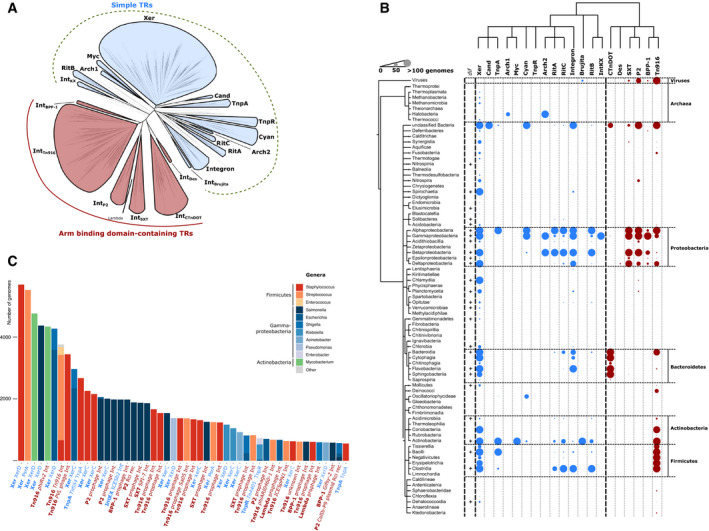
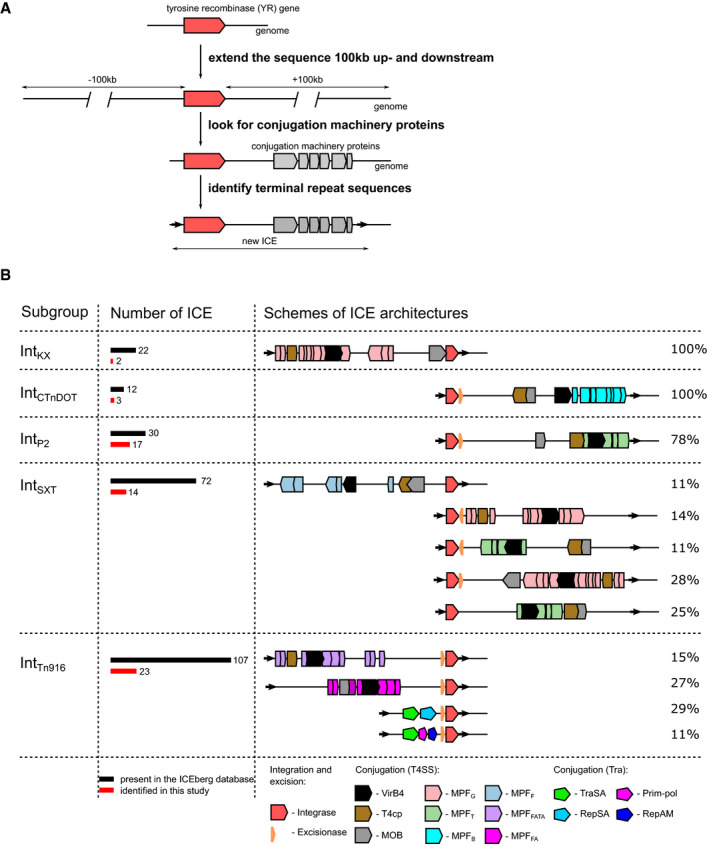
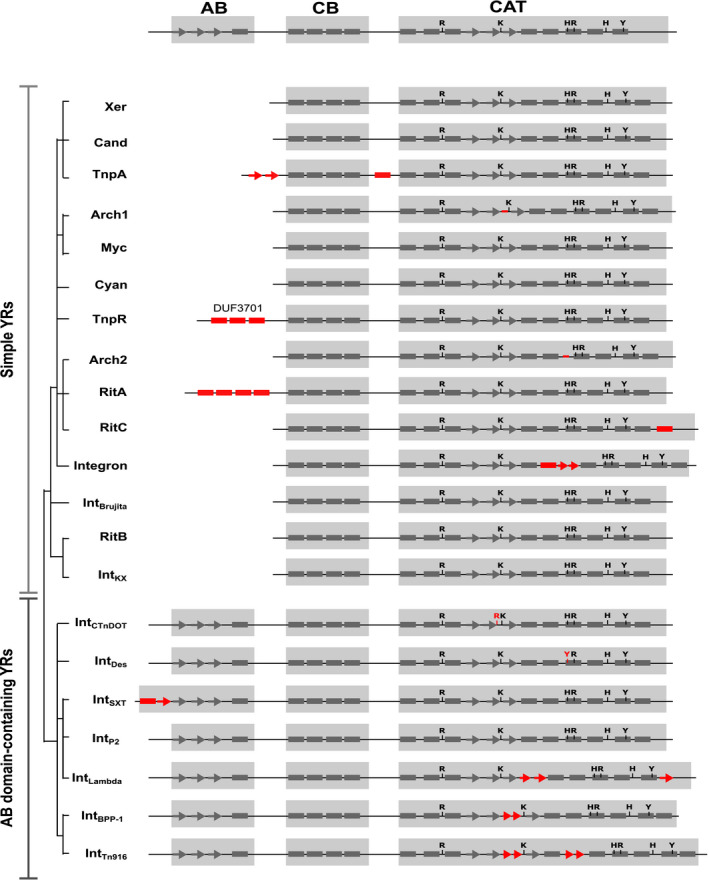
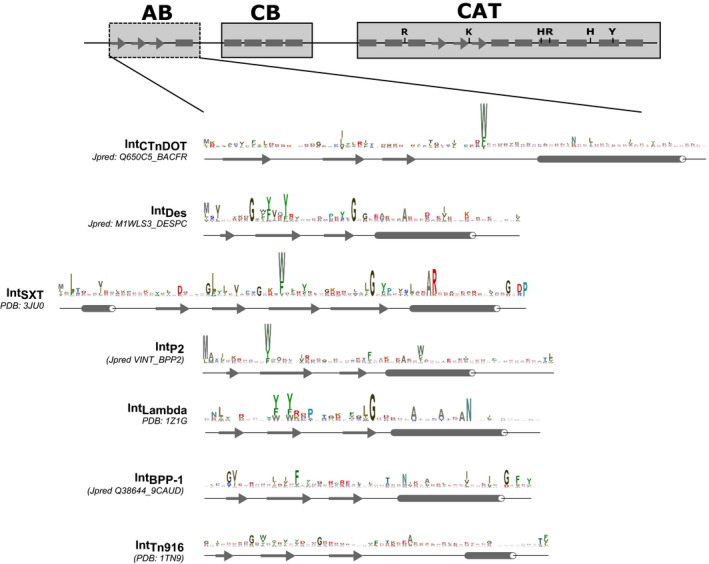
Mobile genetic elements (MGEs) sequester and mobilize antibiotic resistance genes across bacterial genomes. Efficient and reliable identification of such elements is necessary to follow resistance spreading. However, automated tools for MGE identification are missing. Tyrosine recombinase (YR) proteins drive MGE mobilization and could provide markers for MGE detection, but they constitute a diverse family also involved in housekeeping functions. Here, we conducted a comprehensive survey of YRs from bacterial, archaeal, and phage genomes and developed a sequence-based classification system that dissects the characteristics of MGE-borne YRs. We revealed that MGE-related YRs evolved from non-mobile YRs by acquisition of a regulatory arm-binding domain that is essential for their mobility function. Based on these results, we further identified numerous unknown MGEs. This work provides a resource for comparative analysis and functional annotation of YRs and aids the development of computational tools for MGE annotation. Additionally, we reveal how YRs adapted to drive gene transfer across species and provide a tool to better characterize antibiotic resistance dissemination.
移动遗传元件 (MGE) 在细菌基因组中隔离和转移抗生素抗性基因。为了跟踪耐药性的传播,高效可靠地识别这些元件是必要的。然而,目前缺乏用于 MGE 识别的自动化工具。酪氨酸重组酶 (YR) 蛋白驱动 MGE 的移动,并且可以作为 MGE 检测的标记物,但它们构成了一个多样化的家族,也参与了维持细胞功能的过程。在这里,我们对细菌、古菌和噬菌体基因组中的 YR 进行了全面调查,并开发了一种基于序列的分类系统,用于剖析 MGE 携带的 YR 的特征。我们揭示了 MGE 相关的 YR 是通过获得一个对其移动功能至关重要的调节臂结合结构域,从非移动 YR 进化而来的。基于这些结果,我们进一步鉴定了许多未知的 MGE。这项工作为 YR 的比较分析和功能注释提供了资源,并有助于开发用于 MGE 注释的计算工具。此外,我们揭示了 YR 如何适应驱动种间基因转移,并提供了一种更好地描述抗生素耐药性传播的工具。