Systems and Computational Biology Center and Molecular and Cellular Oncogenesis Program, The Wistar Institute, Philadelphia, PA, USA.
Ludwig Institute for Cancer Research, New York, NY, USA.
Methods Mol Biol. 2021;2318:231-239. doi: 10.1007/978-1-0716-1476-1_11.
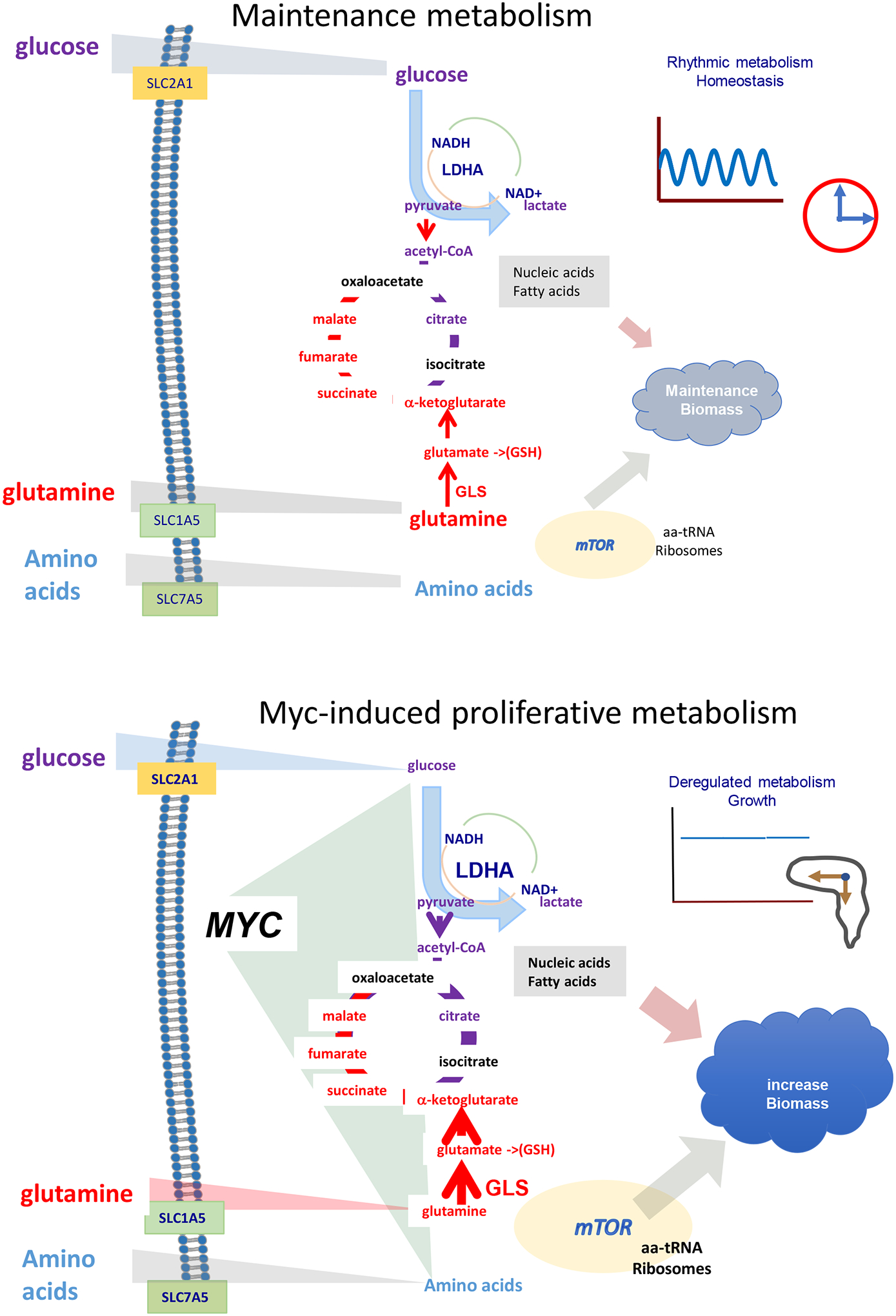
The MYC gene regulates normal cell growth and is deregulated in many human cancers, contributing to tumor growth and progression. The MYC transcription factor activates RNA polymerases I, II, and III target genes that are considered housekeeping genes. These target genes are largely involved in ribosome biogenesis, fatty acid, protein and nucleotide synthesis, nutrient influx or metabolic waste efflux, glycolysis, and glutamine metabolism. MYC's function as a driver of cell growth has been revealed through RNA sequencing, genome-wide chromatin immunoprecipitation, proteomics, and importantly metabolomics, which is highlighted in this chapter.
MYC 基因调节正常细胞生长,在许多人类癌症中失调,导致肿瘤生长和进展。MYC 转录因子激活 RNA 聚合酶 I、II 和 III 的靶基因,这些靶基因被认为是管家基因。这些靶基因主要参与核糖体生物发生、脂肪酸、蛋白质和核苷酸合成、营养物质流入或代谢废物流出、糖酵解和谷氨酰胺代谢。通过 RNA 测序、全基因组染色质免疫沉淀、蛋白质组学,特别是代谢组学,揭示了 MYC 作为细胞生长驱动因子的功能,本章对此进行了重点介绍。