Department of Dermatology, University of California, San Diego, San Diego, CA, USA.
Sci Immunol. 2021 May 21;6(59). doi: 10.1126/sciimmunol.abe1935.
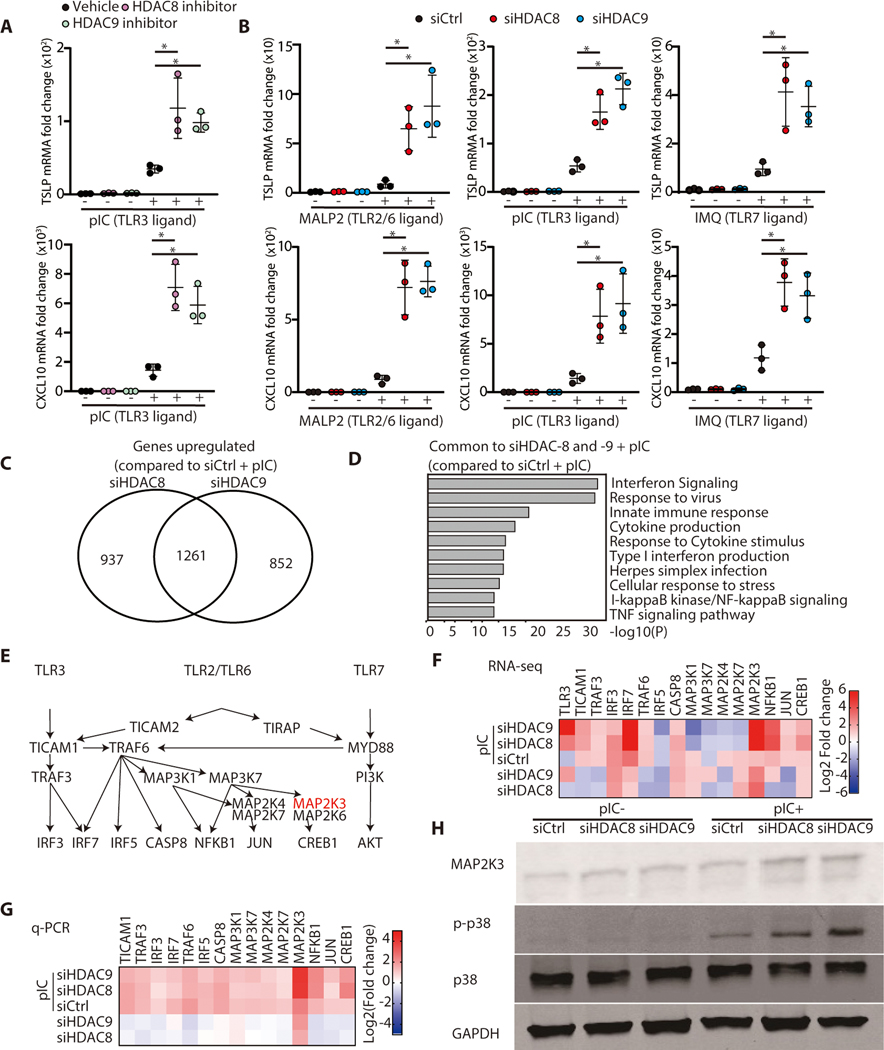
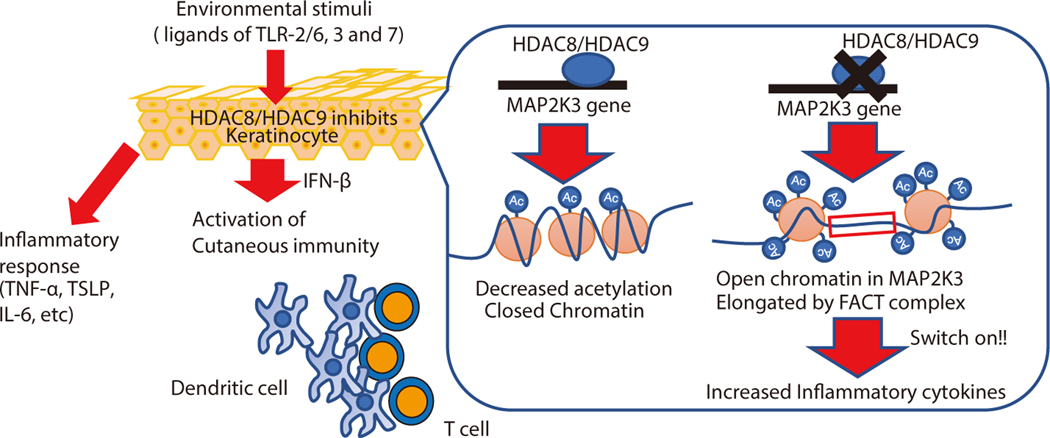
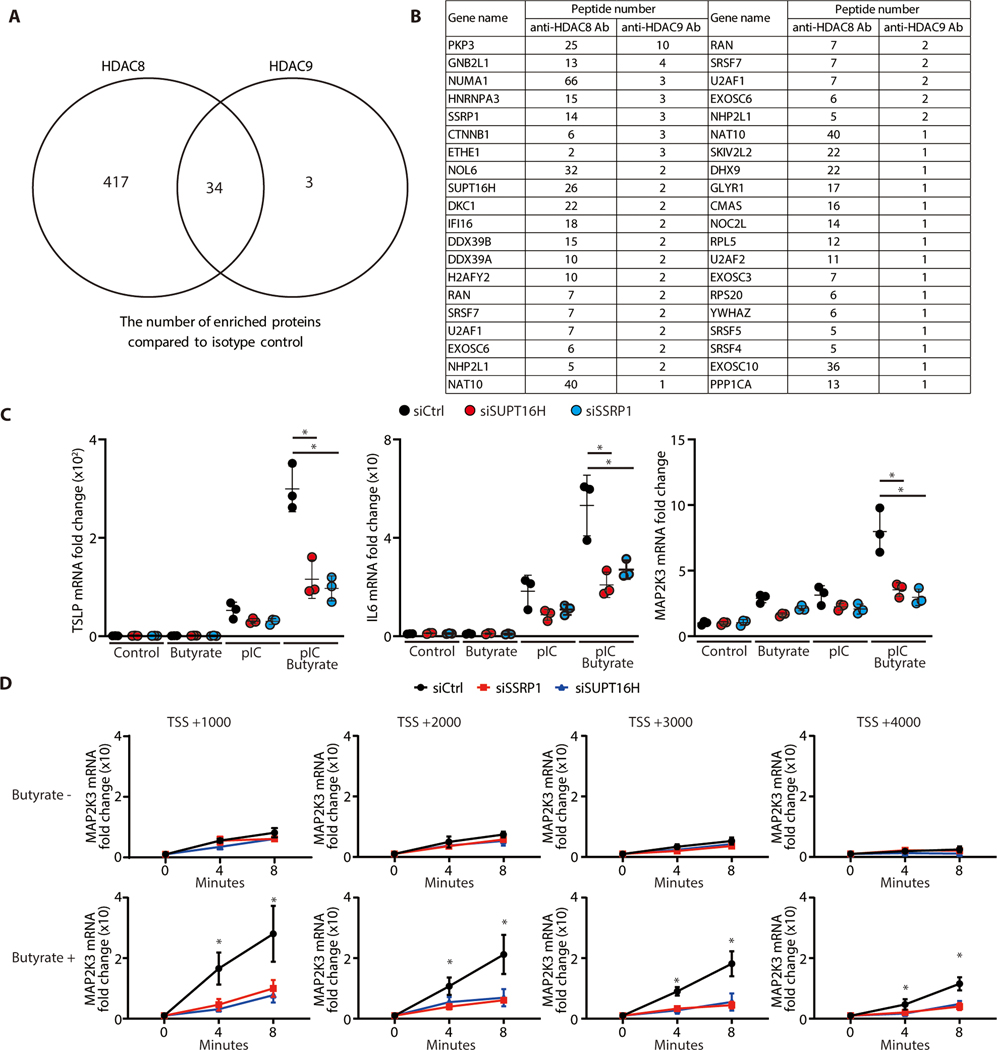
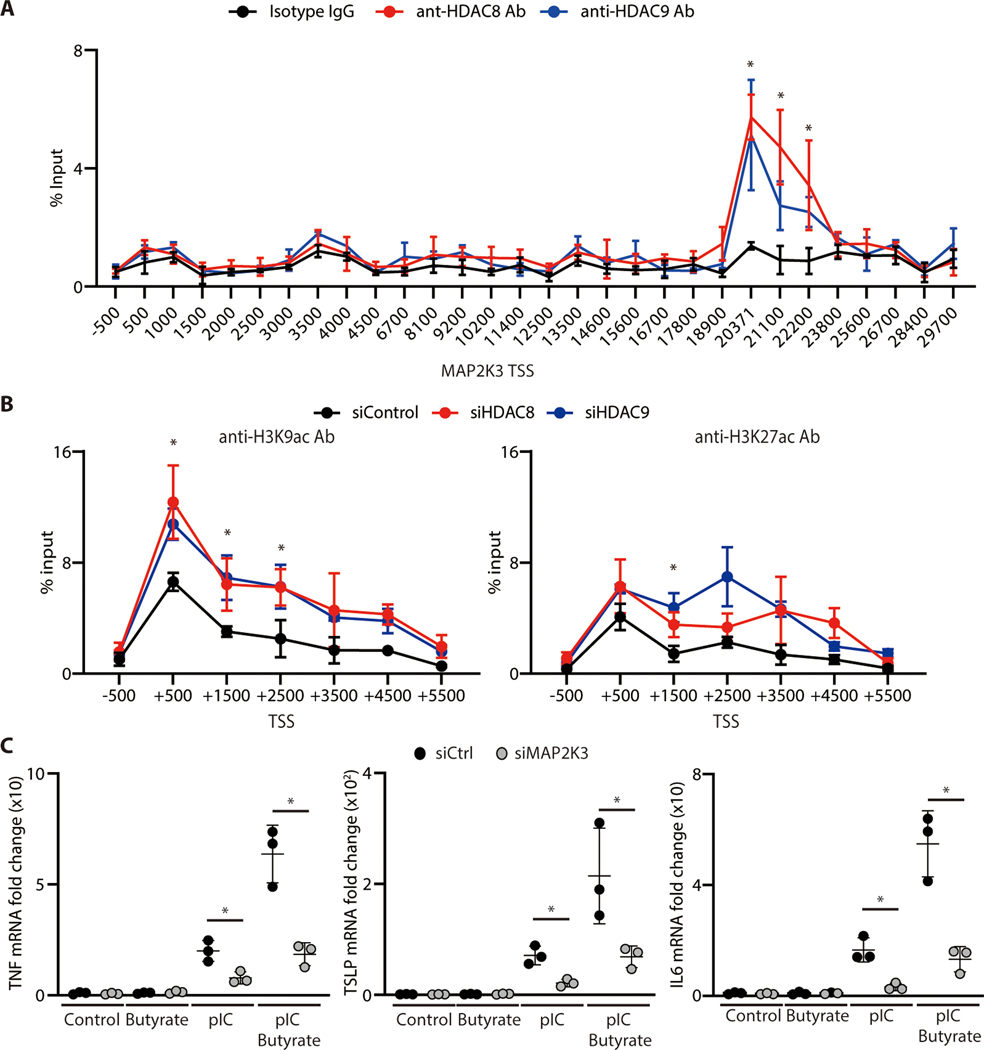
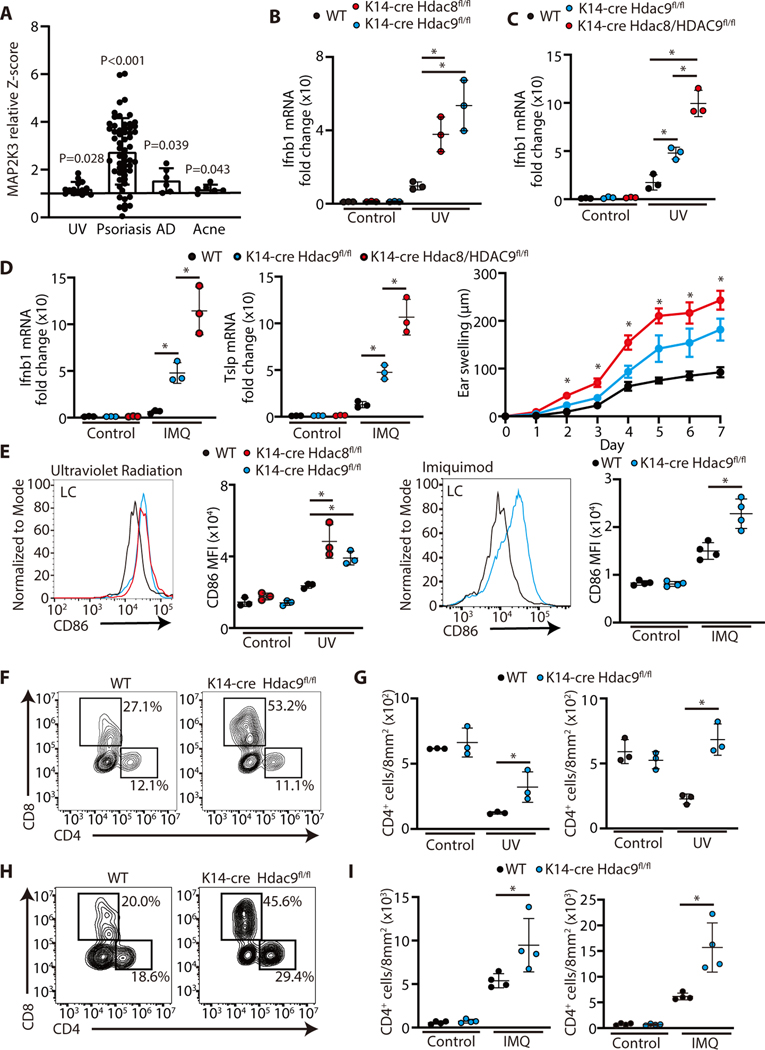
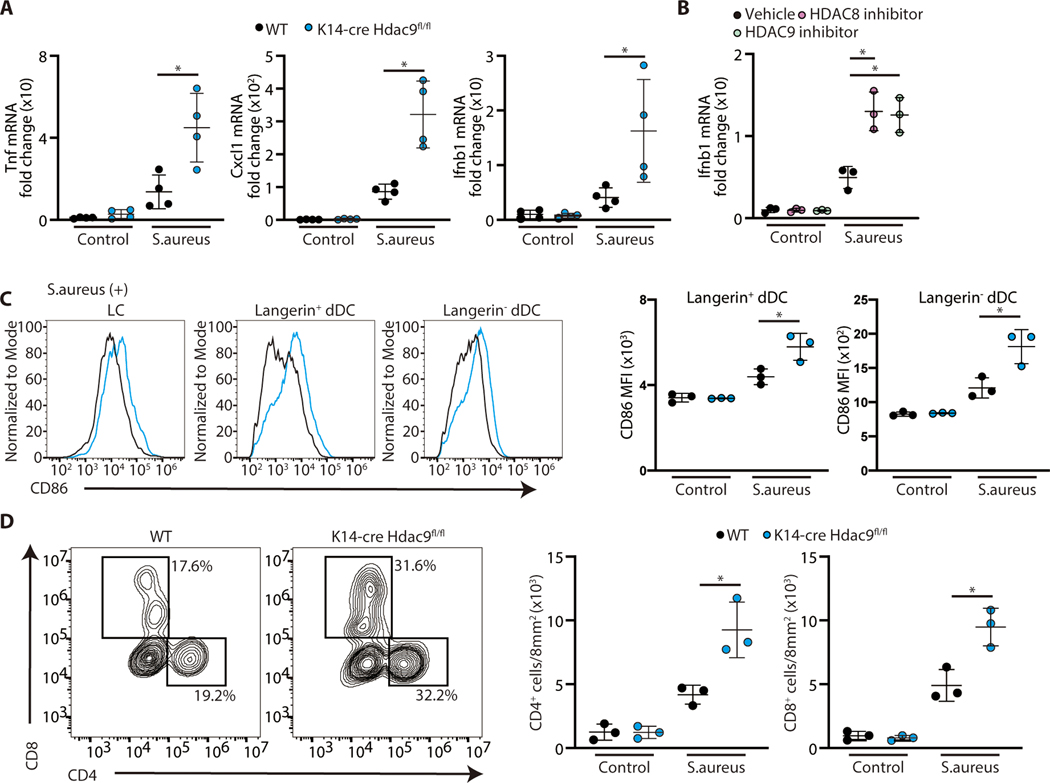
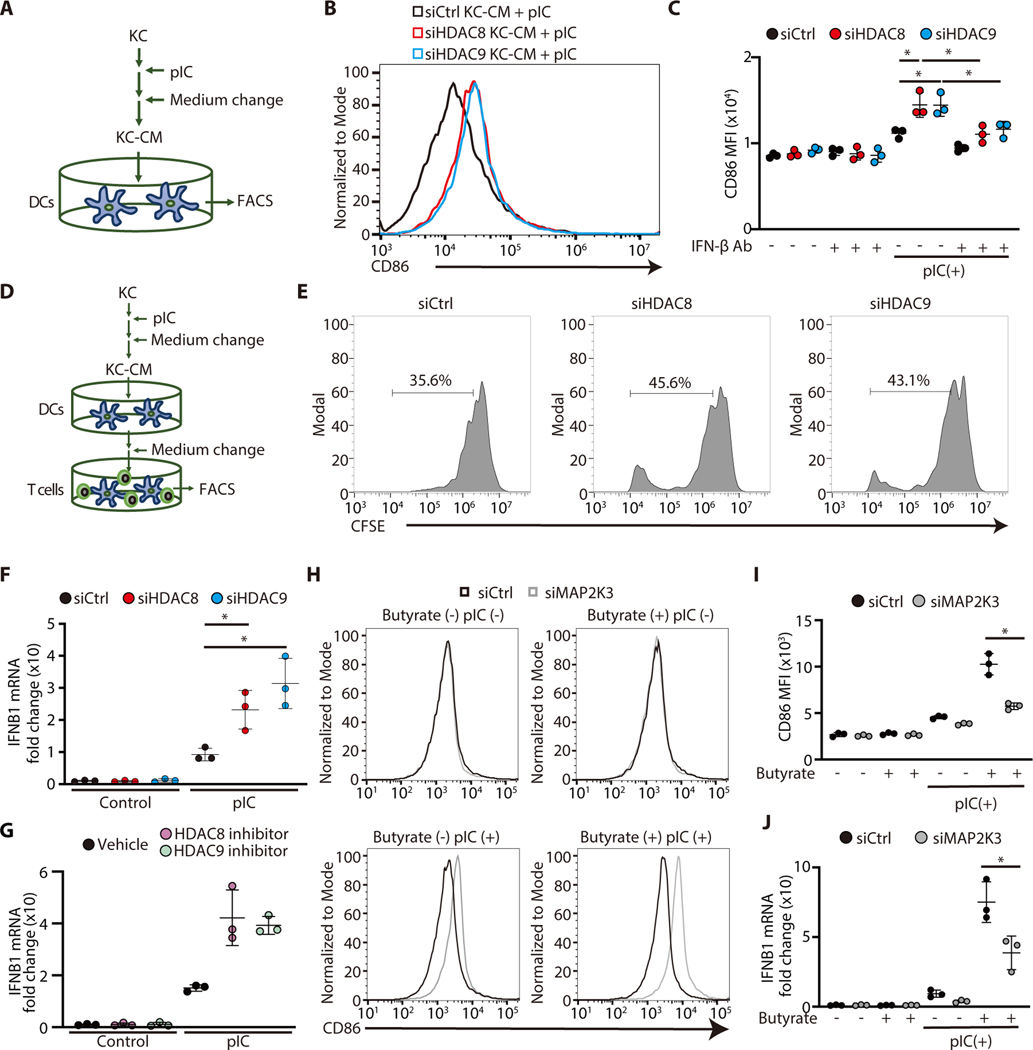
The skin typically tolerates exposure to various microbes and chemicals in the environment. Here, we investigated how the epidermis maintains this innate immune tolerance to stimuli that are recognized by Toll-like receptors (TLRs). Loss of tolerance to TLR ligands occurred after silencing of the histone deacetylases (HDACs) HDAC8 and HDAC9 in keratinocytes. Transcriptional analysis identified MAP2K3 as suppressed by HDAC8/9 activity and a potential key intermediary for establishing this tolerance. HDAC8/9 influenced acetylation at H3K9 and H3K27 marks in the MAP2K3 promoter. Proteomic analysis further identified SSRP1 and SUPT16H as associated with HDAC8/9 and responsible for transcriptional elongation of MAP2K3. Silencing of MAP2K3 blocked the capacity of HDAC8/9 to influence cytokine responses. Relevance in vivo was supported by observations of increased MAP2K3 in human inflammatory skin conditions and the capacity of keratinocyte HDAC8/9 to influence dendritic cell maturation and T cell proliferation. Keratinocyte-specific deletion of HDAC8/9 also increased inflammation in mice after exposure to ultraviolet radiation, imiquimod, or These findings define a mechanism for the epidermis to regulate inflammation in the presence of ubiquitous TLR ligands.
皮肤通常能耐受环境中各种微生物和化学物质的接触。在这里,我们研究了表皮如何维持对 Toll 样受体 (TLR) 识别的刺激物的先天免疫耐受。角质形成细胞中组蛋白去乙酰化酶 (HDAC) HDAC8 和 HDAC9 沉默后,对 TLR 配体的耐受性丧失。转录分析确定 MAP2K3 受 HDAC8/9 活性抑制,并可能是建立这种耐受性的潜在关键中介。HDAC8/9 影响 MAP2K3 启动子处 H3K9 和 H3K27 标记的乙酰化。蛋白质组学分析进一步鉴定 SSRP1 和 SUPT16H 与 HDAC8/9 相关,并负责 MAP2K3 的转录延伸。沉默 MAP2K3 阻止了 HDAC8/9 影响细胞因子反应的能力。体内相关性得到了支持,即观察到人类炎症性皮肤疾病中 MAP2K3 增加,以及角质形成细胞 HDAC8/9 影响树突状细胞成熟和 T 细胞增殖的能力。角质形成细胞特异性敲除 HDAC8/9 也会增加小鼠在暴露于紫外线、咪喹莫特或这些发现定义了表皮在存在普遍存在的 TLR 配体的情况下调节炎症的机制。