Zhang Xue-Hui, Feng Chen-Chen, Pei Li-Jian, Zhang Ya-Nan, Chen Liu, Wei Xu-Qiang, Zhou Jia, Yong Yue, Wang Ke
Acupuncture Anesthesia Clinical Research Institute, Yueyang Hospital of Integrated Traditional Chinese and Western Medicine, Shanghai University of Traditional Chinese Medicine, Shanghai, China.
Department of Anesthesiology and Research Institute for Acupuncture Anesthesia, Shuguang Hospital Affiliated to Shanghai University of Traditional Chinese Medicine, Shanghai, China.
Front Neurosci. 2021 May 7;15:657507. doi: 10.3389/fnins.2021.657507. eCollection 2021.
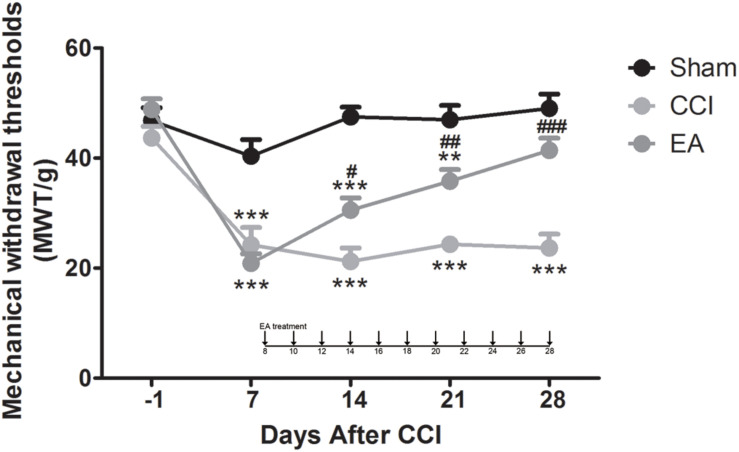
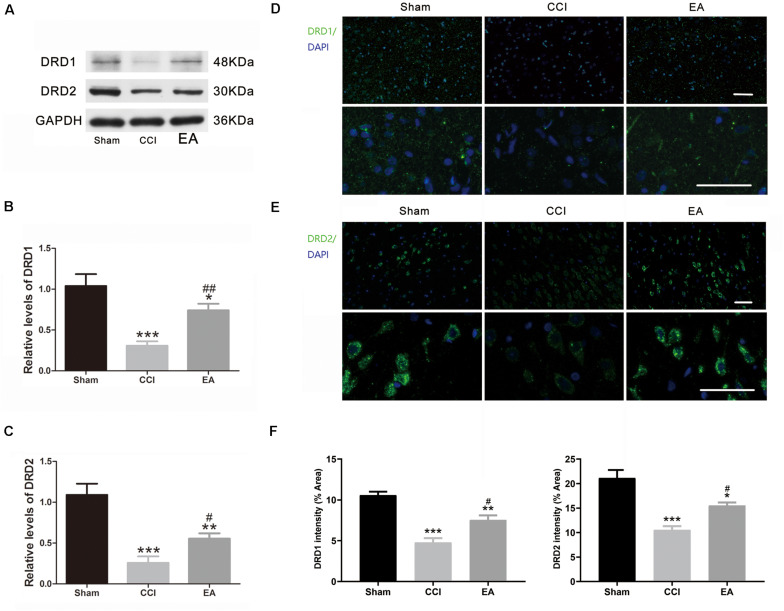
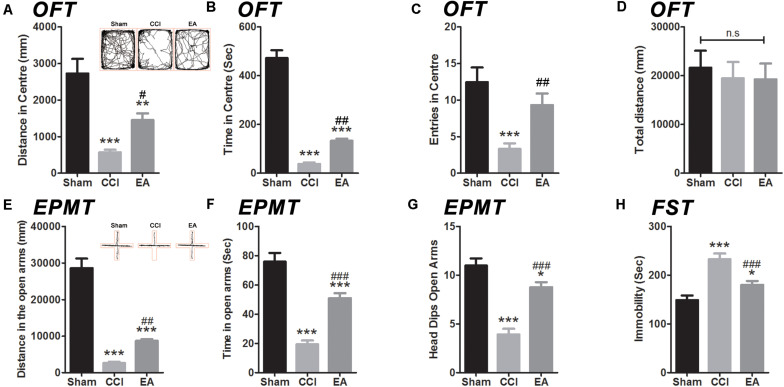
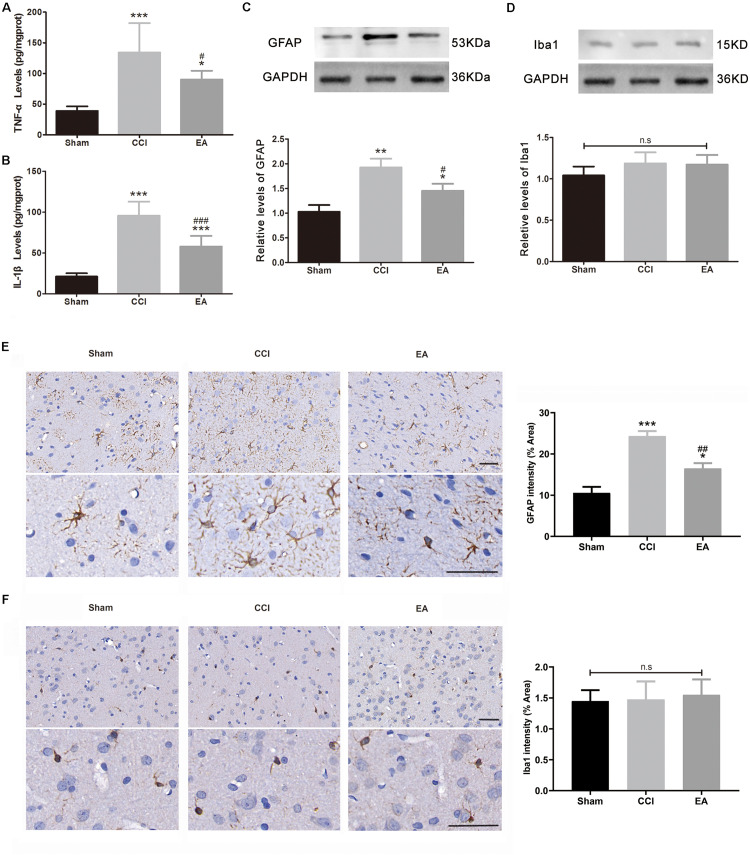
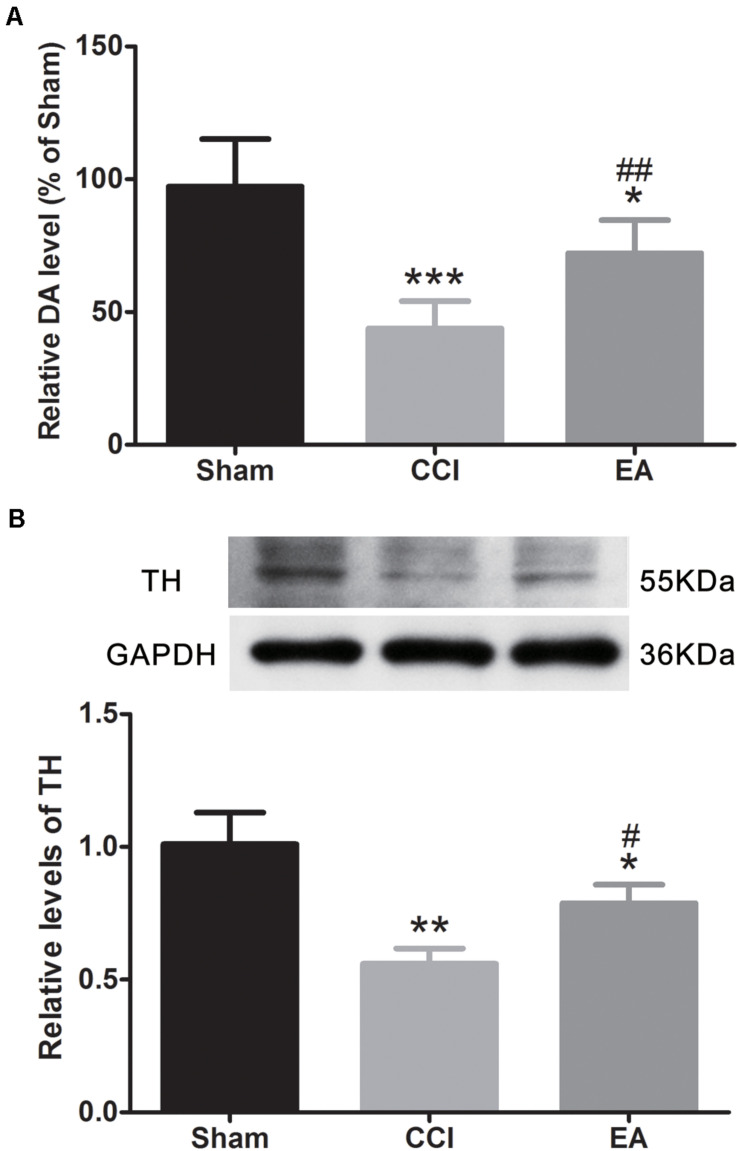
Neuropathic pain (NeuP) is an important clinical problem accompanying negative mood symptoms. Neuroinflammation in the amygdala is critically involved in NeuP, and the dopamine (DA) system acts as an important endogenous anti-inflammatory pathway. Electroacupuncture (EA) can improve the clinical outcomes in NeuP, but the underlying mechanisms have not been fully elucidated. This study was designed to assess the effectiveness of EA on pain and pain-related depressive-like and anxiety-like behaviors and explore the role of the DA system in the effects of EA. Male Sprague-Dawley rats were subjected to the chronic constrictive injury (CCI) model to induce NeuP. EA treatment was carried out for 30 min once every other day for 3 weeks. The results showed that CCI caused mechanical hyperalgesia and depressive and anxiety-like behaviors in rats and neuroinflammation in the amygdala, such as an increased protein level of TNFα and IL-1β and activation of astrocytes. EA treatment significantly improved mechanical allodynia and the emotional dysfunction induced by CCI. The effects of EA were accompanied by markedly decreased expression of TNFα, IL-1β, and glial fibrillary acid protein (GFAP) in the amygdala. Moreover, EA treatment reversed CCI-induced down-regulation of DA concentration, tyrosine hydroxylase (TH) expression, and DRD1 and DRD2 receptors. These results suggest that EA-ameliorated NeuP may possibly be associated with the DA system to inhibit the neuroinflammation in the amygdala.
神经病理性疼痛(NeuP)是一个伴有负面情绪症状的重要临床问题。杏仁核中的神经炎症在NeuP中起关键作用,多巴胺(DA)系统作为一条重要的内源性抗炎途径。电针(EA)可以改善NeuP的临床疗效,但其潜在机制尚未完全阐明。本研究旨在评估EA对疼痛及与疼痛相关的抑郁样和焦虑样行为的有效性,并探讨DA系统在EA作用中的作用。雄性Sprague-Dawley大鼠采用慢性缩窄损伤(CCI)模型诱导NeuP。每隔一天进行一次30分钟的EA治疗,持续3周。结果表明,CCI导致大鼠出现机械性痛觉过敏以及抑郁和焦虑样行为,并引起杏仁核神经炎症,如肿瘤坏死因子α(TNFα)和白细胞介素-1β(IL-1β)蛋白水平升高以及星形胶质细胞活化。EA治疗显著改善了CCI诱导的机械性异常疼痛和情绪功能障碍。EA的作用伴随着杏仁核中TNFα、IL-1β和胶质纤维酸性蛋白(GFAP)表达的显著降低。此外,EA治疗逆转了CCI诱导的DA浓度、酪氨酸羟化酶(TH)表达以及多巴胺D1受体(DRD1)和多巴胺D2受体(DRD2)的下调。这些结果表明,EA改善NeuP可能与DA系统抑制杏仁核中的神经炎症有关。