Marasco Michelangelo, Kirkpatrick John, Nanna Vittoria, Sikorska Justyna, Carlomagno Teresa
Leibniz University Hannover, Center of Biomolecular Drug Research and Institute of Organic Chemistry, Schneiderberg 38, 30167 Hannover, Germany.
Helmholtz Center for Infection Research, Group of NMR-based Structural Chemistry, Inhoffenstrasse 7, 38124 Braunschweig, Germany.
Comput Struct Biotechnol J. 2021 Apr 20;19:2398-2415. doi: 10.1016/j.csbj.2021.04.040. eCollection 2021.
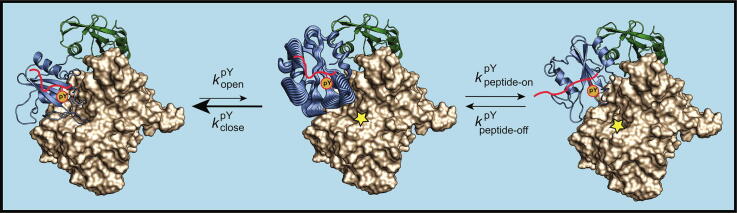
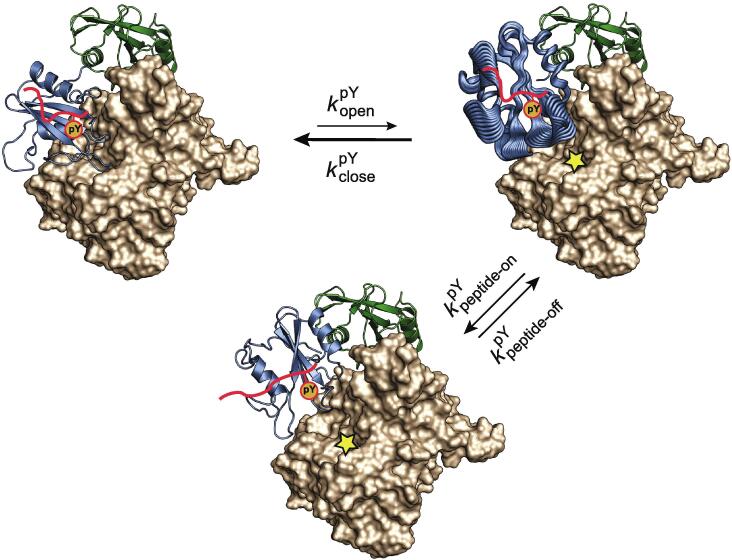
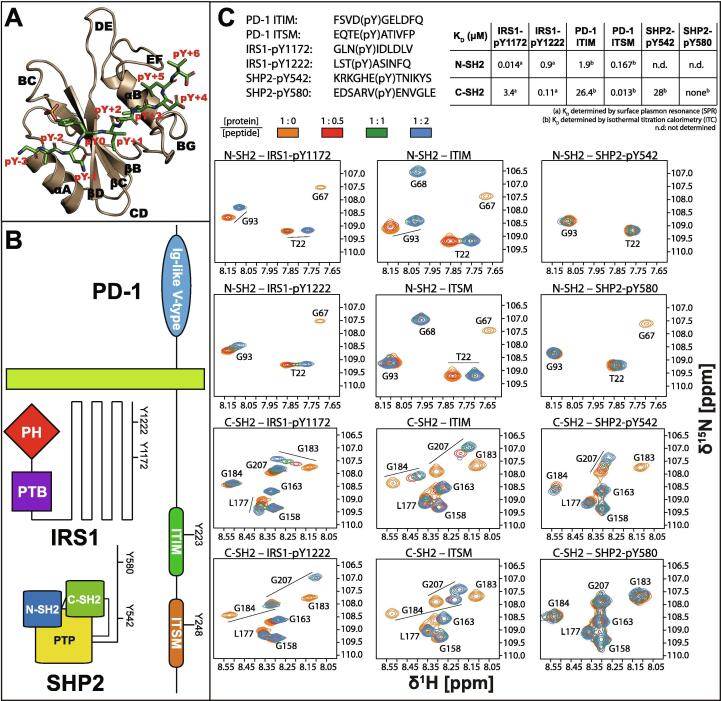
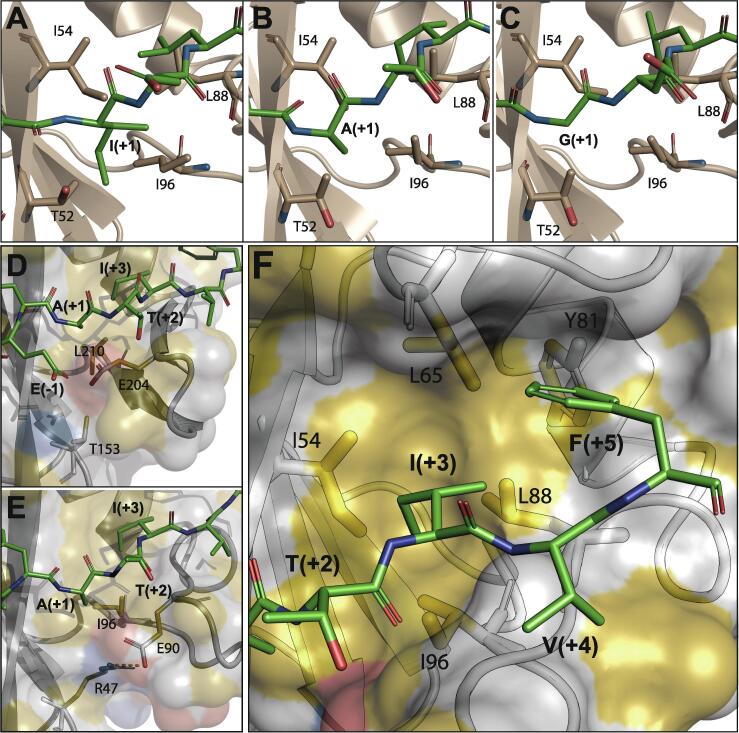
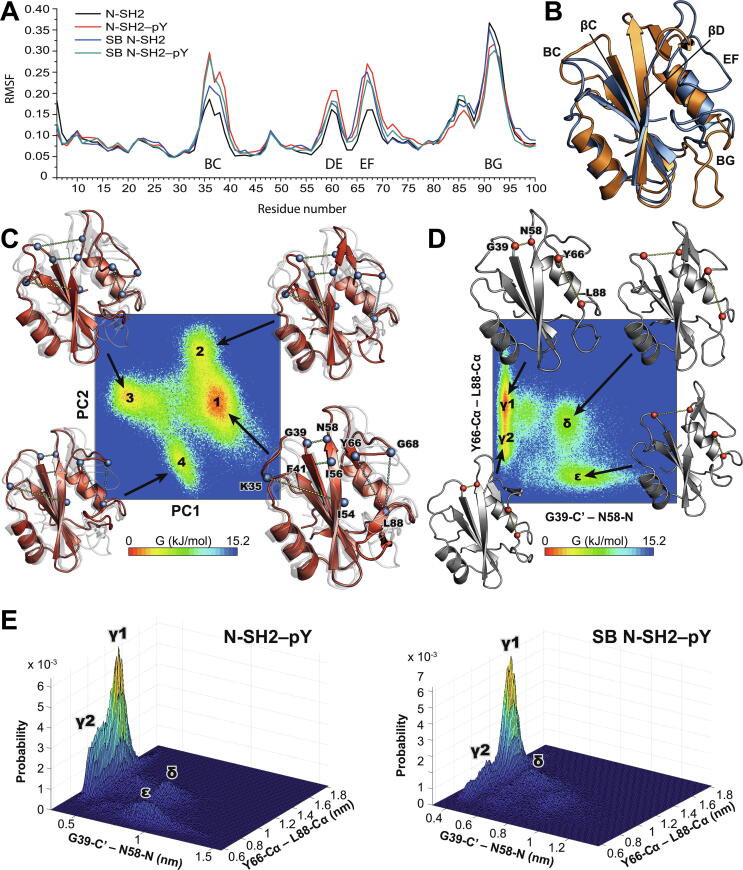
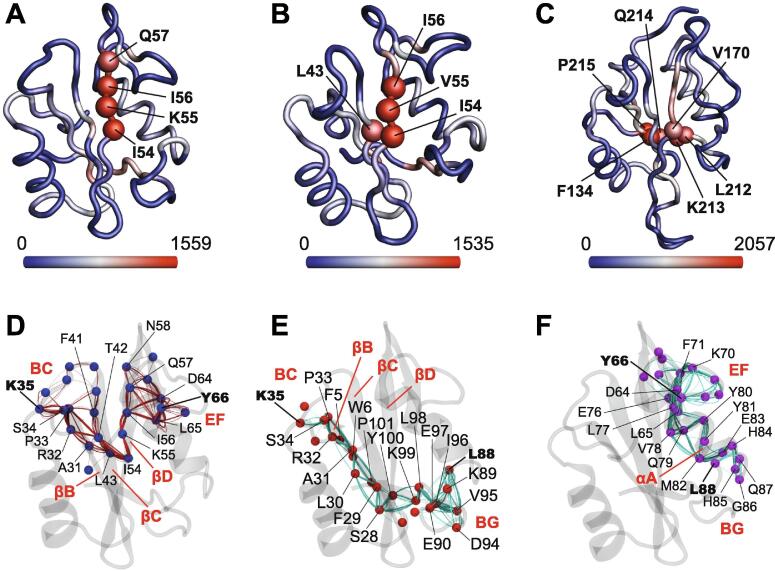
SHP2 is a ubiquitous protein tyrosine phosphatase, whose activity is regulated by phosphotyrosine (pY)-containing peptides generated in response to extracellular stimuli. Its crystal structure reveals a closed, auto-inhibited conformation in which the N-terminal Src homology 2 (N-SH2) domain occludes the catalytic site of the phosphatase (PTP) domain. High-affinity mono-phosphorylated peptides promote catalytic activity by binding to N-SH2 and disrupting the interaction with the PTP. The mechanism behind this process is not entirely clear, especially because N-SH2 is incapable of accommodating complete peptide binding when SHP2 is in the auto-inhibited state. Here, we show that pY performs an essential role in this process; in addition to its contribution to overall peptide-binding energy, pY-recognition leads to enhanced dynamics of the N-SH2 EF and BG loops via an allosteric communication network, which destabilizes the N-SH2-PTP interaction surface and simultaneously generates a fully accessible binding pocket for the C-terminal half of the phosphopeptide. Subsequently, full binding of the phosphopeptide is associated with the stabilization of activated SHP2. We demonstrate that this allosteric network exists only in N-SH2, which is directly involved in the regulation of SHP2 activity, while the C-terminal SH2 domain (C-SH2) functions primarily to recruit high-affinity bidentate phosphopeptides.
SHP2是一种普遍存在的蛋白酪氨酸磷酸酶,其活性受细胞外刺激产生的含磷酸酪氨酸(pY)肽的调节。其晶体结构显示出一种封闭的、自抑制构象,其中N端Src同源2(N-SH2)结构域封闭了磷酸酶(PTP)结构域的催化位点。高亲和力单磷酸化肽通过与N-SH2结合并破坏与PTP的相互作用来促进催化活性。这一过程背后的机制尚不完全清楚,特别是因为当SHP2处于自抑制状态时,N-SH2无法容纳完整的肽结合。在这里,我们表明pY在这一过程中起着至关重要的作用;除了对整体肽结合能有贡献外,pY识别通过变构通讯网络导致N-SH2的EF和BG环动力学增强,这使N-SH2-PTP相互作用表面不稳定,同时为磷酸肽的C端一半生成一个完全可及的结合口袋。随后,磷酸肽的完全结合与活化的SHP2的稳定有关。我们证明这种变构网络仅存在于直接参与SHP2活性调节的N-SH2中,而C端SH2结构域(C-SH2)主要起募集高亲和力双齿磷酸肽的作用。