Hoffmann Ary A, White Vanessa L, Jasper Moshe, Yagui Hiromi, Sinclair Steve J, Kearney Michael R
Pest and Environmental Adaptation Research Group Bio21 Institute School of BioSciences The University of Melbourne Parkville Victoria Australia.
School of BioSciences The University of Melbourne Melbourne Victoria Australia.
Ecol Evol. 2021 Apr 4;11(10):5364-5380. doi: 10.1002/ece3.7428. eCollection 2021 May.
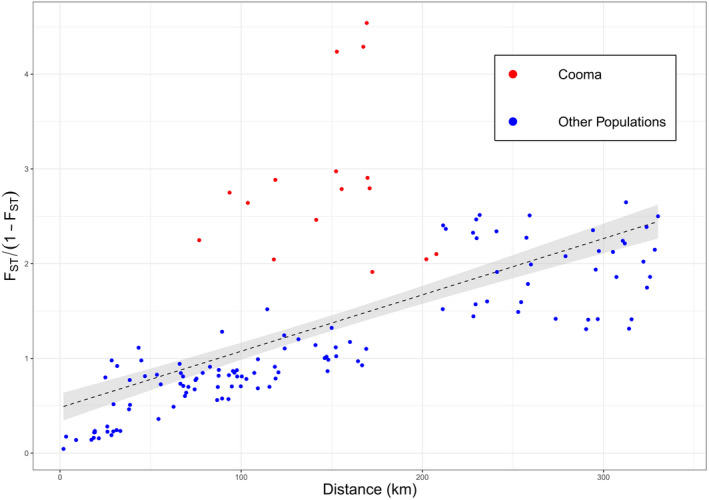
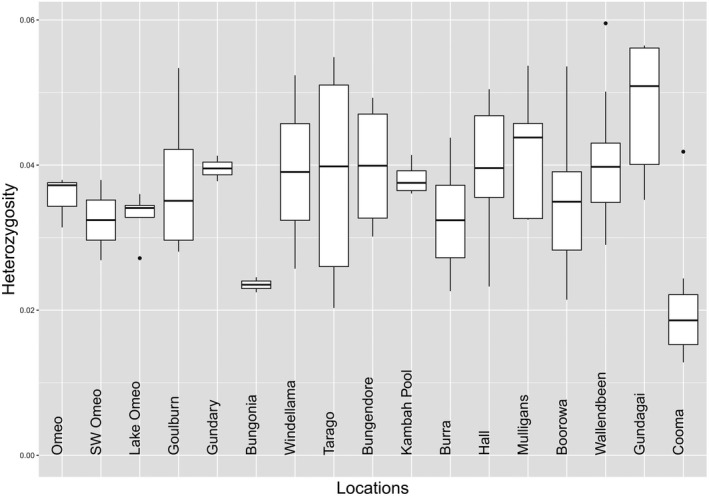
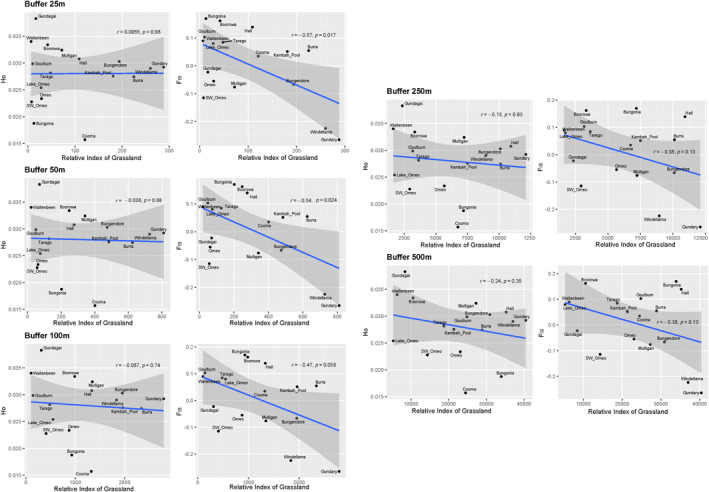
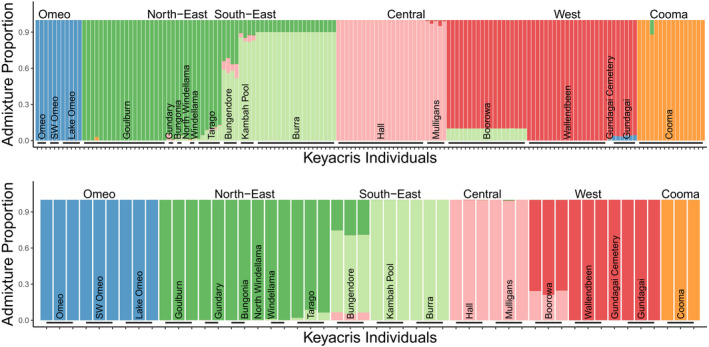
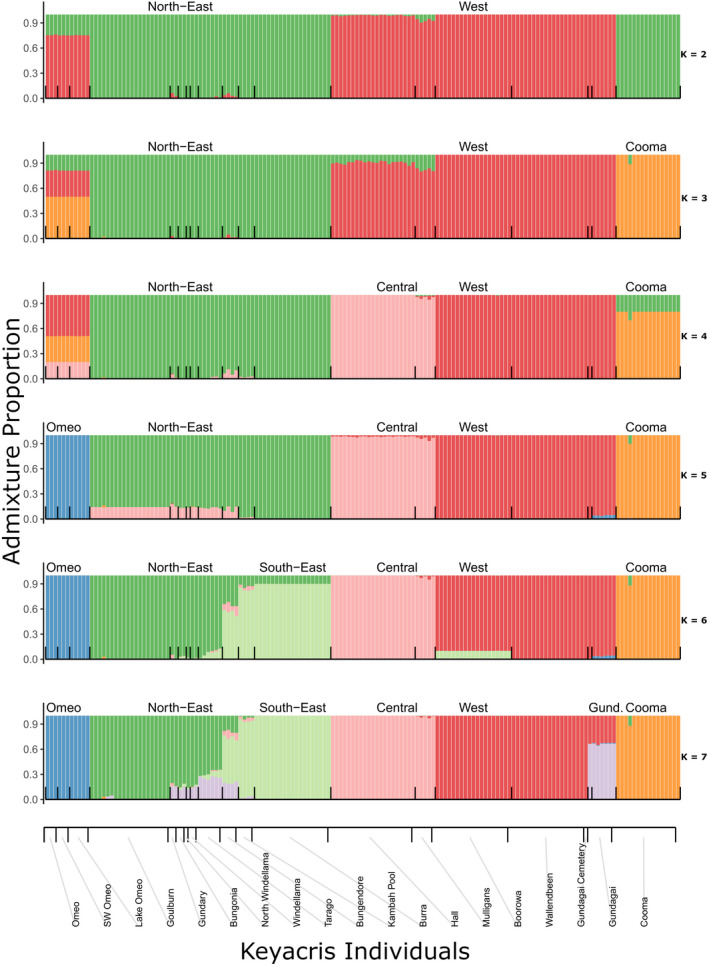
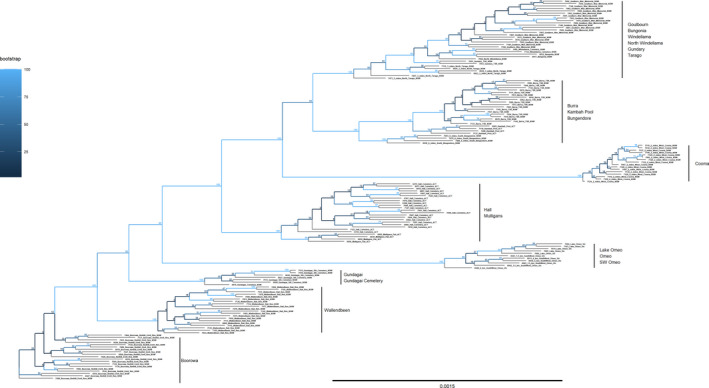
Conservation research is dominated by vertebrate examples but the shorter generation times and high local population sizes of invertebrates may lead to very different management strategies, particularly for species with low movement rates. Here we investigate the genetic structure of an endangered flightless grasshopper, , which was used in classical evolutionary studies in the 1960s. It had a wide distribution across New South Wales (NSW) and Victoria in pre-European times but has now become threatened because of land clearing for agriculture and other activities. We revisited remnant sites of , with populations now restricted to only one area in Victoria and a few small patches in NSW and the Australian Capital Territory (ACT). Using DArtseq to generate SNP markers as well as mtDNA sequence data, we show that the remaining Victorian populations in an isolated valley are genetically distinct from the NSW populations and that all populations tend to be genetically unique, with large values up to 0.8 being detected for the SNP datasets. We also find that, with one notable exception, the NSW/ACT populations separate genetically into previously described chromosomal races (2 = 15 vs. 2 = 17). Isolation by distance was detected across both the SNP and mtDNA datasets, and there was substantial differentiation within chromosomal races. Genetic diversity as measured by heterozygosity was not correlated with the size of remaining habitat where the populations were found, with high variation present in some remnant cemetery sites. However, inbreeding correlated negatively with estimated habitat size at 25-500 m patch radius. These findings emphasize the importance of small habitat areas in conserving genetic variation in such species with low mobility, and they highlight populations suitable for future translocation efforts.
保护研究主要以脊椎动物为例,但无脊椎动物较短的世代时间和较高的本地种群数量可能导致截然不同的管理策略,特别是对于移动率低的物种。在这里,我们研究了一种濒危的不会飞的蚱蜢的遗传结构,这种蚱蜢在20世纪60年代的经典进化研究中被使用过。在欧洲人到来之前,它在新南威尔士州(NSW)和维多利亚州广泛分布,但现在由于农业开垦和其他活动导致的土地清理而受到威胁。我们重新考察了该蚱蜢的残余栖息地,目前其种群仅局限于维多利亚州的一个地区以及新南威尔士州和澳大利亚首都直辖区(ACT)的一些小块区域。使用DArtseq生成单核苷酸多态性(SNP)标记以及线粒体DNA(mtDNA)序列数据,我们发现,位于一个孤立山谷中的维多利亚州剩余种群在基因上与新南威尔士州的种群不同,并且所有种群在基因上往往都是独特的,对于SNP数据集检测到高达0.8的大Fst值。我们还发现,除了一个显著的例外,新南威尔士州/澳大利亚首都直辖区的种群在基因上分为先前描述的染色体种族(2n = 15与2n = 17)。在SNP和mtDNA数据集中都检测到了距离隔离,并且在染色体种族内部存在显著分化。以杂合度衡量的遗传多样性与发现种群的剩余栖息地大小无关,一些残余墓地栖息地存在高度变异。然而,近亲繁殖与估计的25 - 500米斑块半径的栖息地大小呈负相关。这些发现强调了小栖息地面积在保护此类低移动性物种遗传变异方面的重要性,并突出了适合未来迁移努力的种群。