Blanchard-Rohner Géraldine, Caprettini Bruno, Rohner Dominic, Voth Hans-Joachim
Pediatric Immunology and Vaccinology Unit, Geneva University Hospitals and Faculty of Medicine, Geneva, Switzerland.
Center of Vaccinology, Geneva University Hospitals, Switzerland.
J Virus Erad. 2021 Jun;7(2):100044. doi: 10.1016/j.jve.2021.100044. Epub 2021 May 17.
Overcoming coronavirus disease (COVID-19) will likely require mass vaccination. With vaccination scepticism rising in many countries, assessing the willingness to vaccinate against COVID-19 is of crucial global health importance.
The goal of this study was to examine how personal and family COVID-19 risk and ICU (intensive care unit) availability just before the pandemics influence the acceptance of future COVID-19 vaccines.
A two-leg survey was carried out for comparing vaccination attitudes pre-and post-COVID-19. UK residents were surveyed in October 2019 about their vaccination attitudes, and again in a follow-up survey in April 2020, containing the previous questions and further ones related to COVID-19 exposure and COVID-19 vaccine attitudes. The study combined survey results with local COVID-19 incidence and pre-COVID-19 measures of ICU capacity and occupancy. Regression analysis of the impact of individual and public health factors on attitudes towards COVID-19 vaccination was performed.
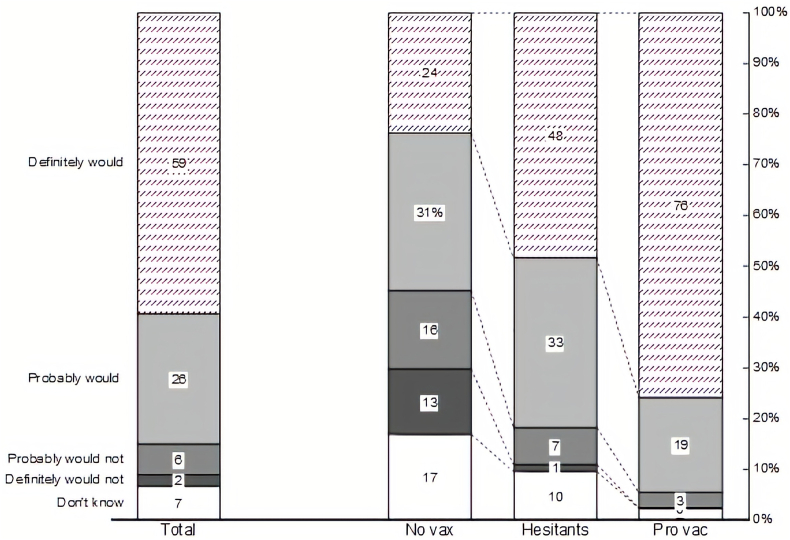
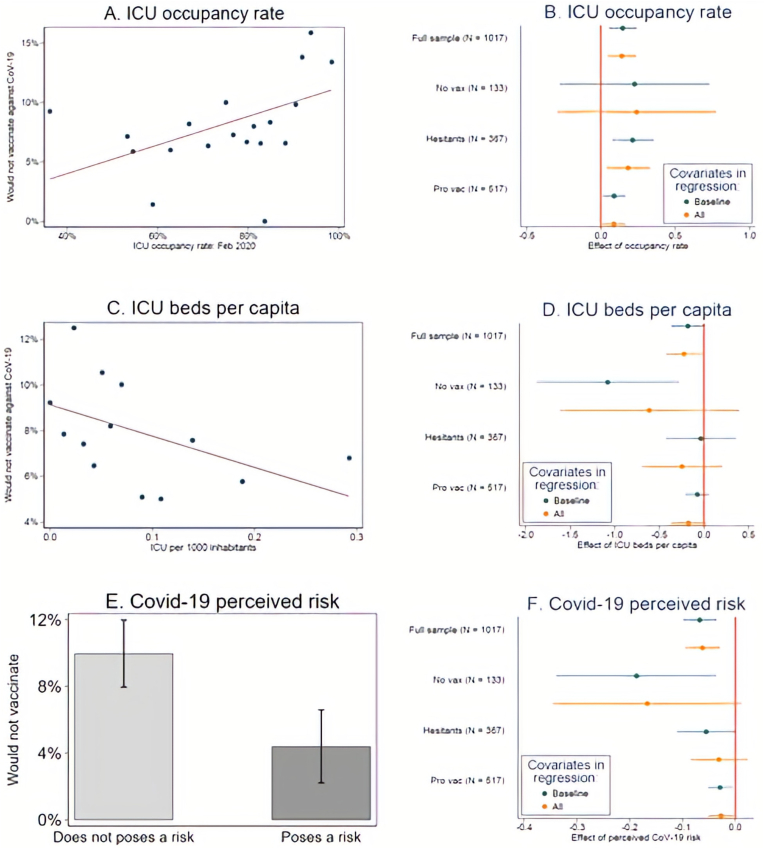
The October 2019 survey included a nationally representative sample of 1653 UK residents. All of them were invited for the follow-up survey in April 2020, and 1194 (72%) participated. The April 2020 sample remained nationally representative. Overall, 85% of respondents (and 55% of vaccine sceptics) would be willing to be vaccinated against COVID-19. Higher personal and family risk for COVID-19 was associated with stronger COVID-19 vaccination willingness, whereas low pre-COVID-19 ICU availability was associated with lower trust in medical experts and lower COVID-19 vaccine support. Further, general vaccination support has risen during the COVID-19 pandemic.
Support for COVID-19 vaccination is high amongst all groups, even vaccine sceptics, boding well for future vaccination take-up rates. Vaccination willingness is correlated with health care availability during the COVID-19 crisis, suggesting a powerful synergy between health care system performance during crisis and the general population's trust in the medical profession - as reflected in vaccination support.
战胜冠状病毒病(COVID-19)可能需要大规模接种疫苗。随着许多国家对疫苗接种的怀疑情绪上升,评估接种COVID-19疫苗的意愿对全球卫生至关重要。
本研究的目的是探讨大流行前个人和家庭感染COVID-19的风险以及重症监护病房(ICU)的可用性如何影响未来对COVID-19疫苗的接受度。
进行了一项双阶段调查,以比较COVID-19前后的疫苗接种态度。2019年10月对英国居民进行了关于其疫苗接种态度的调查,并在2020年4月的后续调查中再次进行,后续调查包含之前的问题以及与COVID-19暴露和COVID-19疫苗态度相关的其他问题。该研究将调查结果与当地COVID-19发病率以及大流行前ICU容量和占用情况的指标相结合。对个人和公共卫生因素对COVID-19疫苗接种态度的影响进行了回归分析。
2019年10月的调查包括1653名具有全国代表性的英国居民样本。所有这些人都被邀请参加2020年4月的后续调查,1194人(72%)参与了调查。2020年4月的样本仍然具有全国代表性。总体而言,85%的受访者(以及55%的疫苗怀疑者)愿意接种COVID-19疫苗。个人和家庭感染COVID-19的风险越高,接种COVID-19疫苗的意愿越强,而大流行前ICU可用性较低与对医学专家的信任度较低以及对COVID-19疫苗的支持度较低相关。此外,在COVID-19大流行期间,对一般疫苗接种的支持有所上升。
所有群体,甚至是疫苗怀疑者,对COVID-19疫苗接种的支持率都很高,这对未来的疫苗接种率是个好兆头。接种意愿与COVID-19危机期间的医疗服务可用性相关,这表明危机期间医疗系统的表现与普通民众对医疗行业的信任之间存在强大的协同作用——这在疫苗接种支持率中得到了体现。