Stumpf Sebastian, Etches Steve, Underwood Charlie J, Kriwet Jürgen
Department of Palaeontology, University of Vienna, Vienna, Austria.
Museum of Jurassic Marine Life, Kimmeridge, Dorset, United Kingdom.
PeerJ. 2021 May 11;9:e11362. doi: 10.7717/peerj.11362. eCollection 2021.
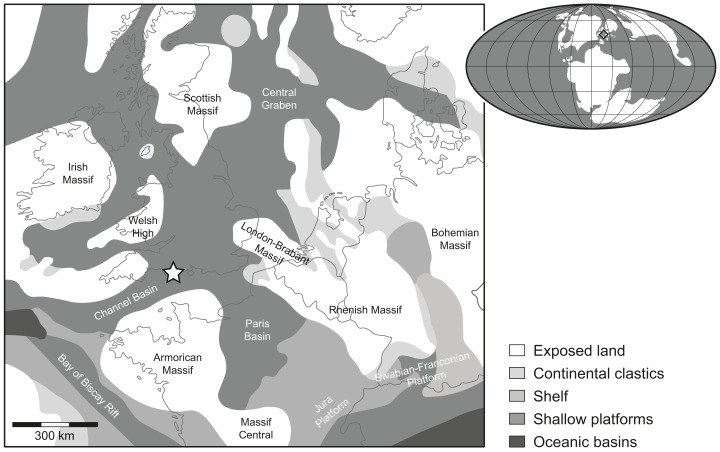
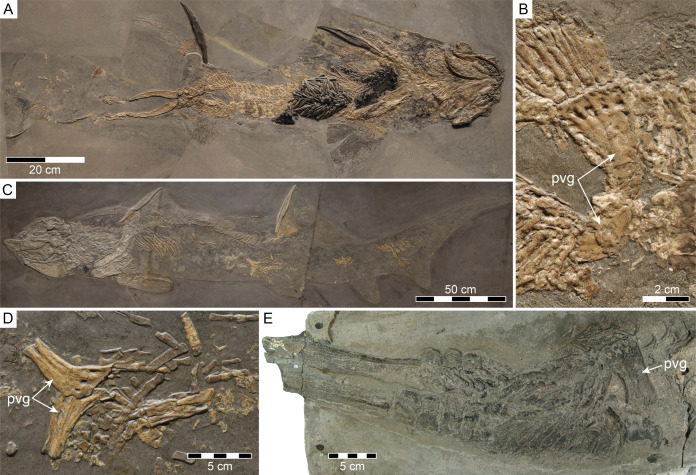
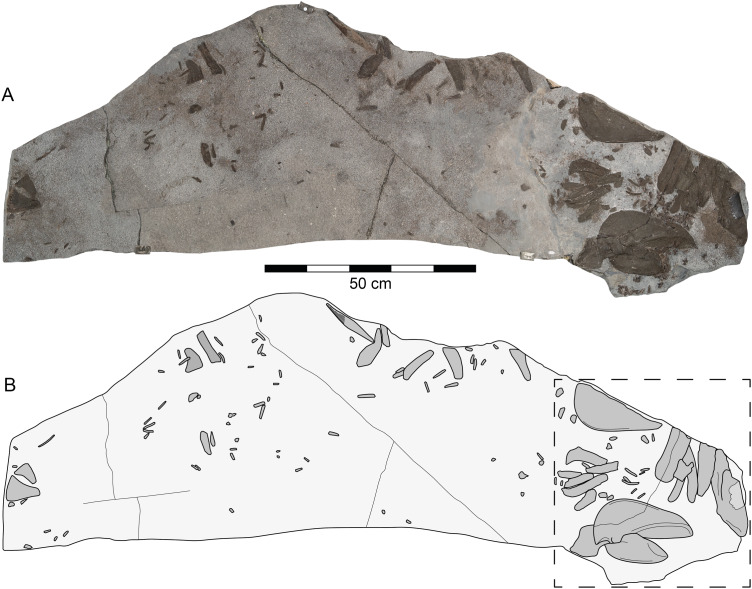
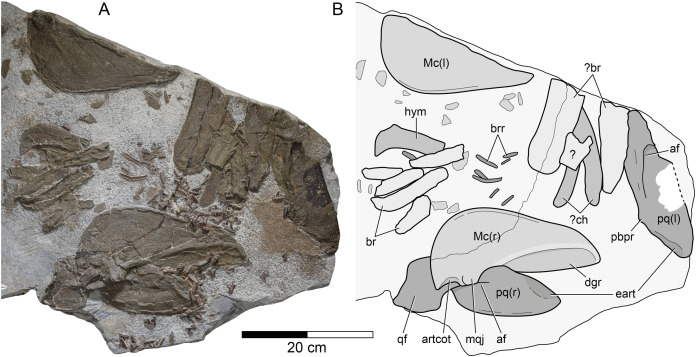
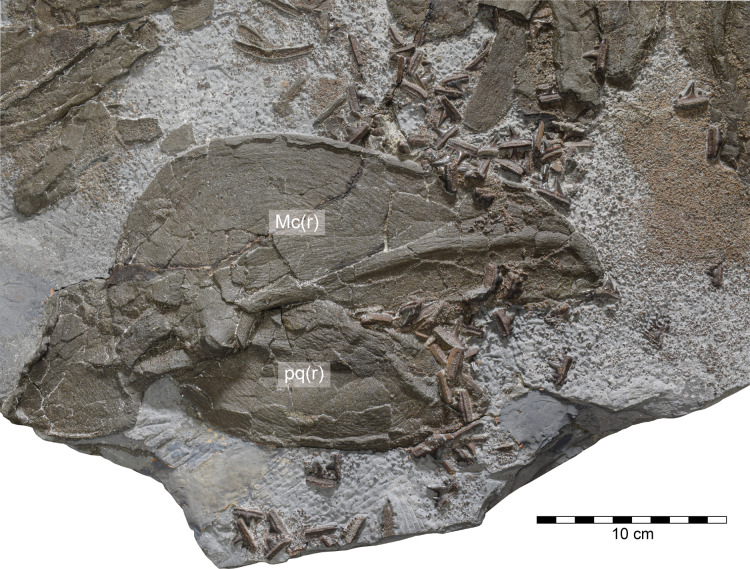
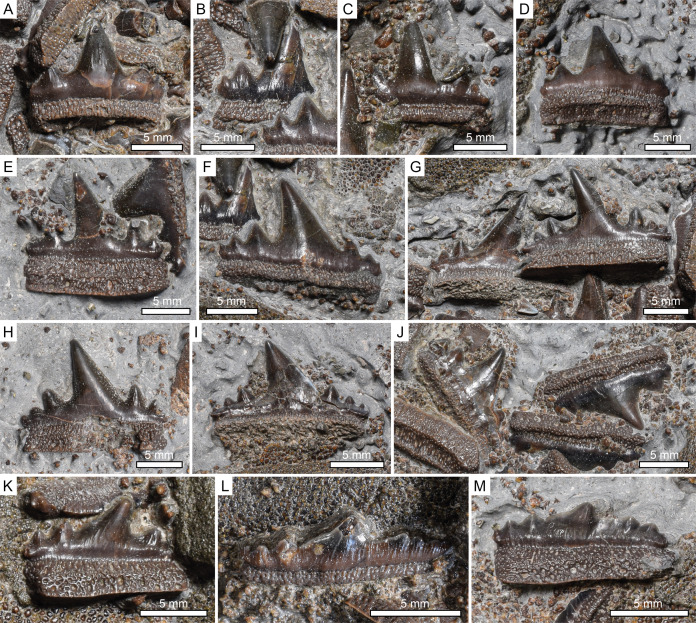
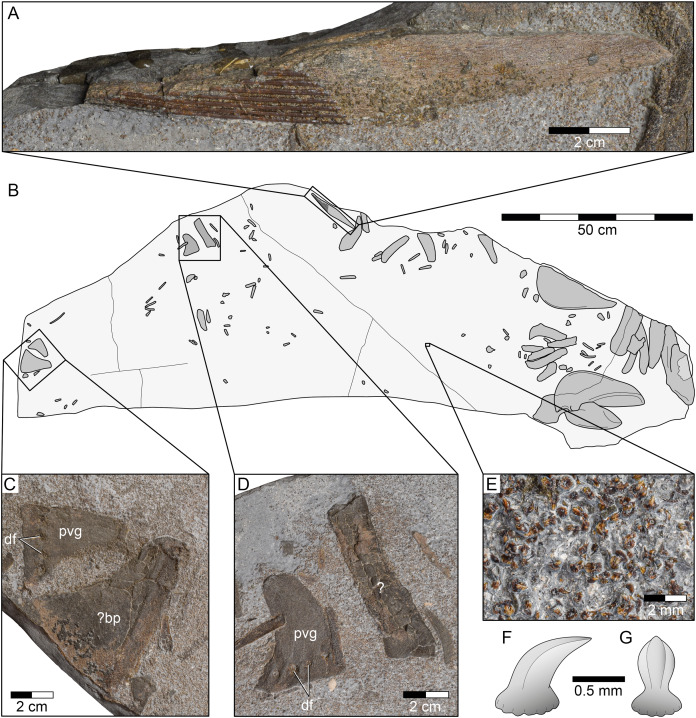
A partial skeleton of a hybodontiform shark-like chondrichthyan from the Upper Jurassic Kimmeridge Clay Formation of Dorset, England, is described and designated as a new genus and species, gen. et sp. nov. The holotype and only known specimen, which is represented by disarticulated splanchnocranial elements with associated teeth, a single dorsal fin spine, the pelvic girdle, as well as unidentifiable cartilage fragments, plus countless dermal denticles, exhibits a puzzling combination of dental and skeletal features, providing important new insights into the morphological and ecological diversity of hybodontiforms. gen. nov. displays a unique set of dental characters, showing close morphological resemblance to from the Middle Jurassic of England, which was erected for distinctive, strongly labio-lingually compressed multicuspid cutting teeth originally described as . Skeletally, gen. nov. resembles and in having a palatoquadrate with a palatobasal process and an ethmoidal articular surface, combined with the possession of dorsal fin spines ornamented with costae. Therefore, and given the absence of any conclusive phylogenetic framework, gen. et sp. nov. is here tentatively referred to Hybodontidae until more complete material becomes available in order to enable a more reliable suprageneric identification. The holotype of gen. et sp. nov. contains two separate pelvic half-girdles, a feature previously considered as evolutionarily primitive among hybodontiforms. However, unfused pelvic half-girdles also occur in the supposedly closely related species and may in fact have been more widely distributed among hybodontiforms than previously thought, thus rendering the phylogenetic utility of separated pelvic half-girdles for inferring hybodontiform interrelationships difficult and unresolved.
本文描述了一具来自英国多塞特郡上侏罗统基默里奇黏土地层的似弓鲛鲨形软骨鱼类的部分骨骼,并将其命名为一个新属新种。该正模标本也是唯一已知的标本,由分离的脏颅元素及相关牙齿、一根背鳍棘、骨盆带以及无法辨认的软骨碎片,再加上无数的皮齿组成,展现出令人费解的牙齿和骨骼特征组合,为弓鲛鲨形鱼类的形态和生态多样性提供了重要的新见解。新属显示出一组独特的牙齿特征,在形态上与来自英国中侏罗统的[属名]非常相似,[属名]是为具有独特的、强烈唇舌向压缩的多尖切割齿(最初被描述为[种名])而建立的。在骨骼方面,新属与[属名1]和[属名2]相似,具有带有腭基部突起和筛骨关节面的腭方骨,同时拥有带有肋条装饰的背鳍棘。因此,鉴于缺乏任何确凿的系统发育框架,在有更完整的材料以便进行更可靠的超属鉴定之前,新属新种在此暂被归入弓鲛鲨科。新属新种的正模标本包含两个分离的骨盆半带,这一特征以前被认为在弓鲛鲨形鱼类中是进化上原始的。然而,未融合的骨盆半带在据推测关系密切的物种[种名1]和[种名2]中也有出现,实际上可能在弓鲛鲨形鱼类中比以前认为的分布更广,从而使得分离的骨盆半带在推断弓鲛鲨形鱼类亲缘关系方面的系统发育效用变得困难且尚未解决。