Institute of Biotechnology, Helsinki Institute of Life Science University of Helsinki Helsinki 00790 Finland.
Faculty of Medicine and Health Technology Tampere University Tampere 33720 Finland.
Adv Sci (Weinh). 2021 Mar 8;8(10):2004588. doi: 10.1002/advs.202004588. eCollection 2021 May.
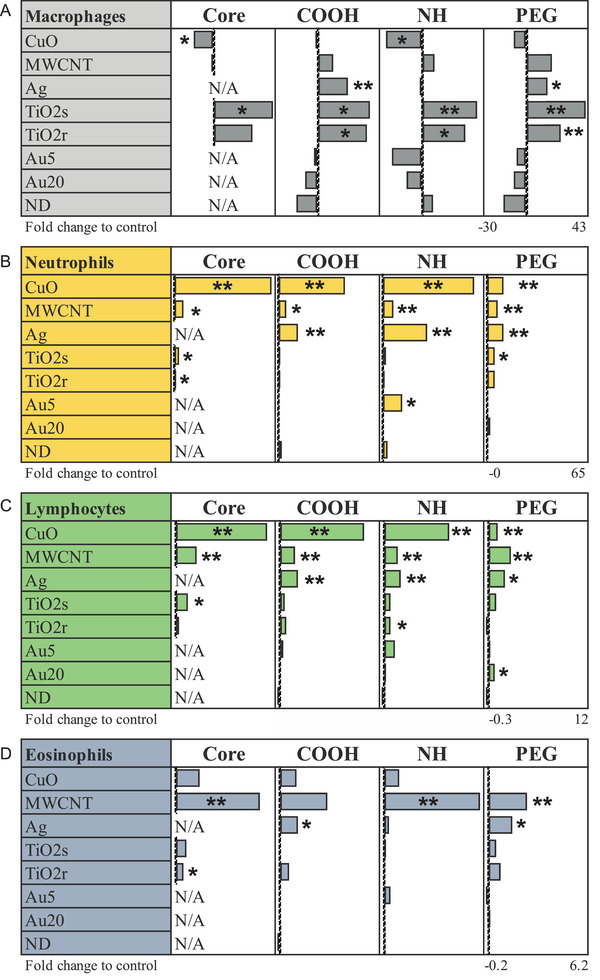
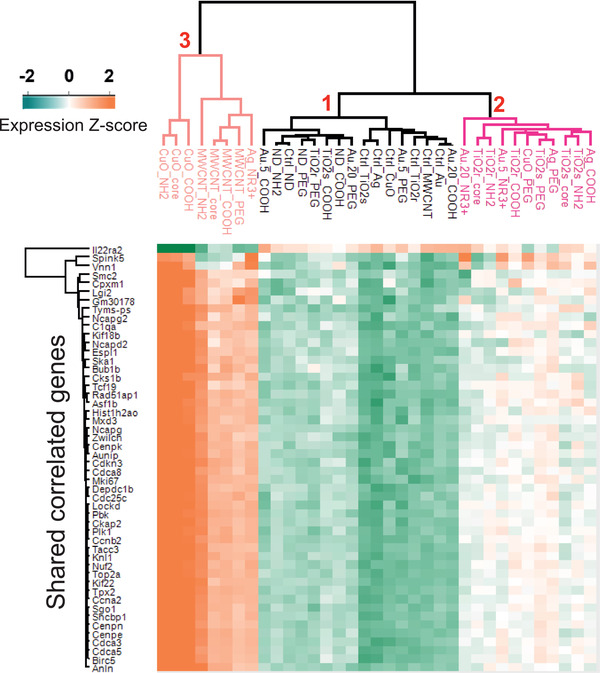
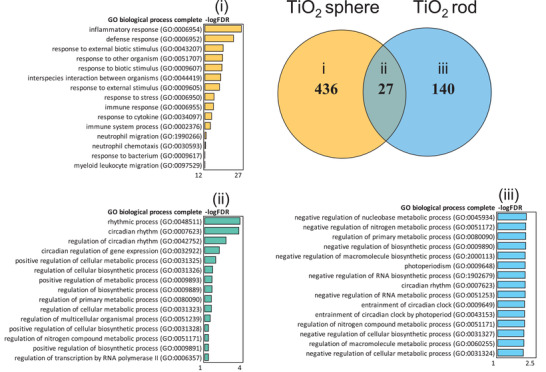
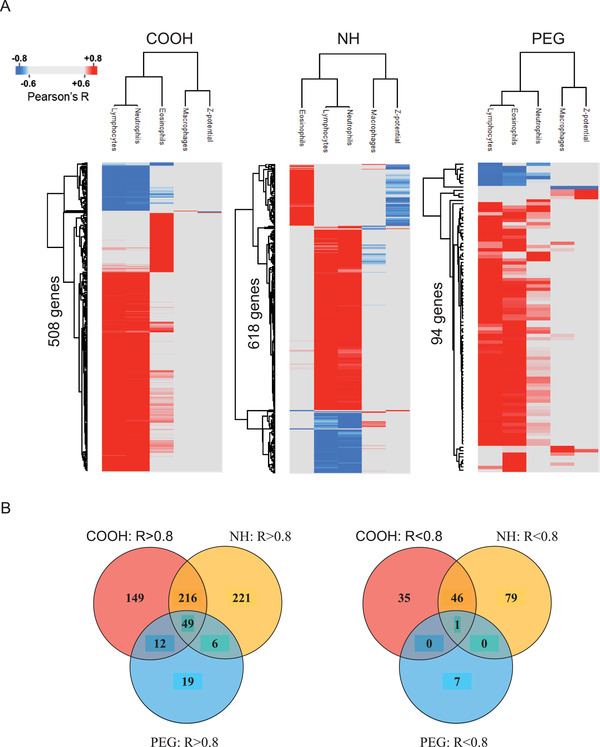
Toxicogenomics opens novel opportunities for hazard assessment by utilizing computational methods to map molecular events and biological processes. In this study, the transcriptomic and immunopathological changes associated with airway exposure to a total of 28 engineered nanomaterials (ENM) are investigated. The ENM are selected to have different core (Ag, Au, TiO, CuO, nanodiamond, and multiwalled carbon nanotubes) and surface chemistries (COOH, NH, or polyethylene glycosylation (PEG)). Additionally, ENM with variations in either size (Au) or shape (TiO) are included. Mice are exposed to 10 µg of ENM by oropharyngeal aspiration for 4 consecutive days, followed by extensive histological/cytological analyses and transcriptomic characterization of lung tissue. The results demonstrate that transcriptomic alterations are correlated with the inflammatory cell infiltrate in the lungs. Surface modification has varying effects on the airways with amination rendering the strongest inflammatory response, while PEGylation suppresses toxicity. However, toxicological responses are also dependent on ENM core chemistry. In addition to ENM-specific transcriptional changes, a subset of 50 shared differentially expressed genes is also highlighted that cluster these ENM according to their toxicity. This study provides the largest in vivo data set currently available and as such provides valuable information to be utilized in developing predictive models for ENM toxicity.
毒理基因组学通过利用计算方法来绘制分子事件和生物过程图,为危险评估开辟了新的机会。在这项研究中,研究了与气道暴露于总共 28 种工程纳米材料(ENM)相关的转录组和免疫病理学变化。选择这些 ENM 具有不同的核心(Ag、Au、TiO、CuO、纳米金刚石和多壁碳纳米管)和表面化学性质(COOH、NH 或聚乙二醇化(PEG))。此外,还包括在大小(Au)或形状(TiO)上存在变化的 ENM。通过口咽吸入将 10µg 的 ENM 连续 4 天暴露于小鼠,然后进行广泛的组织学/细胞学分析和肺组织的转录组特征分析。结果表明,转录组改变与肺部炎症细胞浸润相关。表面修饰对气道有不同的影响,氨基化产生最强的炎症反应,而 PEG 化则抑制毒性。然而,毒理学反应也取决于 ENM 核心化学。除了特定于 ENM 的转录变化外,还突出了一组 50 个共同差异表达的基因,这些基因根据其毒性对这些 ENM 进行聚类。本研究提供了目前可用的最大体内数据集,并提供了有价值的信息,可用于开发 ENM 毒性的预测模型。