Wojnarowicz Paulina M, Escolano Marta Garcia, Huang Yun-Han, Desai Bina, Chin Yvette, Shah Riddhi, Xu Sijia, Yadav Saurabh, Yaklichkin Sergey, Ouerfelli Ouathek, Soni Rajesh Kumar, Philip John, Montrose David C, Healey John H, Rajasekhar Vinagolu K, Garland William A, Ratiu Jeremy, Zhuang Yuan, Norton Larry, Rosen Neal, Hendrickson Ronald C, Zhou Xi Kathy, Iavarone Antonio, Massague Joan, Dannenberg Andrew J, Lasorella Anna, Benezra Robert
Cancer Biology and Genetics Program, Memorial Sloan Kettering Cancer Center, New York, NY, USA.
Weill Cornell/Sloan Kettering/Rockefeller Tri-Institutional MD-PhD Program, New York, NY, 10065, USA.
NPJ Breast Cancer. 2021 May 24;7(1):58. doi: 10.1038/s41523-021-00266-0.
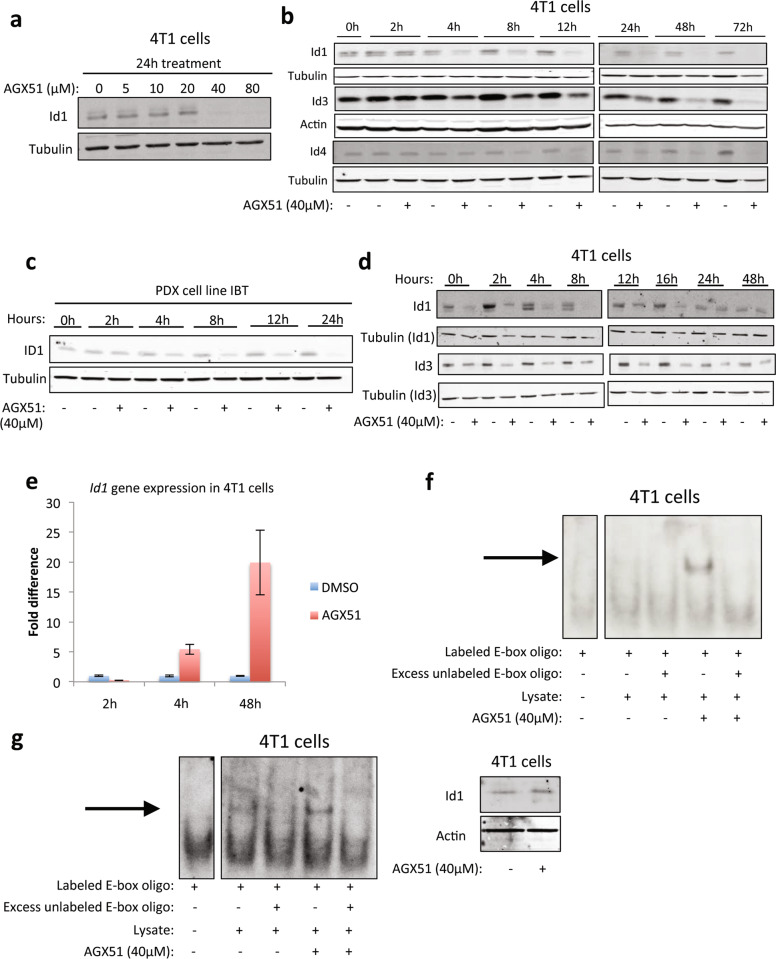
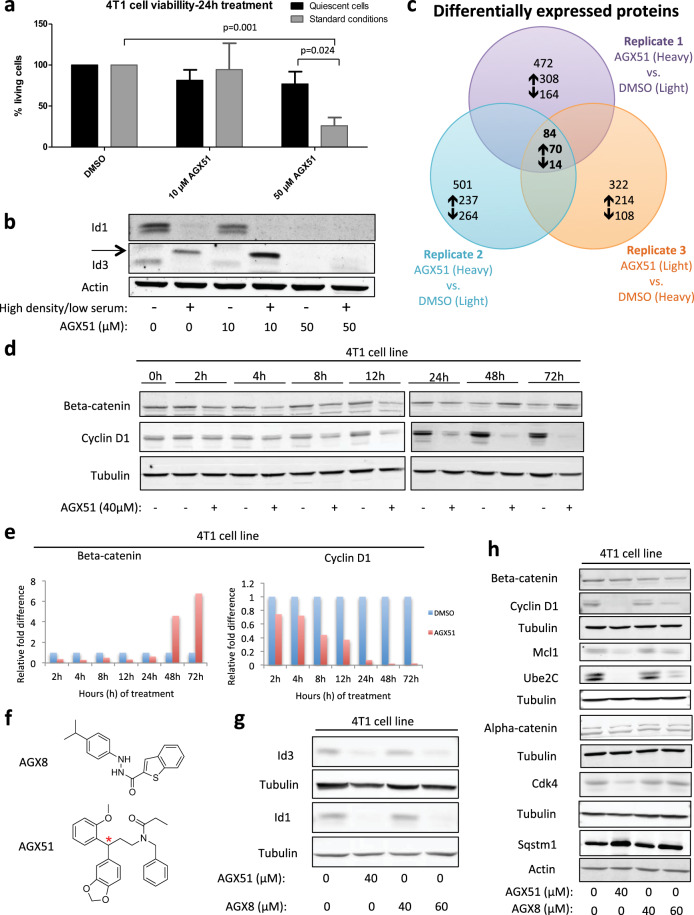
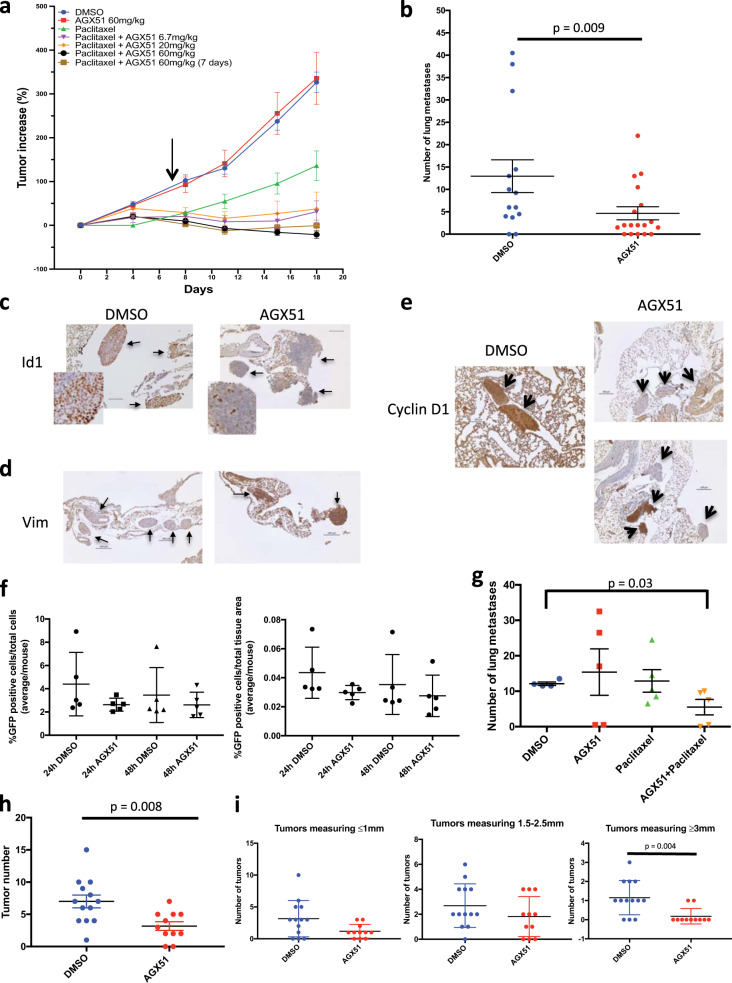
ID proteins are helix-loop-helix (HLH) transcriptional regulators frequently overexpressed in cancer. ID proteins inhibit basic-HLH transcription factors often blocking differentiation and sustaining proliferation. A small-molecule, AGX51, targets ID proteins for degradation and impairs ocular neovascularization in mouse models. Here we show that AGX51 treatment of cancer cell lines impairs cell growth and viability that results from an increase in reactive oxygen species (ROS) production upon ID degradation. In mouse models, AGX51 treatment suppresses breast cancer colonization in the lung, regresses the growth of paclitaxel-resistant breast tumors when combined with paclitaxel and reduces tumor burden in sporadic colorectal neoplasia. Furthermore, in cells and mice, we fail to observe acquired resistance to AGX51 likely the result of the inability to mutate the binding pocket without loss of ID function and efficient degradation of the ID proteins. Thus, AGX51 is a first-in-class compound that antagonizes ID proteins, shows strong anti-tumor effects and may be further developed for the management of multiple cancers.
ID蛋白是螺旋-环-螺旋(HLH)转录调节因子,在癌症中经常过度表达。ID蛋白抑制碱性HLH转录因子,常常阻碍分化并维持增殖。一种小分子AGX51靶向ID蛋白使其降解,并在小鼠模型中损害眼部血管生成。在此我们表明,用AGX51处理癌细胞系会损害细胞生长和活力,这是由于ID降解后活性氧(ROS)生成增加所致。在小鼠模型中,AGX51处理可抑制乳腺癌在肺部的定植,与紫杉醇联合使用时可使耐紫杉醇的乳腺肿瘤缩小,并减轻散发性结直肠肿瘤的肿瘤负担。此外,在细胞和小鼠中,我们未观察到对AGX51产生获得性耐药,这可能是因为无法在不丧失ID功能和ID蛋白有效降解的情况下使结合口袋发生突变。因此,AGX51是首个拮抗ID蛋白的化合物,具有强大的抗肿瘤作用,可能会进一步开发用于多种癌症的治疗。