Department of Biology, The Johns Hopkins University, Baltimore, MD, USA.
EMBO Rep. 2021 Jul 5;22(7):e51530. doi: 10.15252/embr.202051530. Epub 2021 May 25.
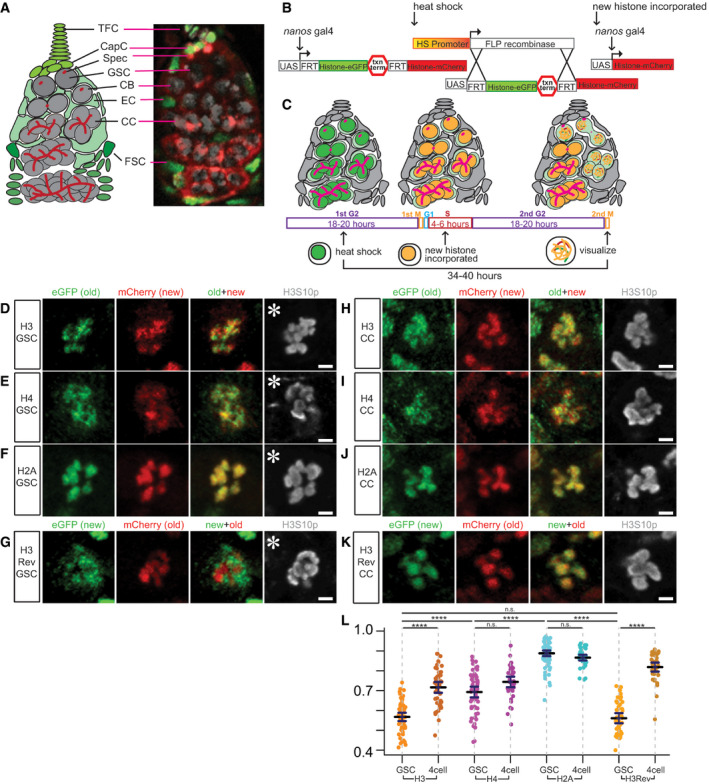
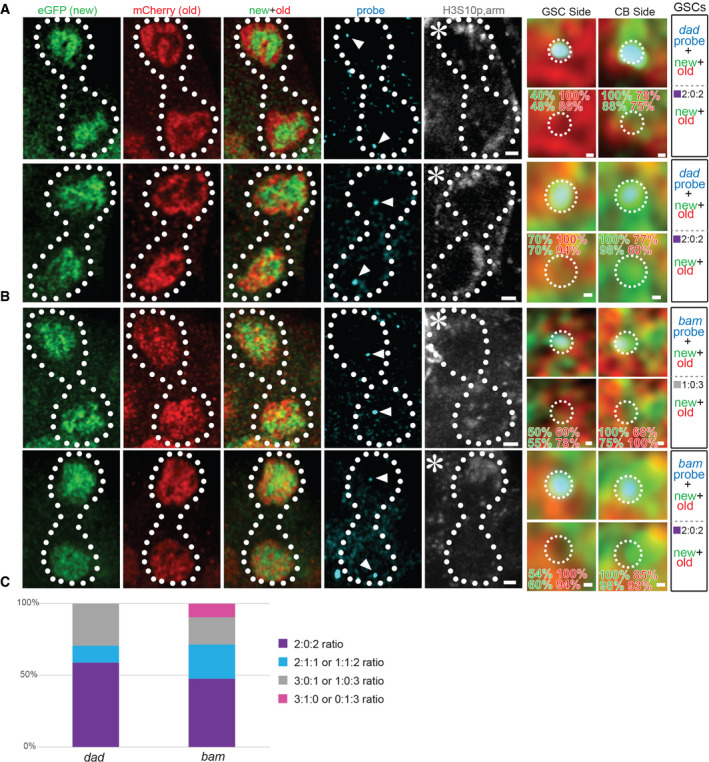
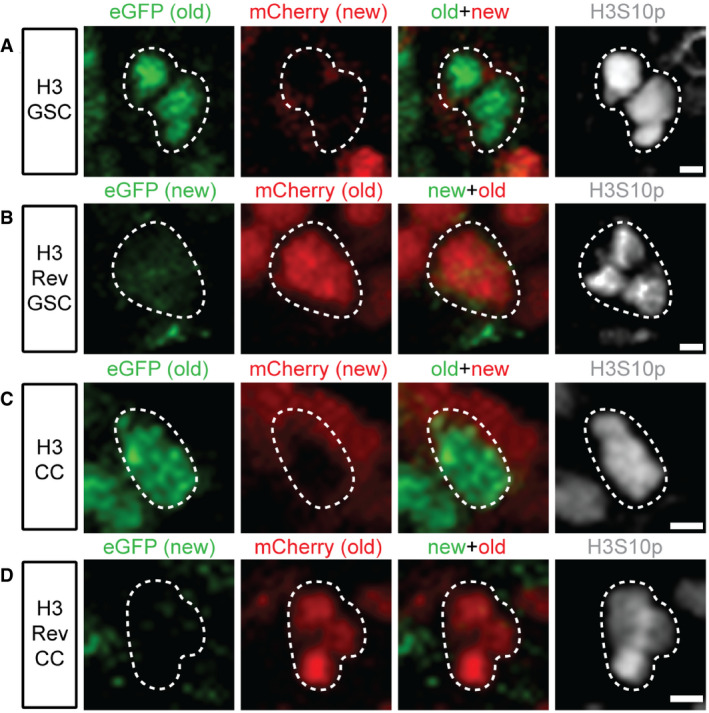
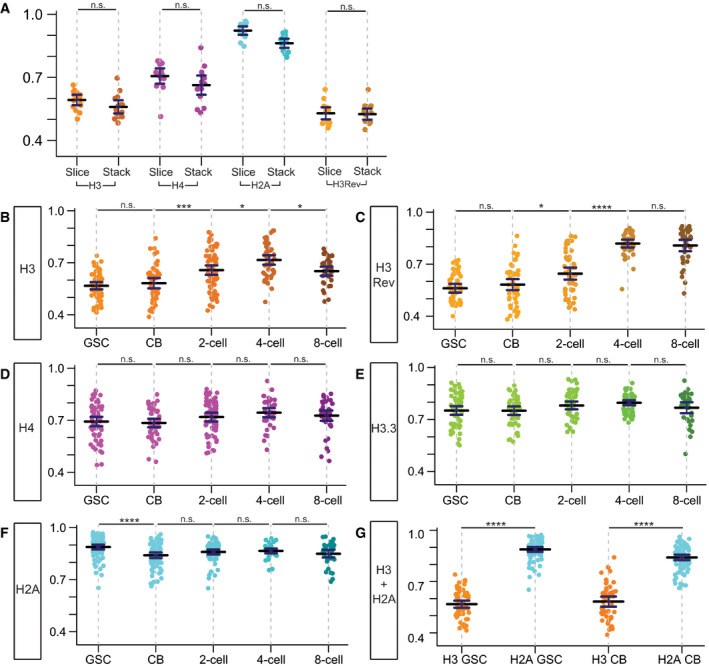
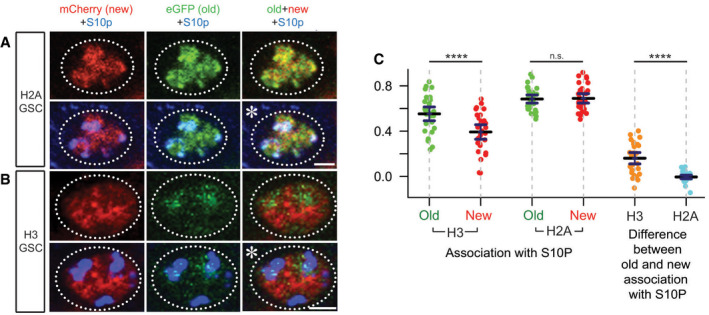
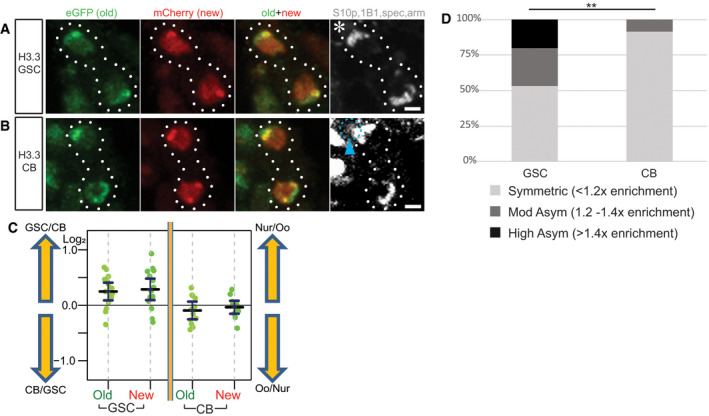
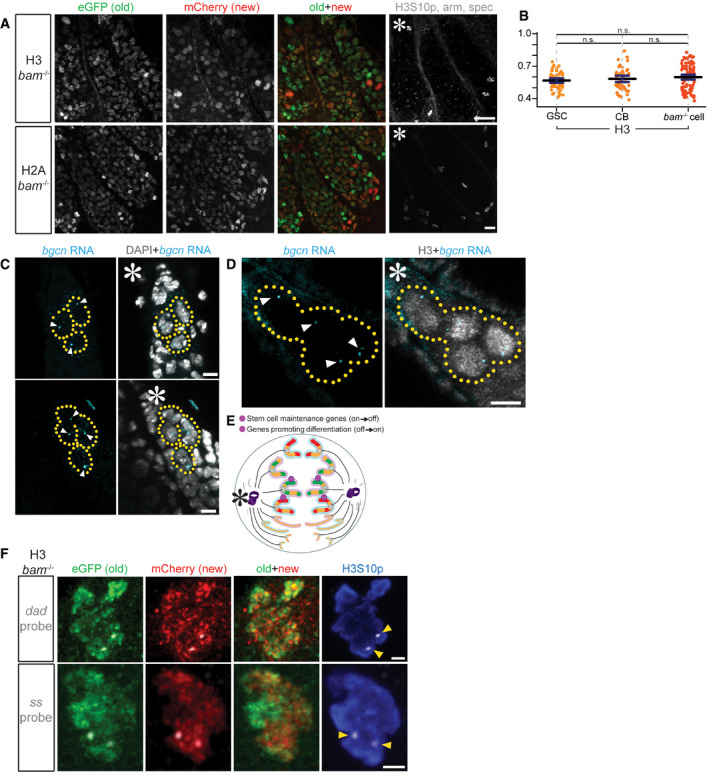
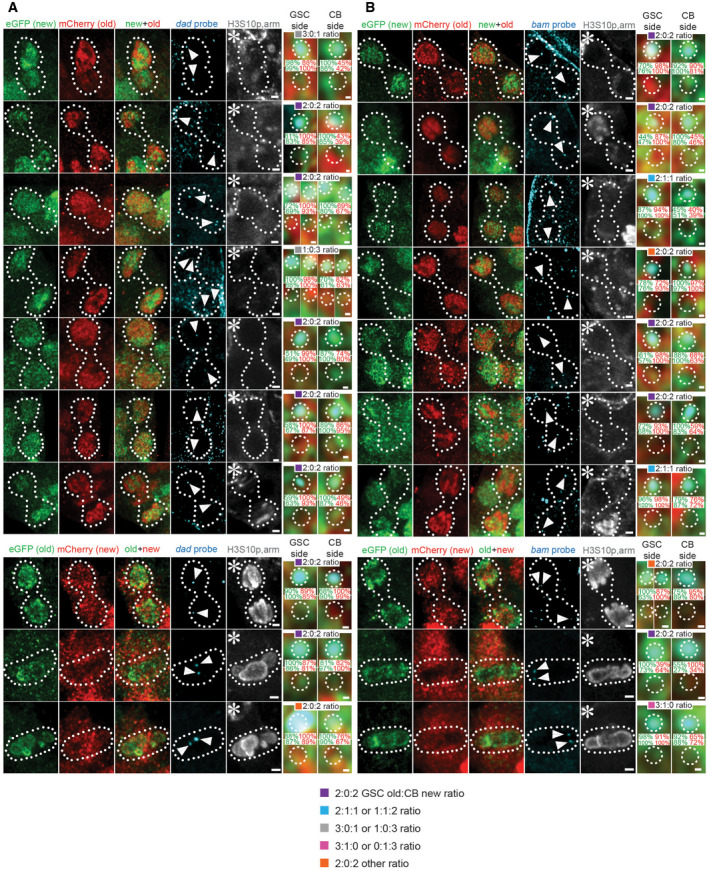
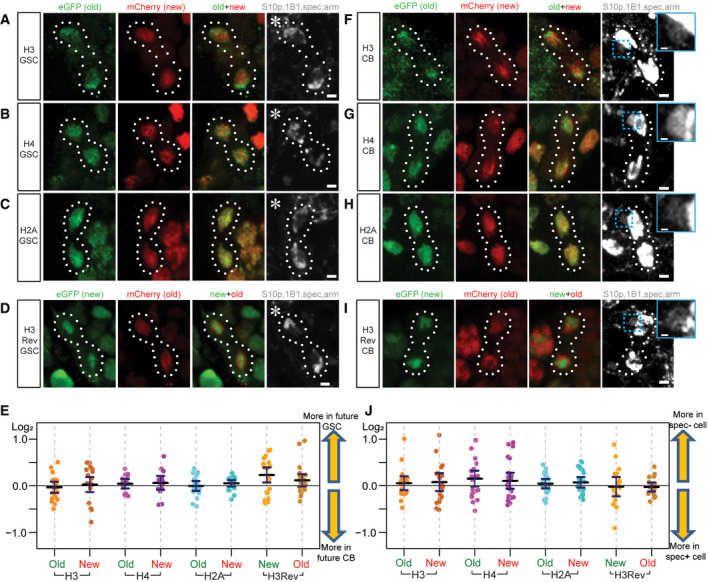
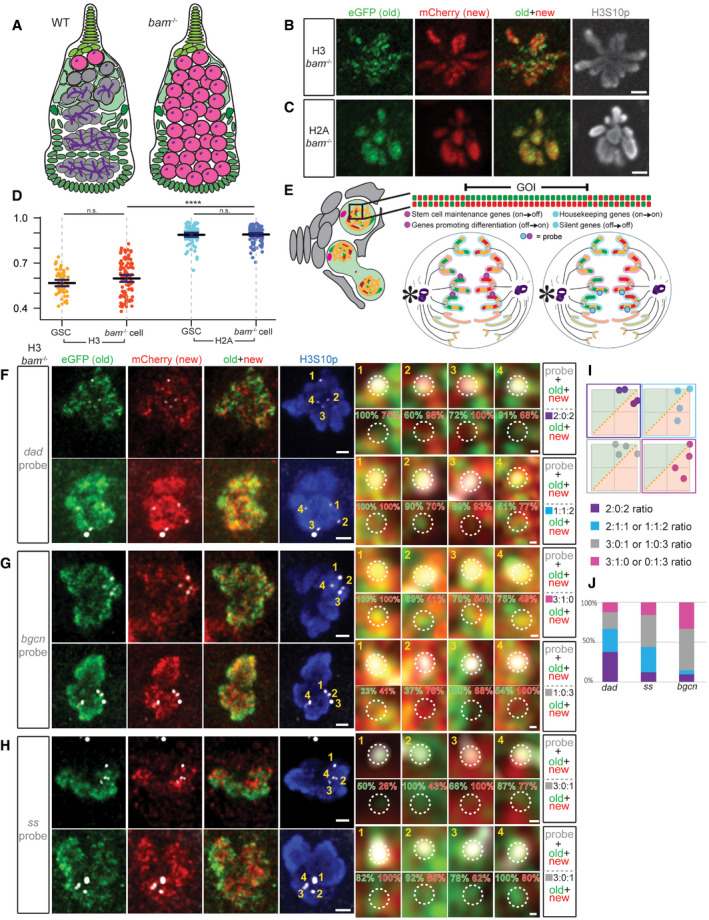
Stem cells have the unique ability to undergo asymmetric division which produces two daughter cells that are genetically identical, but commit to different cell fates. The loss of this balanced asymmetric outcome can lead to many diseases, including cancer and tissue dystrophy. Understanding this tightly regulated process is crucial in developing methods to treat these abnormalities. Here, we report that during a Drosophila female germline stem cell asymmetric division, the two daughter cells differentially inherit histones at key genes related to either maintaining the stem cell state or promoting differentiation, but not at constitutively active or silenced genes. We combine histone labeling with DNA Oligopaints to distinguish old versus new histones and visualize their inheritance patterns at a single-gene resolution in asymmetrically dividing cells in vivo. This strategy can be applied to other biological systems involving cell fate change during development or tissue homeostasis in multicellular organisms.
干细胞具有不对称分裂的独特能力,可产生两个遗传上相同但具有不同细胞命运的子细胞。这种平衡的不对称结果的丧失可能导致许多疾病,包括癌症和组织营养不良。了解这个受严格调控的过程对于开发治疗这些异常的方法至关重要。在这里,我们报告在果蝇雌性生殖干细胞不对称分裂过程中,两个子细胞在与维持干细胞状态或促进分化相关的关键基因上差异地继承组蛋白,但在组成性激活或沉默的基因上则没有。我们将组蛋白标记与 DNA 寡核苷酸探针结合使用,以区分旧的和新的组蛋白,并在体内不对称分裂细胞中以单基因分辨率可视化它们的遗传模式。这种策略可应用于其他涉及发育过程中细胞命运变化或多细胞生物组织稳态的生物系统。