Department of Public Health Nursing, Faculty of Public Health, Mahidol University.
Department of Biostatistics, Faculty of Public Health, Mahidol University, Bangkok, Thailand.
Inquiry. 2021 Jan-Dec;58:469580211018285. doi: 10.1177/00469580211018285.
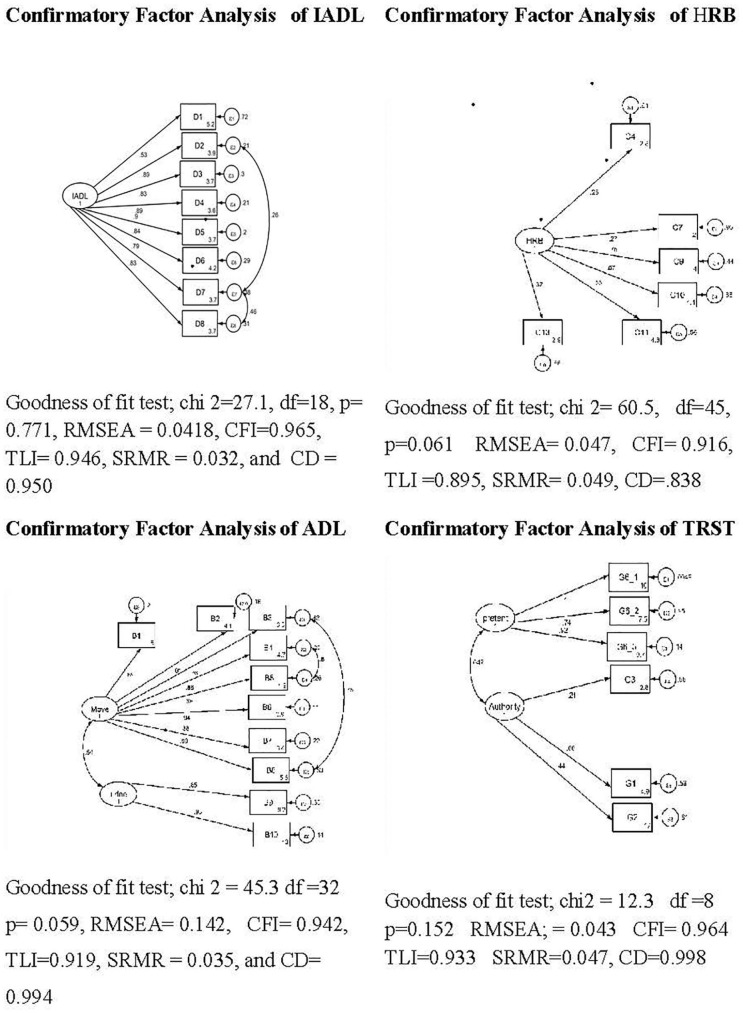
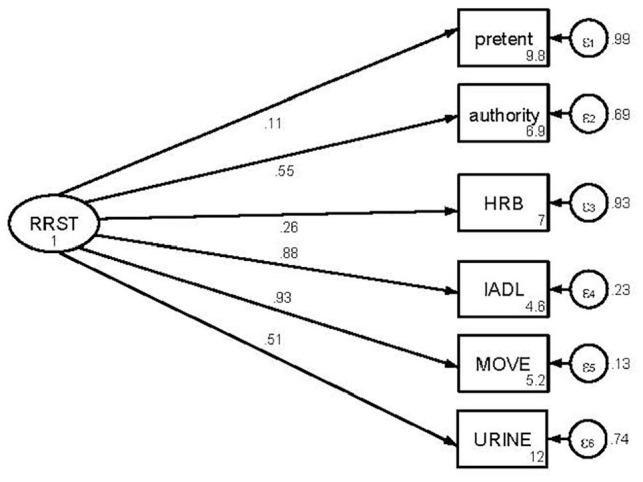
Hospital readmission of stroke elderly remains a need for detecting preventable risks. This study aims to develop a Readmission Stroke Screening Tool or RRST. The mixed research design was employed, phase1; systematic reviews from 193 articles extracting to be 14 articles, 9 experts' consensus, and try out the RRST Internal consistency; IOC = .93, ICC = between .93 and .56, phase 2; Data collecting 150 of strokes patients in the stroke units during 2019 to 2020; 30 nurses employed the RRST to screen stroke elderly before discharge. Statistical analysis, Exploring Principal Factor Analysis to test the best predictor factor, and Confirmatory Factor Analysis to test the model identity were employed. The multi-domain RRST; 4 factors: Intra, inter, and external factors of patients can predict the hospital readmission of Stroke elderly at a high level in 28 days. The ADL: Activities in the Daily life domain was the highest level of predicting (Eigen Value = 6.76, 1.15, Variances = 79.19%) significantly. 53.3% of user nurses reflected; the RRST tool's effectiveness was achievable in usefulness, benefit, accuracy, and easy to use; however, the rest users identified to improve the RRST easier and quicker. ; The new RRST; can predict the high-risk readmission effectively = 92.5%. User nurses satisfied the RRST predicted quality. the multi-domain RRST could be detecting the Thai Stroke's high-risk group for reducing avoidable risks, suggestion; more effort will be investigated prospectively in readmission by expanded volume of the Asian' Stroke elderly for increasing accuracy predicting and extended tool quality utilized standard scored correctly.
卒中老年人的住院再入院仍然是检测可预防风险的需要。本研究旨在开发再入院卒中筛查工具(RRST)。采用混合研究设计,第 1 阶段:系统评价从 193 篇文章中提取 14 篇文章,9 位专家共识,并尝试 RRST 的内部一致性;IOC=0.93,ICC=0.93 至 0.56 之间,第 2 阶段:2019 年至 2020 年在卒中单元收集 150 例卒中患者的数据;30 名护士在出院前使用 RRST 筛查卒中老年人。采用探索性主成分分析检验最佳预测因子,验证性因子分析检验模型身份的统计分析。多域 RRST;4 个因素:患者的内在、外在和外在因素可以高水平预测卒中老年人 28 天内的住院再入院。ADL:日常生活活动领域的预测水平最高(特征值=6.76,1.15,方差=79.19%)。53.3%的用户护士反映;RRST 工具在实用性、效益、准确性和易用性方面具有较高的有效性;然而,其余用户认为可以提高 RRST 的易用性和速度。新的 RRST;可以有效地预测高风险再入院率=92.5%。用户护士对 RRST 的预测质量感到满意。多域 RRST 可以检测泰国卒中高危人群,以降低可避免的风险,建议;将进一步努力通过扩大亚洲卒中老年人的数量进行前瞻性研究,以提高预测准确性并扩大工具质量利用标准正确评分。