Department of Basic and Translational Sciences, School of Dental Medicine, University of Pennsylvania, Philadelphia, Pennsylvania, USA.
Department of Orthopedics, Shanghai General Hospital, Shanghai Jiao Tong University School of Medicine, Shanghai, People's Republic of China.
Stem Cells Transl Med. 2021 Oct;10(10):1419-1432. doi: 10.1002/sctm.20-0424. Epub 2021 May 25.
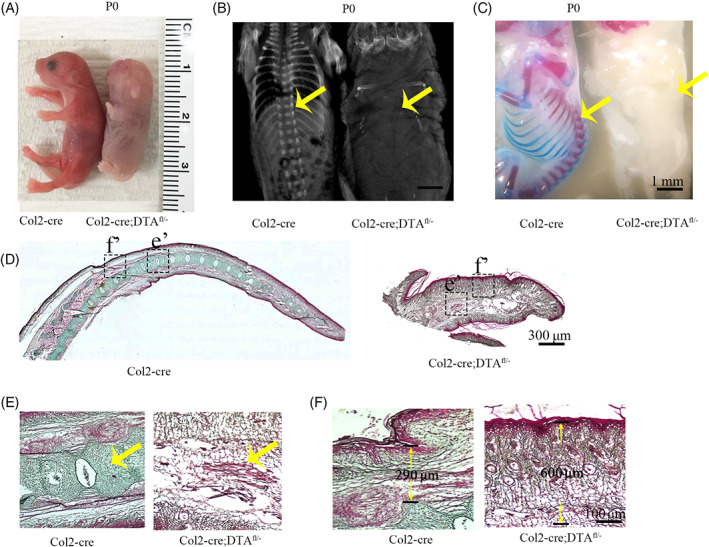
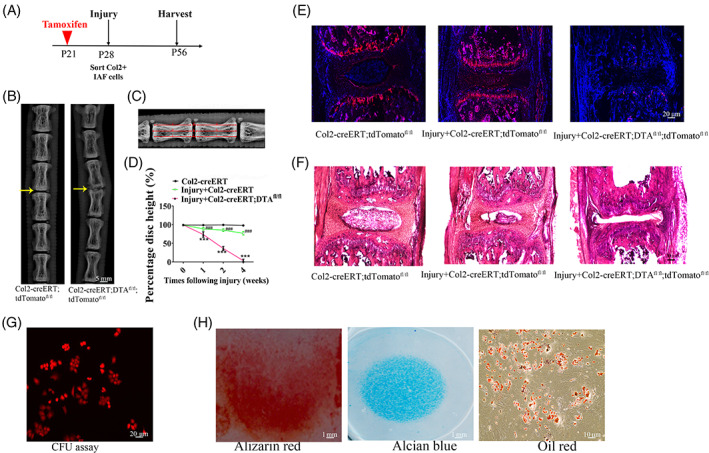
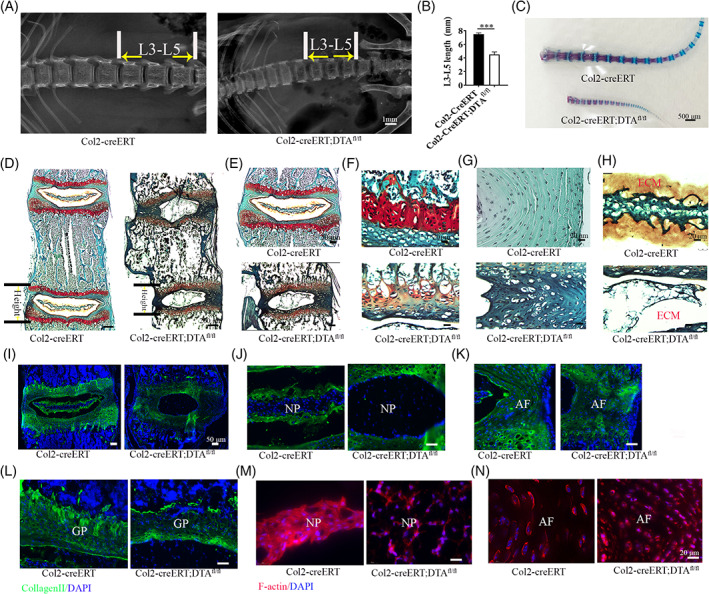
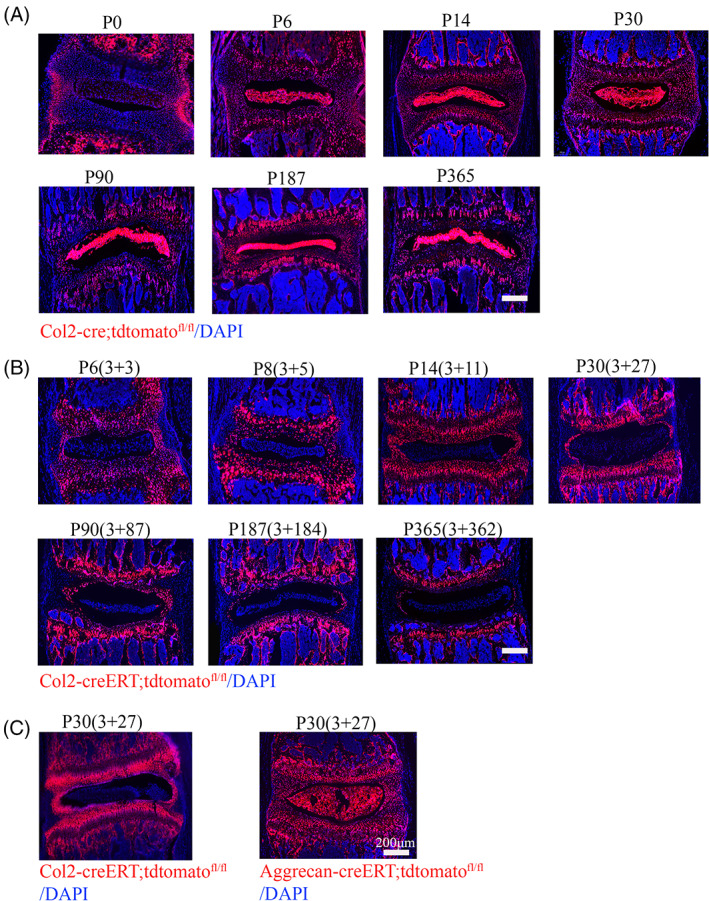
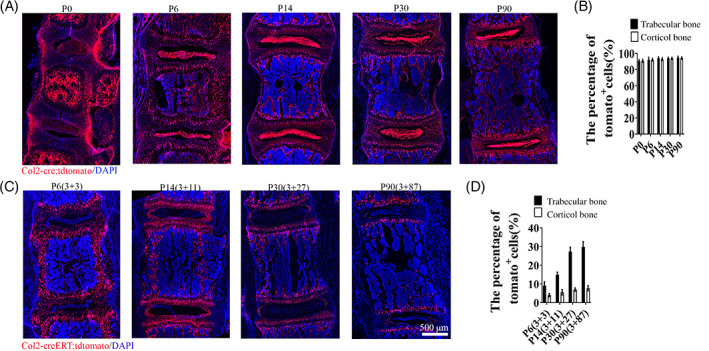
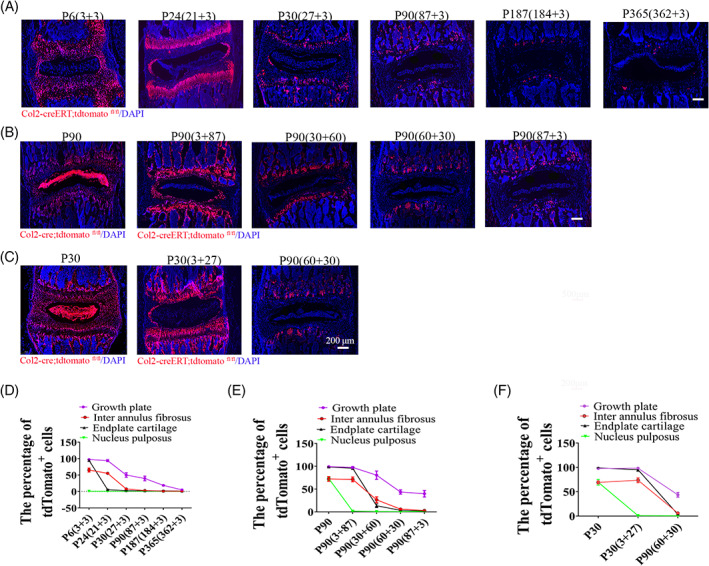
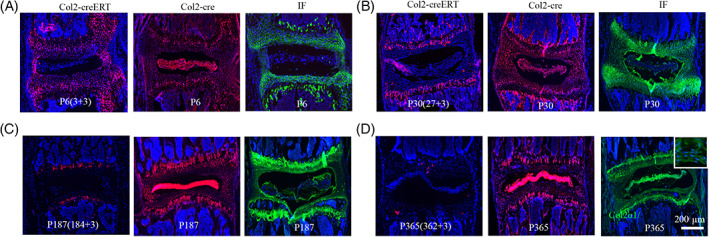
Basic mechanism of spine development is poorly understood. Type II collagen positive (Col2+) cells have been reported to encompass early mesenchymal progenitors that continue to become chondrocytes, osteoblasts, stromal cells, and adipocytes in long bone. However, the function of Col2+ cells in spine and intervertebral disc (IVD) development is largely unknown. To further elucidate the function of Col2+ progenitors in spine, we generated the mice with ablation of Col2+ cells either at embryonic or at postnatal stage. Embryonic ablation of Col2+ progenitors caused the mouse die at newborn with the absence of all spine and IVD. Moreover, postnatal deletion Col2+ cells in spine resulted in a shorter growth plate and endplate cartilage, defected inner annulus fibrosus, a less compact and markedly decreased gel-like matrix in the nucleus pulposus and disorganized cell alignment in each compartment of IVD. Genetic lineage tracing IVD cell populations by using inducible Col2-creERT;tdTomato reporter mice and non-inducible Col2-cre;tdTomato reporter mice revealed that the numbers and differentiation ability of Col2+ progenitors decreased with age. Moreover, immunofluorescence staining showed type II collagen expression changed from extracellular matrix to cytoplasm in nucleus pulposus between 6 month and 1-year-old mice. Finally, fate-mapping studies revealed that Col2+ progenitors are essential for IVD repair in IVD injured model. In summary, embryonic Col2+ cells are the major source of spine development and Col2+ progenitors are the important contributors for IVD repair and regeneration.
脊柱发育的基本机制尚不清楚。已有报道称,II 型胶原蛋白阳性(Col2+)细胞包含早期间充质祖细胞,这些祖细胞继续分化为长骨中的软骨细胞、成骨细胞、基质细胞和成脂细胞。然而,Col2+细胞在脊柱和椎间盘(IVD)发育中的功能在很大程度上尚不清楚。为了进一步阐明 Col2+祖细胞在脊柱中的功能,我们生成了胚胎期或出生后阶段 Col2+细胞缺失的小鼠。胚胎期 Col2+祖细胞的缺失导致新生小鼠死亡,脊柱和 IVD 完全缺失。此外,脊柱出生后 Col2+细胞的缺失导致生长板和终板软骨变短,内环纤维层缺陷,髓核中凝胶样基质不致密且明显减少,IVD 的各个隔室中的细胞排列紊乱。通过使用诱导型 Col2-creERT;tdTomato 报告小鼠和非诱导型 Col2-cre;tdTomato 报告小鼠对 IVD 细胞群体进行遗传谱系追踪,发现 Col2+祖细胞的数量和分化能力随年龄增长而下降。此外,免疫荧光染色显示,在 6 月龄至 1 岁的小鼠中,II 型胶原蛋白的表达从细胞外基质转移到核髓质的细胞质中。最后,命运图谱研究表明,Col2+祖细胞对于 IVD 损伤模型中的 IVD 修复是必不可少的。总之,胚胎期 Col2+细胞是脊柱发育的主要来源,Col2+祖细胞是 IVD 修复和再生的重要贡献者。