Li Yang, Yang Shu-Ting, Yang Shuying
Department of Basic & Translational Sciences, School of Dental Medicine, University of Pennsylvania, Philadelphia, PA, 19104, USA.
The Penn Center for Musculoskeletal Disorders, School of Medicine, University of Pennsylvania, Philadelphia, PA, 19104, USA.
Cell Death Discov. 2022 Jul 12;8(1):317. doi: 10.1038/s41420-022-01105-2.
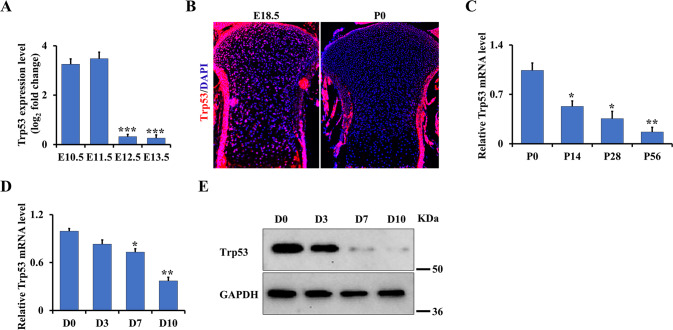
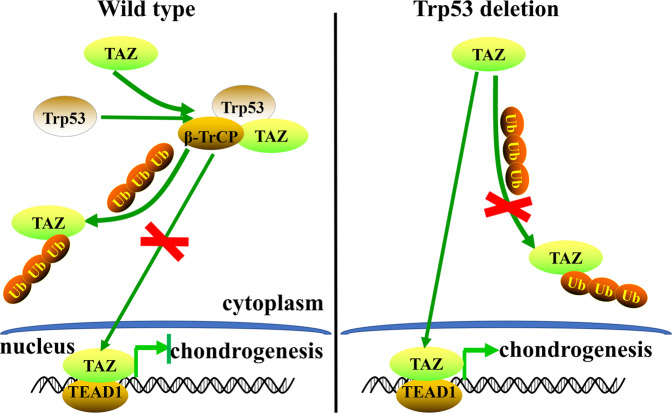
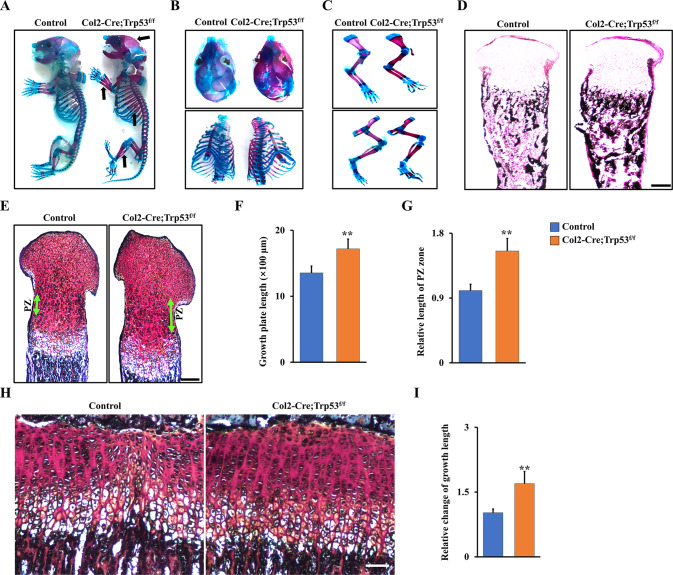
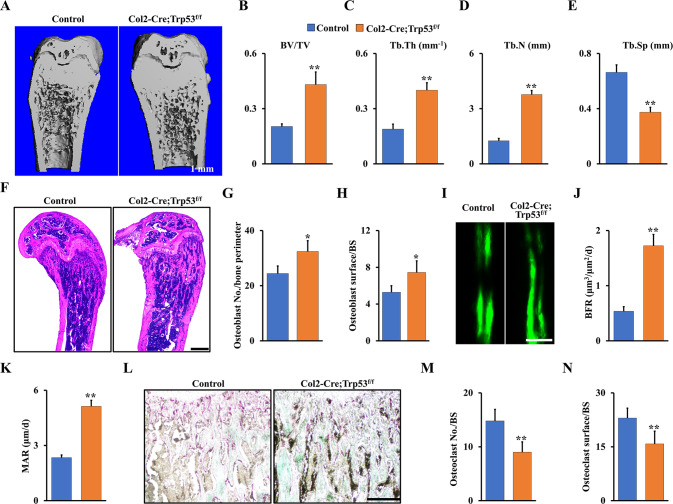
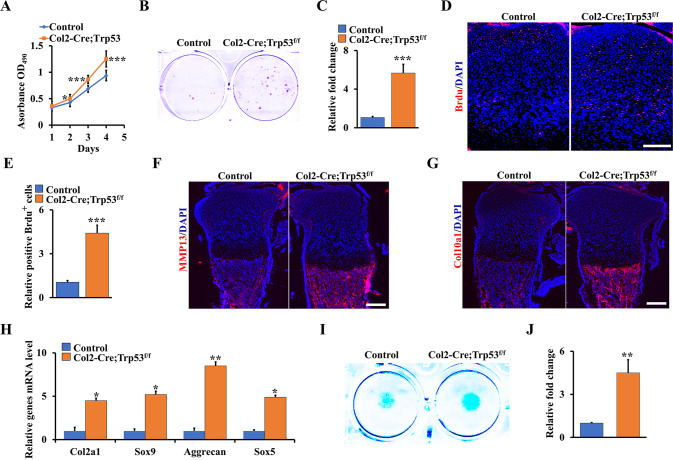
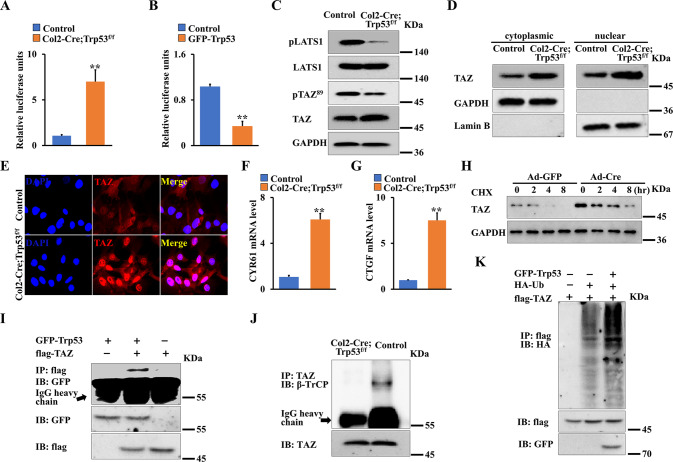
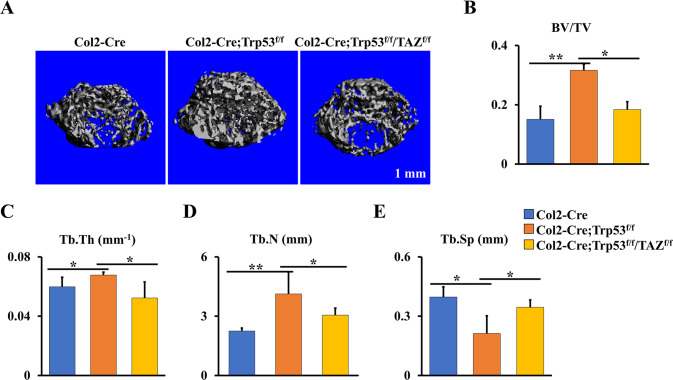
Transformation-related protein 53 (Trp53) is a critical regulator of cell fate determination by controlling cell proliferation and differentiation. Ablation of Trp53 signaling in osteoblast lineages significantly promotes osteogenesis, bone formation, and bone remodeling. However, how Trp53 regulates chondrogenesis and endochondral bone formation is undefined. In this study, we found that Trp53 expression gradually decreased in tibia growth plates during embryonic development in vivo and during chondrogenesis in vitro. By deleting Trp53 in chondrocyte lineage using Col2-Cre transgenic line, we found that loss of Trp53 in chondrocytes significantly increased growth plate growth and bone formation by increasing chondrocyte proliferation, matrix production and maturation, and bone dynamic formation rate. Mechanistically, our data revealed loss of Trp53 significantly promoted TAZ transcriptional activity through inhibition of TAZ phosphorylation and nuclear translocation, whereas its activity was pronouncedly inhibited after forced expression of Trp53. Furthermore, Co-IP data demonstrated that Trp53 associated with TAZ. Moreover, Trp53 decreased the stability of TAZ protein and promoted its degradation through β-TrCP-mediated ubiquitination. Ablation of TAZ in Col2-Cre;Trp53 mice rescued the phenotypes of enhanced chondrogenesis and bone formation caused by Trp53 deletion. Collectively, this study revealed that Trp53 modulates chondrogenesis and endochondral ossification through negative regulation of TAZ activity and stability, suggesting that targeting Trp53 signaling may be a potential strategy for fracture healing, heterotopic ossification, arthritis, and other bone diseases.
转化相关蛋白53(Trp53)是通过控制细胞增殖和分化来决定细胞命运的关键调节因子。成骨细胞谱系中Trp53信号的缺失显著促进骨生成、骨形成和骨重塑。然而,Trp53如何调节软骨生成和软骨内骨形成尚不清楚。在本研究中,我们发现Trp53的表达在体内胚胎发育期间和体外软骨生成过程中,在胫骨生长板中逐渐降低。通过使用Col2-Cre转基因系在软骨细胞谱系中删除Trp53,我们发现软骨细胞中Trp53的缺失通过增加软骨细胞增殖、基质产生和成熟以及骨动态形成率,显著增加了生长板生长和骨形成。机制上,我们的数据显示Trp53的缺失通过抑制TAZ磷酸化和核转位显著促进TAZ转录活性,而在强制表达Trp53后其活性受到明显抑制。此外,免疫共沉淀数据表明Trp53与TAZ相互作用。而且,Trp53降低了TAZ蛋白的稳定性,并通过β-TrCP介导的泛素化促进其降解。在Col2-Cre;Trp53小鼠中删除TAZ挽救了由Trp53缺失引起的软骨生成和骨形成增强的表型。总的来说,本研究揭示Trp53通过对TAZ活性和稳定性的负调节来调控软骨生成和软骨内骨化,表明靶向Trp53信号可能是骨折愈合、异位骨化、关节炎和其他骨疾病的潜在策略。