Archambault Anne-Sophie, Zaid Younes, Rakotoarivelo Volatiana, Turcotte Caroline, Doré Étienne, Dubuc Isabelle, Martin Cyril, Flamand Olivier, Amar Youssef, Cheikh Amine, Fares Hakima, El Hassani Amine, Tijani Youssef, Côté Andréanne, Laviolette Michel, Boilard Éric, Flamand Louis, Flamand Nicolas
Centre de Recherche de l'Institut universitaire de cardiologie et de pneumologie de Québec, Faculté de médecine, Département de médecine, Université Laval, Québec, QC, Canada.
Canada Excellence Research Chair in the Microbiome-Endocannabinoidome Axis in Metabolic Health, Université Laval, Québec, QC, Canada.
FASEB J. 2021 Jun;35(6):e21666. doi: 10.1096/fj.202100540R.
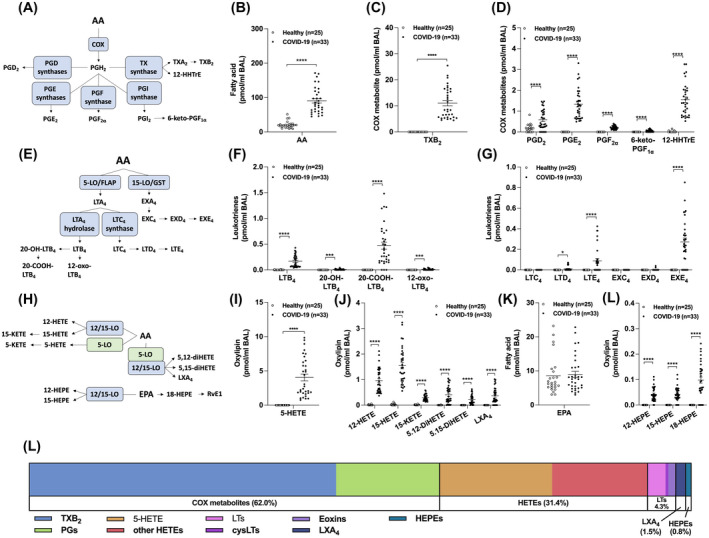
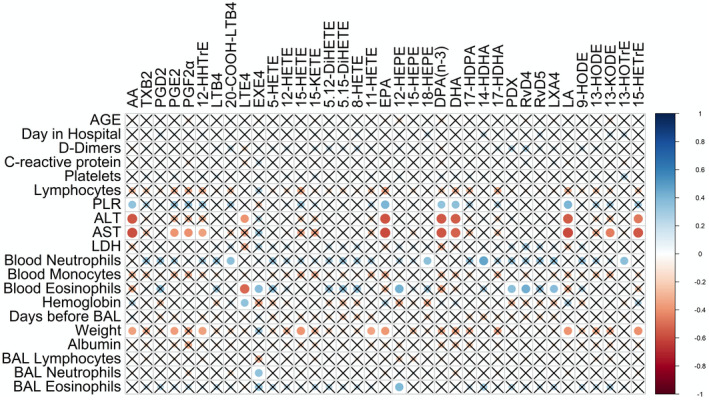
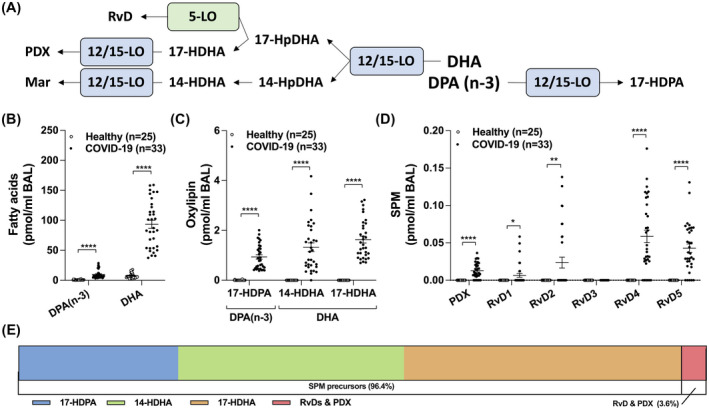
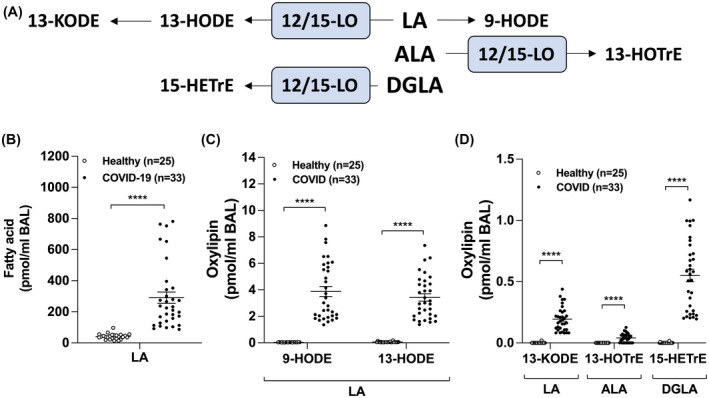
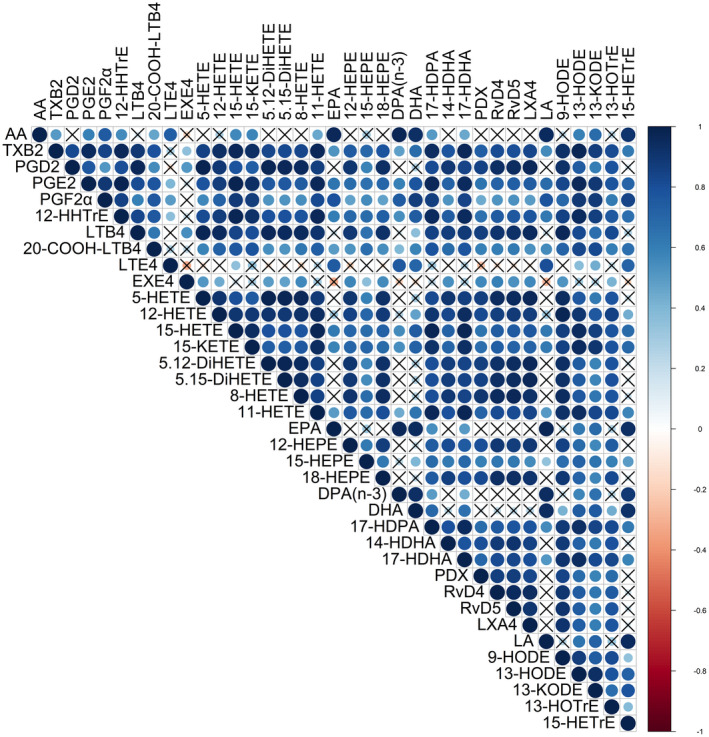
Severe acute respiratory syndrome coronavirus 2 is responsible for coronavirus disease 2019 (COVID-19). While COVID-19 is often benign, a subset of patients develops severe multilobar pneumonia that can progress to an acute respiratory distress syndrome. There is no cure for severe COVID-19 and few treatments significantly improved clinical outcome. Dexamethasone and possibly aspirin, which directly/indirectly target the biosynthesis/effects of numerous lipid mediators are among those options. Our objective was to define if severe COVID-19 patients were characterized by increased bioactive lipids modulating lung inflammation. A targeted lipidomic analysis of bronchoalveolar lavages (BALs) by tandem mass spectrometry was done on 25 healthy controls and 33 COVID-19 patients requiring mechanical ventilation. BALs from severe COVID-19 patients were characterized by increased fatty acids and inflammatory lipid mediators. There was a predominance of thromboxane and prostaglandins. Leukotrienes were also increased, notably LTB , LTE , and eoxin E . Monohydroxylated 15-lipoxygenase metabolites derived from linoleate, arachidonate, eicosapentaenoate, and docosahexaenoate were also increased. Finally yet importantly, specialized pro-resolving mediators, notably lipoxin A and the D-series resolvins, were also increased, underscoring that the lipid mediator storm occurring in severe COVID-19 involves pro- and anti-inflammatory lipids. Our data unmask the lipid mediator storm occurring in the lungs of patients afflicted with severe COVID-19. We discuss which clinically available drugs could be helpful at modulating the lipidome we observed in the hope of minimizing the deleterious effects of pro-inflammatory lipids and enhancing the effects of anti-inflammatory and/or pro-resolving lipid mediators.
严重急性呼吸综合征冠状病毒2是2019冠状病毒病(COVID-19)的病原体。虽然COVID-19通常症状较轻,但一部分患者会发展为严重的多叶性肺炎,并可能进展为急性呼吸窘迫综合征。目前尚无治疗重症COVID-19的方法,很少有治疗方法能显著改善临床结局。地塞米松以及可能的阿司匹林是其中的选择,它们直接/间接靶向多种脂质介质的生物合成/作用。我们的目的是确定重症COVID-19患者是否具有调节肺部炎症的生物活性脂质增加的特征。通过串联质谱对25名健康对照者和33名需要机械通气的COVID-19患者的支气管肺泡灌洗(BAL)样本进行了靶向脂质组学分析。重症COVID-19患者的BAL样本中脂肪酸和炎性脂质介质增加。血栓烷和前列腺素占主导地位。白三烯也增加,尤其是LTB、LTE和嗜酸性粒细胞趋化因子E。源自亚油酸、花生四烯酸、二十碳五烯酸和二十二碳六烯酸的单羟基化15-脂氧合酶代谢产物也增加。最后但同样重要的是,专门的促解决介质,尤其是脂氧素A和D系列消退素也增加,这突出表明重症COVID-19中发生的脂质介质风暴涉及促炎和抗炎脂质。我们的数据揭示了重症COVID-19患者肺部发生的脂质介质风暴。我们讨论了哪些临床可用药物可能有助于调节我们观察到的脂质组,以期将促炎脂质地有害作用降至最低,并增强抗炎和/或促解决脂质介质的作用。