Division for Health Services, Norwegian Institute of Public Health, Oslo, Norway.
Epistemonikos Foundation, Santiago, Chile.
BMC Med Inform Decis Mak. 2021 May 25;21(1):169. doi: 10.1186/s12911-021-01532-8.
Evidence to Decision (EtD) frameworks bring clarity, structure and transparency to health care decision making. The interactive Evidence to Decision (iEtD) tool, developed in the context of the DECIDE project and published by Epistemonikos, is a stand-alone online solution for producing and using EtD frameworks. Since its development, little is known about how organizations have been using the iEtD tool and what characterizes users' experiences with it. This missing information is necessary for any teams planning future developments of the iEtD tool.
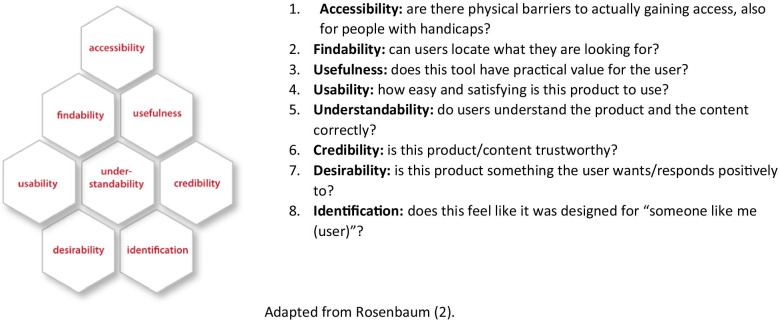
This study aimed to describe users' experiences with the iEtD and identify main barriers and facilitators related to use. We contacted all users registered in the iEtD via email and invited people who identified themselves as having used the solution to a semi-structured interview. Audio recordings were transcribed, and one researcher conducted a directed content analysis of the interviews guided by a user experience framework. Two researchers checked the content independently for accuracy.
Out of 860 people contacted, 81 people replied to our introductory email (response rate 9.4%). Twenty of these had used the tool in a real scenario and were invited to an interview. We interviewed all eight users that accepted this invitation (from six countries, four continents). 'Guideline development' was the iEtD use scenario they most commonly identified. Most participants reported an overall positive experience, without major difficulties navigating or using the different sections. They reported having used most of the EtD framework criteria. Participants reported tailoring their frameworks, for instance by adding or deleting criteria, translating to another language, or rewording headings. Several people preferred to produce a Word version rather than working online, due to the burden of completing the framework, or lack of experience with the tool. Some reported difficulties working with the exportable formats, as they needed considerable editing.
A very limited number of guideline developers have used the iEtD tool published by Epistemonikos since its development. Although users' general experiences are positive, our work has identified some aspects of the tool that need improvement. Our findings could be also applied to development or improvement of other solutions for producing or using EtD frameworks.
证据决策(EtD)框架为医疗保健决策带来了清晰性、结构性和透明度。互动证据决策(iEtD)工具是在 DECIDE 项目背景下开发的,并由 Epistemonikos 发布,是一个独立的在线解决方案,用于制作和使用 EtD 框架。自开发以来,人们对组织如何使用 iEtD 工具以及用户的使用体验特点知之甚少。这些缺失的信息对于任何计划未来开发 iEtD 工具的团队都是必要的。
本研究旨在描述用户使用 iEtD 的体验,并确定与使用相关的主要障碍和促进因素。我们通过电子邮件联系了 iEtD 中注册的所有用户,并邀请自认为使用过该解决方案的人参加半结构化访谈。音频记录被转录,一位研究人员在用户体验框架的指导下对访谈进行了定向内容分析。两位研究人员独立检查内容的准确性。
在联系的 860 人中,有 81 人回复了我们的介绍性电子邮件(回复率 9.4%)。其中 20 人在实际场景中使用过该工具,并被邀请参加访谈。我们采访了所有 8 位接受邀请的用户(来自六个国家,四个大洲)。他们最常识别的 iEtD 使用场景是“指南制定”。大多数参与者报告说体验总体上是积极的,在导航或使用不同部分时没有遇到重大困难。他们报告说已经使用了大部分 EtD 框架标准。参与者报告说对框架进行了定制,例如添加或删除标准、翻译成另一种语言或重新措辞标题。由于完成框架的负担或缺乏对工具的经验,一些人更喜欢生成 Word 版本而不是在线工作。一些人报告说在使用可导出格式时遇到困难,因为它们需要大量编辑。
自开发以来,只有极少数指南开发者使用了 Epistemonikos 发布的 iEtD 工具。尽管用户的总体体验是积极的,但我们的工作已经确定了工具需要改进的一些方面。我们的发现也可以应用于制作或使用 EtD 框架的其他解决方案的开发或改进。