University of Sciences, Techniques and Technologies of Bamako, Bamako, Mali.
Referral Health Centre of Sélingué, Ministry of Health and Public Hygiene, Bamako, Mali.
Malar J. 2021 May 25;20(1):235. doi: 10.1186/s12936-021-03760-9.
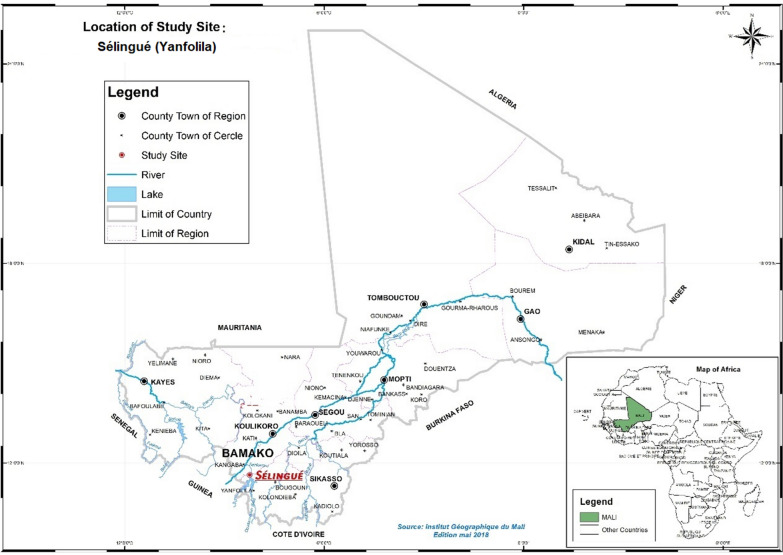
The current first-line treatments for uncomplicated malaria recommended by the National Malaria Control Programme in Mali are artemether-lumefantrine (AL) and artesunate-amodiaquine (ASAQ). From 2015 to 2016, an in vivo study was carried out to assess the clinical and parasitological responses to AL and ASAQ in Sélingué, Mali.
Children between 6 and 59 months of age with uncomplicated Plasmodium falciparum infection and 2000-200,000 asexual parasites/μL of blood were enrolled, randomly assigned to either AL or ASAQ, and followed up for 42 days. Uncorrected and PCR-corrected efficacy results at days 28 and 42. were calculated. Known markers of resistance in the Pfk13, Pfmdr1, and Pfcrt genes were assessed using Sanger sequencing.
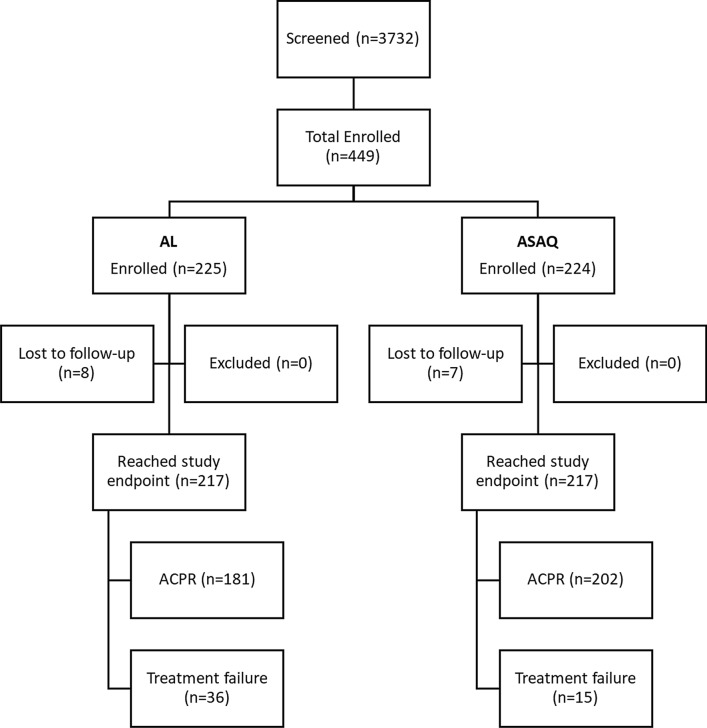
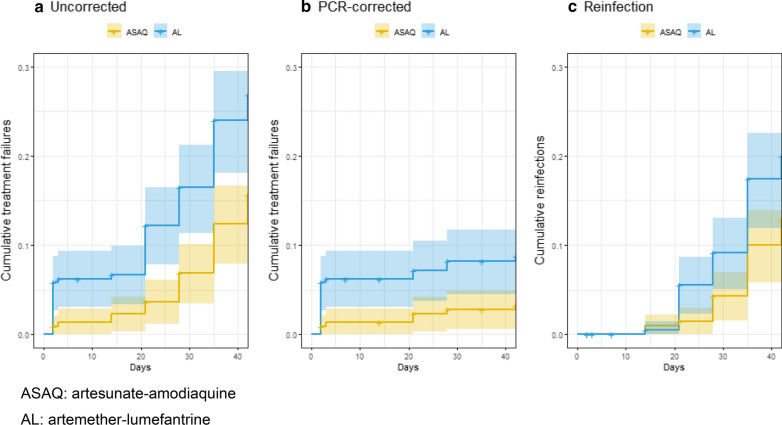
A total of 449 patients were enrolled: 225 in the AL group and 224 in the ASAQ group. Uncorrected efficacy at day 28 was 83.4% (95% CI 78.5-88.4%) in the AL arm and 93.1% (95% CI 89.7-96.5%) in the ASAQ arm. The per protocol PCR-corrected efficacy at day 28 was 91.0% (86.0-95.9%) in the AL arm and 97.1% (93.6-100%) in the ASAQ arm. ASAQ was significantly (p < 0.05) better than AL for each of the aforementioned efficacy outcomes. No mutations associated with artemisinin resistance were identified in the Pfk13 gene. Overall, for Pfmdr1, the N86 allele and the NFD haplotype were the most common. The NFD haplotype was significantly more prevalent in the post-treatment than in the pre-treatment isolates in the AL arm (p < 0.01) but not in the ASAQ arm. For Pfcrt, the CVIET haplotype was the most common.
The findings indicate that both AL and ASAQ remain effective for the treatment of uncomplicated malaria in Sélingué, Mali.
马里国家疟疾控制规划目前推荐的治疗无并发症疟疾的一线药物为青蒿琥酯-甲氟喹(AL)和青蒿琥酯-阿莫地喹(ASAQ)。2015 年至 2016 年,在马里的塞林盖进行了一项体内研究,以评估 AL 和 ASAQ 对无并发症恶性疟原虫感染的临床和寄生虫学反应。
年龄在 6 至 59 个月、有恶性疟原虫感染且血液中无性体寄生虫为 2000-200000 个/μL 的儿童入组,随机分配至 AL 或 ASAQ 组,并随访 42 天。计算第 28 天和第 42 天未校正和 PCR 校正的疗效结果。使用 Sanger 测序评估 Pfk13、Pfmdr1 和 Pfcrt 基因中的已知耐药标记。
共纳入 449 例患者:AL 组 225 例,ASAQ 组 224 例。AL 组第 28 天未校正疗效为 83.4%(95%CI 78.5-88.4%),ASAQ 组为 93.1%(95%CI 89.7-96.5%)。AL 组第 28 天的按方案 PCR 校正疗效为 91.0%(86.0-95.9%),ASAQ 组为 97.1%(93.6-100%)。ASAQ 在上述每个疗效结果方面均显著优于 AL(p<0.05)。在 Pfk13 基因中未发现与青蒿素耐药相关的突变。总体而言,对于 Pfmdr1,N86 等位基因和 NFD 单倍型最为常见。AL 组治疗后 NFD 单倍型的比例明显高于治疗前(p<0.01),但 ASAQ 组则无此现象。对于 Pfcrt,CVIET 单倍型最为常见。
研究结果表明,AL 和 ASAQ 仍可有效治疗马里塞林盖的无并发症疟疾。