Departamento de Fisiología Médica Y Biofísica, Universidad de Sevilla, Av. Sánchez-Pizjuán 4, 41009, Sevilla, Spain.
Instituto de Biomedicina de Sevilla, IBIS/Hospital Universitario Virgen del Rocío/CSIC/Universidad de Sevilla, Sevilla, Spain.
Mol Brain. 2021 May 25;14(1):84. doi: 10.1186/s13041-021-00795-6.
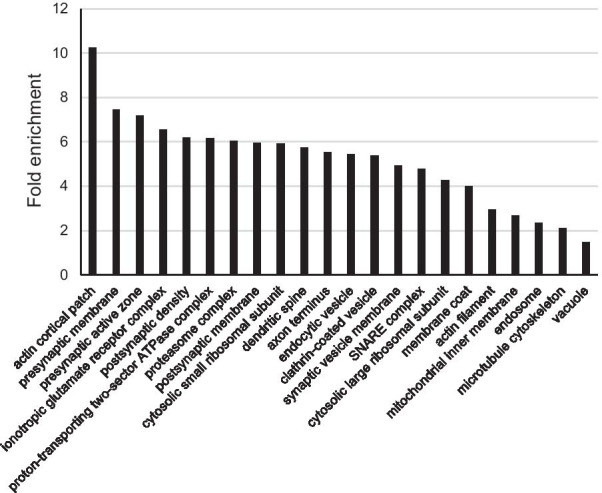
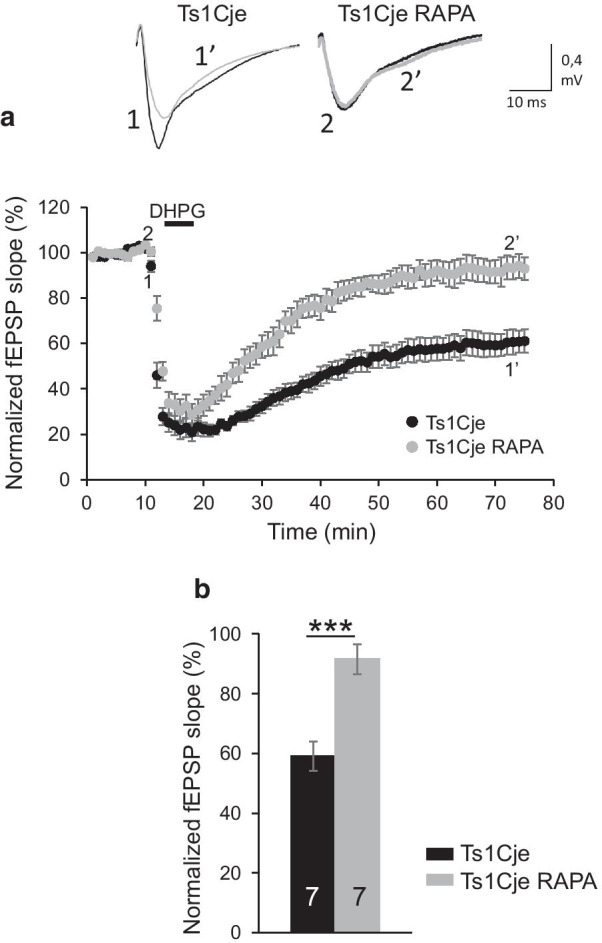
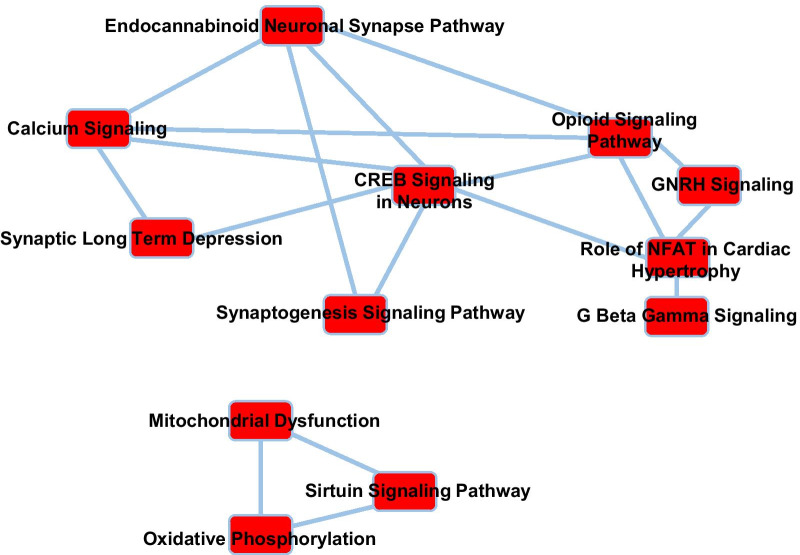
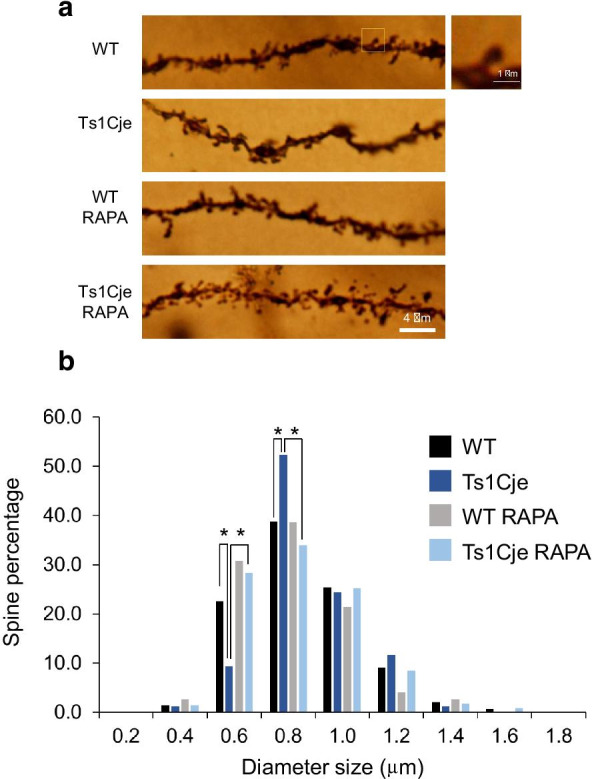
Down syndrome (DS) is the most frequent genetic cause of intellectual disability including hippocampal-dependent memory deficits. We have previously reported hippocampal mTOR (mammalian target of rapamycin) hyperactivation, and related plasticity as well as memory deficits in Ts1Cje mice, a DS experimental model. Here we characterize the proteome of hippocampal synaptoneurosomes (SNs) from these mice, and found a predicted alteration of synaptic plasticity pathways, including long term depression (LTD). Accordingly, mGluR-LTD (metabotropic Glutamate Receptor-LTD) is enhanced in the hippocampus of Ts1Cje mice and this is correlated with an increased proportion of a particular category of mushroom spines in hippocampal pyramidal neurons. Remarkably, prenatal treatment of these mice with rapamycin has a positive pharmacological effect on both phenotypes, supporting the therapeutic potential of rapamycin/rapalogs for DS intellectual disability.
唐氏综合征(DS)是最常见的遗传性智力障碍病因,包括海马依赖性记忆缺陷。我们之前曾报道过 Ts1Cje 小鼠(DS 实验模型)中海马 mTOR(雷帕霉素靶蛋白)过度激活,以及相关的可塑性和记忆缺陷。在这里,我们对这些小鼠的海马突触小体(SNs)的蛋白质组进行了特征描述,发现了突触可塑性途径的预测改变,包括长时程抑制(LTD)。因此,Ts1Cje 小鼠的海马体中 mGluR-LTD(代谢型谷氨酸受体 LTD)增强,这与海马锥体神经元中特定类别的蘑菇形刺的比例增加有关。值得注意的是,对这些小鼠进行雷帕霉素的产前治疗对这两种表型均有积极的药物作用,这支持了雷帕霉素/雷帕霉素类似物治疗 DS 智力障碍的治疗潜力。