Department of Pathology and Molecular Medicine, 3rd Faculty of Medicine, Charles University and Thomayer University Hospital, Videnska 800, 14059, Prague 4 - Krc, Czech Republic.
Department of Neurology, 3rd Faculty of Medicine, Charles University and Thomayer University Hospital, Prague, Czech Republic.
Sci Rep. 2021 May 25;11(1):10837. doi: 10.1038/s41598-021-90366-5.
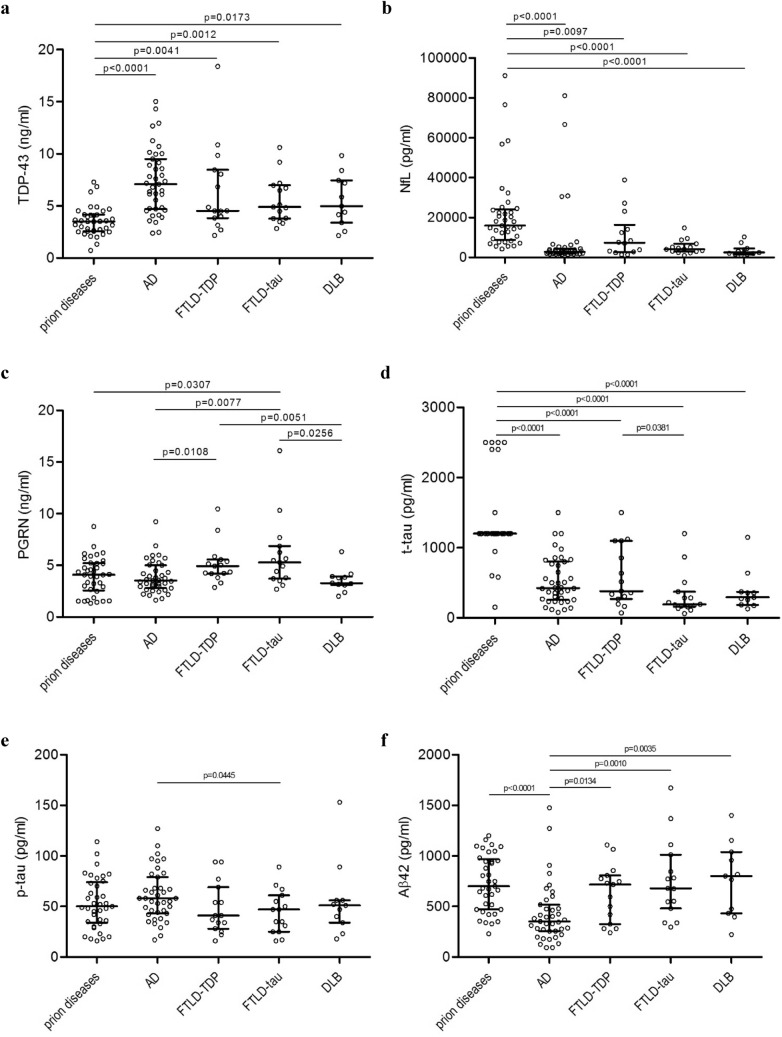
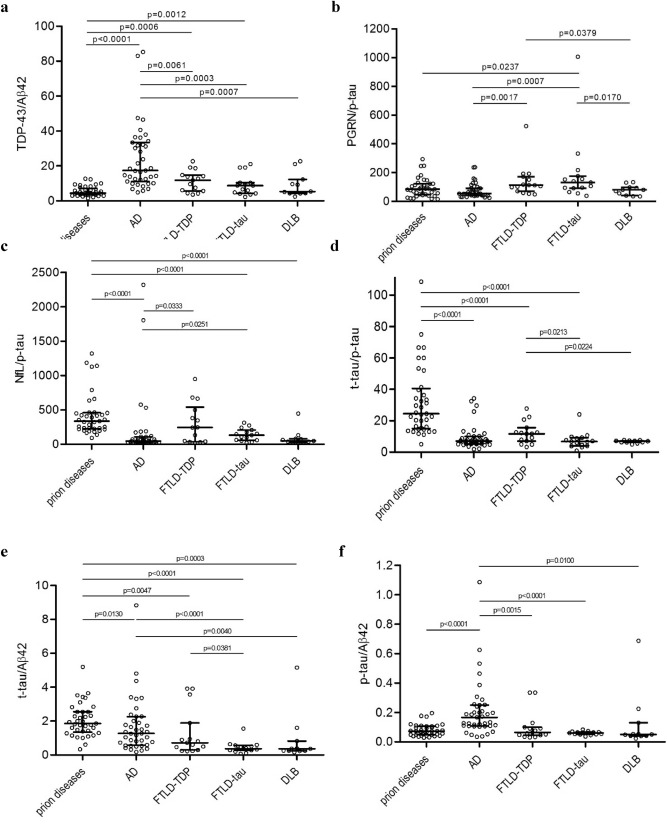
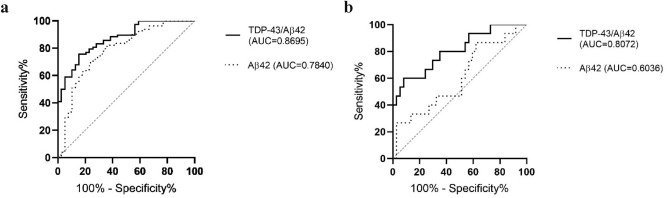
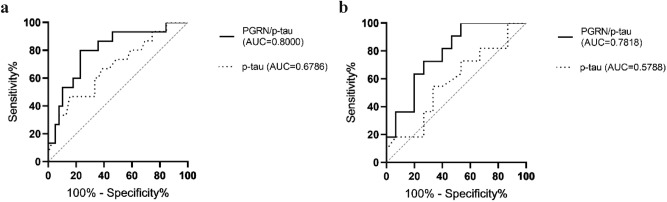
Various proteins play a decisive role in the pathology of different neurodegenerative diseases. Nonetheless, most of these proteins can only be detected during a neuropathological assessment, although some non-specific biomarkers are routinely tested for in the cerebrospinal fluid (CSF) as a part of the differential diagnosis of dementia. In antemortem CSF samples from 117 patients with different types of neuropathologically confirmed neurodegenerative disease with dementia, we assessed total-tau (t-tau), phosphorylated-tau (181P) (p-tau), amyloid-beta (1-42) (Aβ42), TAR DNA binding protein (TDP)-43, progranulin (PGRN), and neurofilament light (NfL) chain levels, and positivity of protein 14-3-3. We found t-tau levels and the t-tau/p-tau ratios were significantly higher in prion diseases compared to the other neurodegenerative diseases. Statistically significant differences in the t-tau/Aβ42 ratio predominantly corresponded to t-tau levels in prion diseases and Aβ42 levels in AD. TDP-43 levels were significantly lower in prion diseases. Additionally, the TDP-43/Aβ42 ratio was better able to distinguish Alzheimer's disease from other neurodegenerative diseases compared to using Aβ42 alone. In frontotemporal lobar degeneration, PRGN levels were significantly higher in comparison to other neurodegenerative diseases. There is an increasing need for biomarkers suitable for diagnostic workups for neurodegenerative diseases. It appears that adding TDP-43 and PGRN to the testing panel for neurodegenerative diseases could improve the resolution of differential diagnoses.
各种蛋白质在不同神经退行性疾病的病理学中起着决定性作用。尽管如此,这些蛋白质中的大多数只能在神经病理学评估中检测到,尽管一些非特异性生物标志物通常作为痴呆症鉴别诊断的一部分在脑脊液 (CSF) 中进行测试。在 117 例不同类型的经神经病理学证实的伴有痴呆的神经退行性疾病的生前 CSF 样本中,我们评估了总tau(t-tau)、磷酸化 tau(181P)(p-tau)、淀粉样蛋白-β(1-42)(Aβ42)、TAR DNA 结合蛋白(TDP)-43、颗粒蛋白(PGRN)和神经丝轻链(NfL)水平,以及蛋白 14-3-3 的阳性率。我们发现与其他神经退行性疾病相比,朊病毒病中的 t-tau 水平和 t-tau/p-tau 比值明显更高。t-tau/Aβ42 比值的统计学显著差异主要对应于朊病毒病中的 t-tau 水平和 AD 中的 Aβ42 水平。在朊病毒病中 TDP-43 水平明显较低。此外,与单独使用 Aβ42 相比,TDP-43/ Aβ42 比值能够更好地区分阿尔茨海默病与其他神经退行性疾病。在额颞叶变性中,PRGN 水平明显高于其他神经退行性疾病。需要寻找适合神经退行性疾病诊断工作的生物标志物。似乎在神经退行性疾病的检测面板中添加 TDP-43 和 PGRN 可以提高鉴别诊断的分辨率。