Secco Arianna, Tonin Alessandro, Rana Aygul, Jaramillo-Gonzalez Andres, Khalili-Ardali Majid, Birbaumer Niels, Chaudhary Ujwal
Department of Information Engineering, Bioengineering, Università Degli Studi di Padova, Padua, Italy.
Wyss-Center for Bio- and Neuro-Engineering, Chemin de Mines 9, 1202 Geneva, Switzerland.
Cogn Neurodyn. 2021 Jun;15(3):473-480. doi: 10.1007/s11571-020-09639-w. Epub 2020 Oct 23.
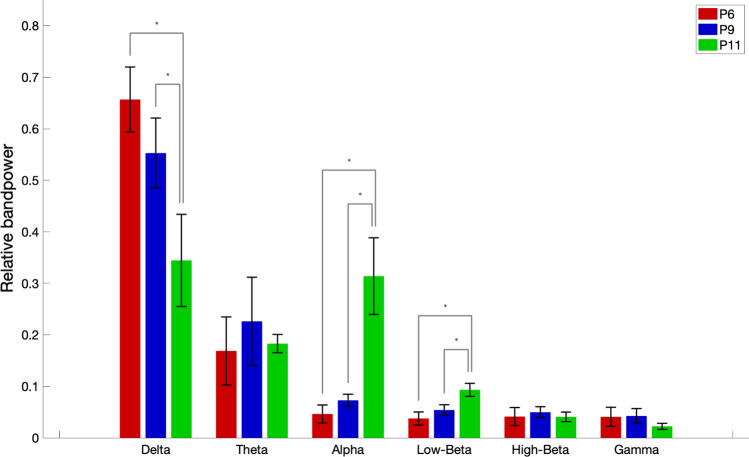
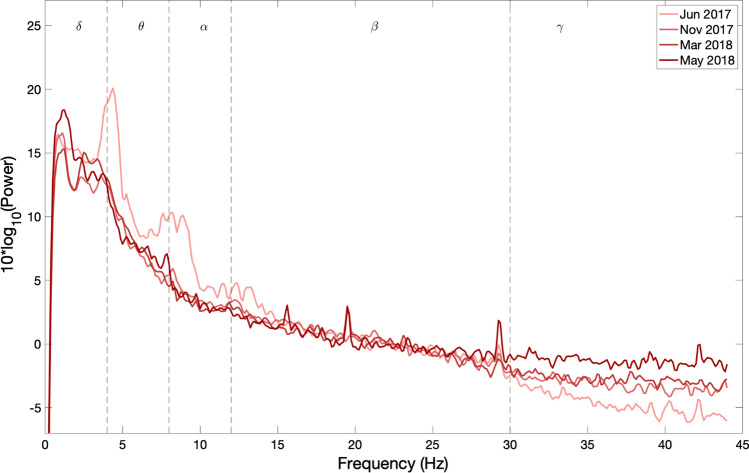
Persons with their eye closed and without any means of communication is said to be in a completely locked-in state (CLIS) while when they could still open their eyes actively or passively and have some means of communication are said to be in locked-in state (LIS). Two patients in CLIS without any means of communication, and one patient in the transition from LIS to CLIS with means of communication, who have Amyotrophic Lateral Sclerosis were followed at a regular interval for more than 1 year. During each visit, resting-state EEG was recorded before the brain-computer interface (BCI) based communication sessions. The resting-state EEG of the patients was analyzed to elucidate the evolution of their EEG spectrum over time with the disease's progression to provide future BCI-research with the relevant information to classify changes in EEG evolution. Comparison of power spectral density (PSD) of these patients revealed a significant difference in the PSD's of patients in CLIS without any means of communication and the patient in the transition from LIS to CLIS with means of communication. The EEG of patients without any means of communication is devoid of alpha, beta, and higher frequencies than the patient in transition who still had means of communication. The results show that the change in the EEG frequency spectrum may serve as an indicator of the communication ability of such patients.
眼睛闭合且没有任何交流方式的人被称为处于完全闭锁状态(CLIS),而那些仍能主动或被动睁开眼睛并有某种交流方式的人则被称为处于闭锁状态(LIS)。对两名处于CLIS且没有任何交流方式的肌萎缩侧索硬化症患者,以及一名从LIS转变为CLIS但有交流方式的患者进行了为期1年多的定期随访。每次随访时,在基于脑机接口(BCI)的交流会话之前记录静息态脑电图。分析患者的静息态脑电图,以阐明随着疾病进展其脑电图频谱随时间的演变,为未来的BCI研究提供相关信息,以对脑电图演变的变化进行分类。这些患者的功率谱密度(PSD)比较显示,处于CLIS且没有任何交流方式的患者与从LIS转变为CLIS且有交流方式的患者的PSD存在显著差异。没有任何交流方式的患者的脑电图缺乏α波、β波以及比仍有交流方式的处于转变期的患者更高的频率。结果表明,脑电图频谱的变化可能作为此类患者交流能力的一个指标。