Bani Marco, Russo Selena, Ardenghi Stefano, Rampoldi Giulia, Wickline Virginia, Nowicki Stephen, Strepparava Maria Grazia
School of Medicine and Surgery, University of Milano-Bicocca, Via Cadore 48, 20052 Milan, Italy.
Department of Psychology, Georgia Southern University-Armstrong Campus, Savannah, GA, USA.
Med Sci Educ. 2021 May 20;31(4):1273-1277. doi: 10.1007/s40670-021-01317-8. eCollection 2021 Aug.
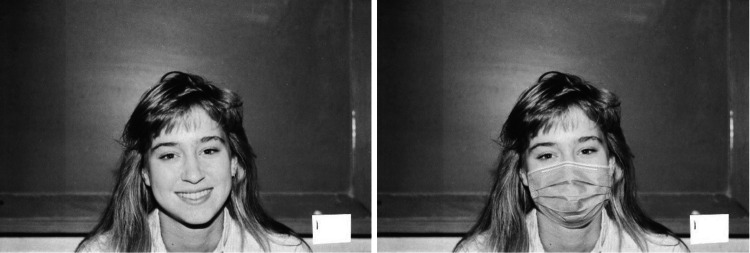
Current widespread facemask usage profoundly impacts clinical practice and healthcare education where communicational dimensions are essential to the care and teaching processes. As part of a larger study, 208 medical and nursing students were randomly assigned to a masked vs unmasked version of the standardized facial emotion recognition task DANVA2. A significantly higher number of errors existed in the masked vs unmasked condition. Differences for happy, sad, and angry faces, but not for fearful faces, existed between conditions. Misinterpretation of facial emotions can severely affect doctor-patient and inter-professional communication in healthcare. Teaching communication in medical education must adapt to the current universal use of facemasks in professional settings.
当前广泛使用口罩对临床实践和医学教育产生了深远影响,在这些领域中,沟通层面对于护理和教学过程至关重要。作为一项更大规模研究的一部分,208名医学和护理专业学生被随机分配到标准化面部表情识别任务DANVA2的戴口罩组和不戴口罩组。戴口罩组与不戴口罩组相比,错误数量显著更多。不同组在识别开心、悲伤和愤怒表情方面存在差异,但在识别恐惧表情方面没有差异。对面部表情的误解会严重影响医疗保健中的医患沟通和跨专业沟通。医学教育中的沟通教学必须适应目前专业环境中普遍使用口罩的情况。