Laboratory of Fruit Quality Biology/Zhejiang Provincial Key Laboratory of Horticultural Plant Integrative Biology, Zhejiang University, Hangzhou, China.
Research Center for Agricultural Products Preservation and Processing, Shanghai Academy of Agricultural Sciences, Shanghai, China.
Plant Biotechnol J. 2021 Oct;19(10):2082-2096. doi: 10.1111/pbi.13638. Epub 2021 Jun 5.
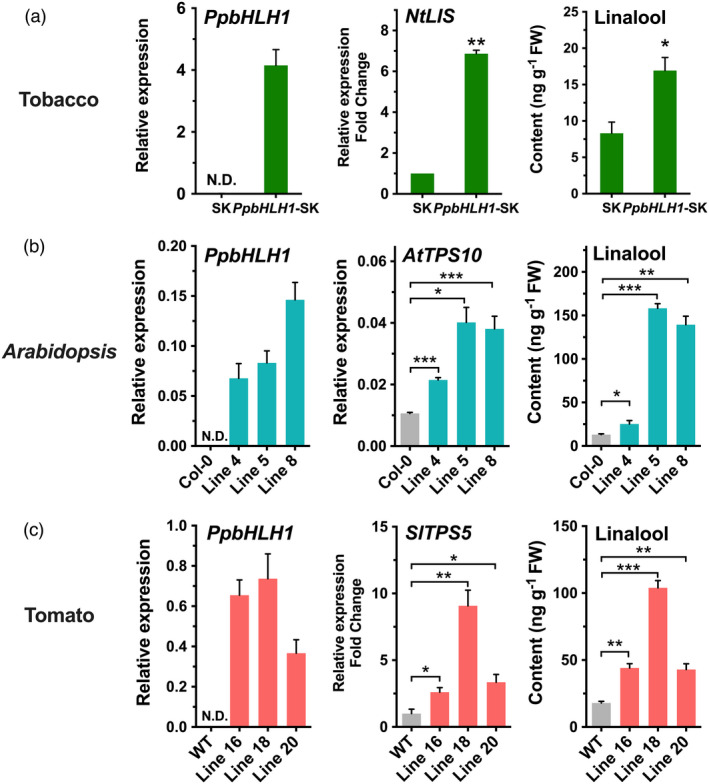
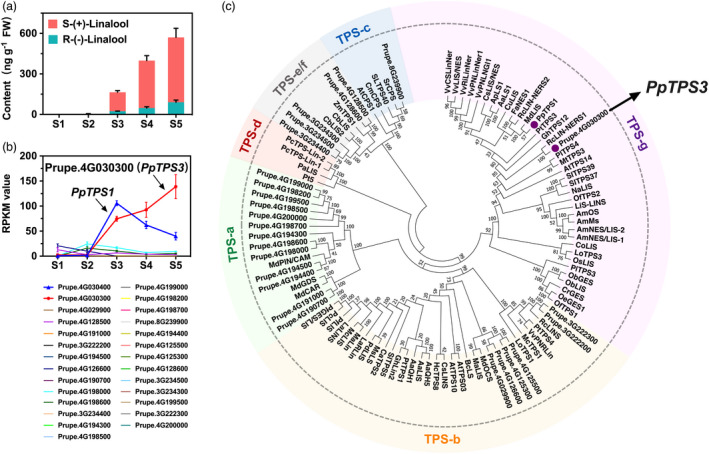
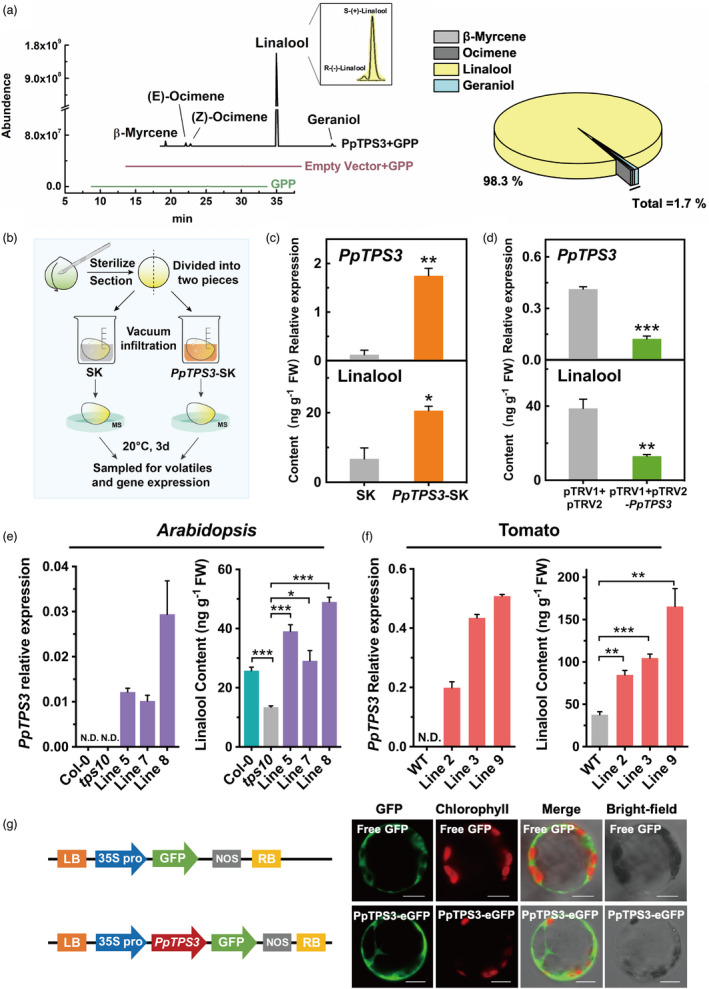
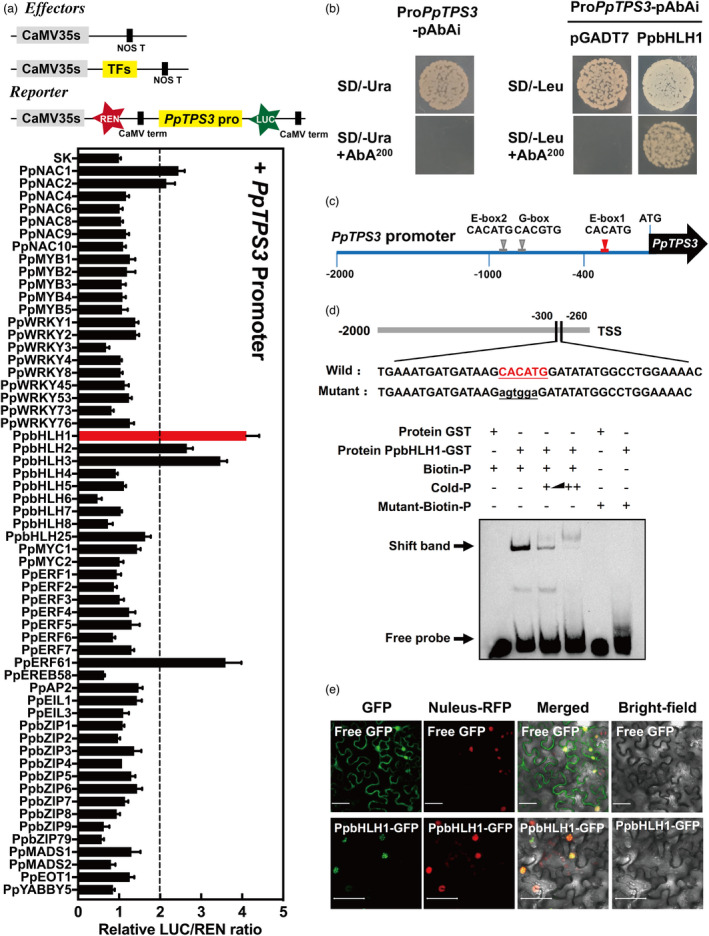
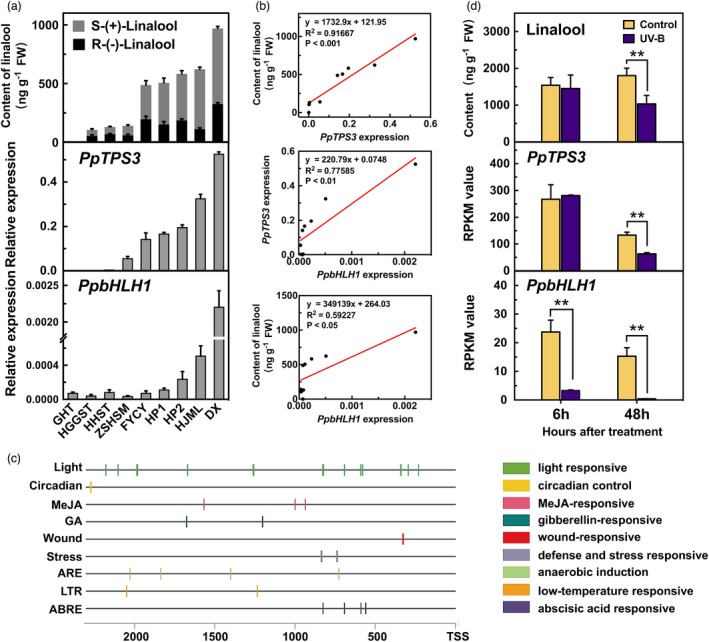
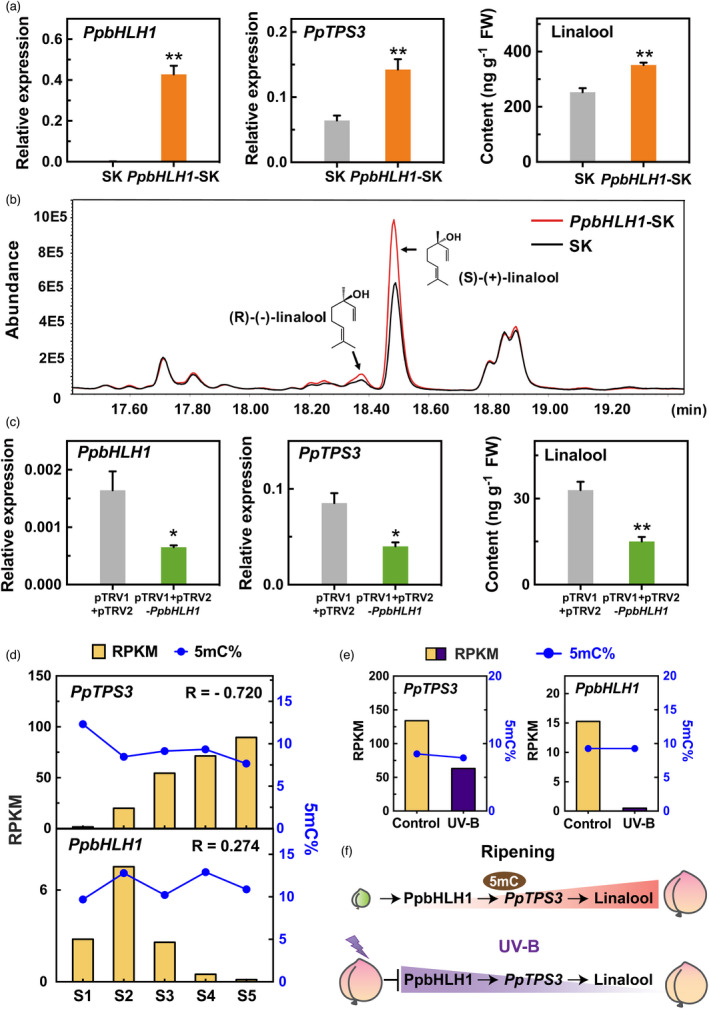
Linalool is one of the common flavour-related volatiles across the plant kingdom and plays an essential role in determining consumer liking of plant foods. Although great process has been made in identifying terpene synthase (TPS) genes associated with linalool synthesis, much less is known about regulation of this pathway. We initiated study by identifying PpTPS3 encoding protein catalysing enantiomer (S)-(+)-linalool synthesis, which is a major linalool component (˜70%) observed in ripe peach fruit. Overexpression of PpTPS3 led to linalool accumulation, while virus-induced gene silencing of PpTPS3 led to a 66.5% reduction in linalool content in peach fruit. We next identified transcription factor (TF) PpbHLH1 directly binds to E-box (CACATG) in the PpTPS3 promoter and activates its expression based on yeast one-hybrid assay and EMSA analysis. Significantly positive correlation was also observed between PpbHLH1 expression and linalool production across peach cultivars. Peach fruit accumulated more linalool after overexpressing PpbHLH1 in peach fruit and reduced approximately 54.4% linalool production after silencing this TF. DNA methylation analysis showed increased PpTPS3 expression was associated with decreased 5 mC level in its promoter during peach fruit ripening, but no reverse pattern was observed for PpbHLH1. Arabidopsis and tomato fruits transgenic for peach PpbHLH1 synthesize and accumulate higher levels of linalool compared with wild-type controls. Taken together, these results would greatly facilitate efforts to enhance linalool production and thus improve flavour of fruits.
芳樟醇是植物界中常见的与风味有关的挥发性化合物之一,对植物性食品的消费者喜好起着至关重要的作用。虽然在鉴定与芳樟醇合成相关的萜烯合酶(TPS)基因方面已经取得了很大进展,但对该途径的调控却知之甚少。我们通过鉴定编码催化对映体(S)-(+)-芳樟醇合成的 PpTPS3 蛋白的 PpTPS3 基因来启动研究,该蛋白是成熟桃果实中主要的芳樟醇成分(约 70%)。PpTPS3 的过表达导致芳樟醇的积累,而 PpTPS3 的病毒诱导基因沉默导致桃果实中芳樟醇含量减少 66.5%。我们接下来鉴定了转录因子(TF)PpbHLH1,它直接结合 PpTPS3 启动子中的 E 盒(CACATG),并根据酵母单杂交测定和 EMSA 分析激活其表达。在桃品种中也观察到 PpbHLH1 表达与芳樟醇产量之间存在显著的正相关。在桃果实中过表达 PpbHLH1 后,桃果实积累了更多的芳樟醇,而沉默该 TF 后,芳樟醇的产量减少了约 54.4%。DNA 甲基化分析表明,在桃果实成熟过程中,PpTPS3 表达增加与启动子中 5mC 水平降低有关,但 PpbHLH1 没有出现相反的模式。与野生型对照相比,桃 PpbHLH1 转基因的拟南芥和番茄果实合成和积累了更高水平的芳樟醇。总之,这些结果将极大地促进提高芳樟醇产量和改善果实风味的努力。