Metabolic and Structural Biology Dept, CSIR-Central Institute of Medicinal and Aromatic Plants, Lucknow (U.P.), INDIA.
Biotechnology Division, CSIR-Central Institute of Medicinal and Aromatic Plants, Lucknow (U.P.), INDIA.
PLoS One. 2018 Nov 16;13(11):e0207097. doi: 10.1371/journal.pone.0207097. eCollection 2018.
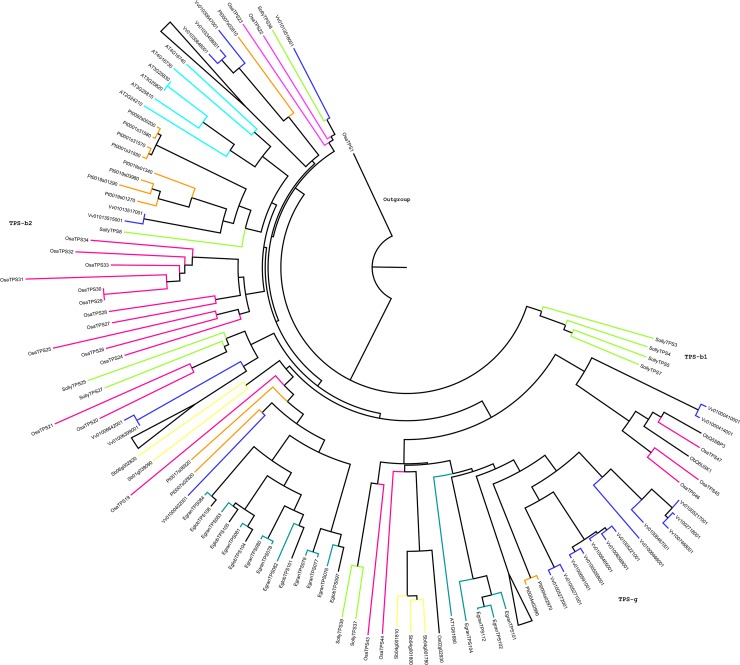
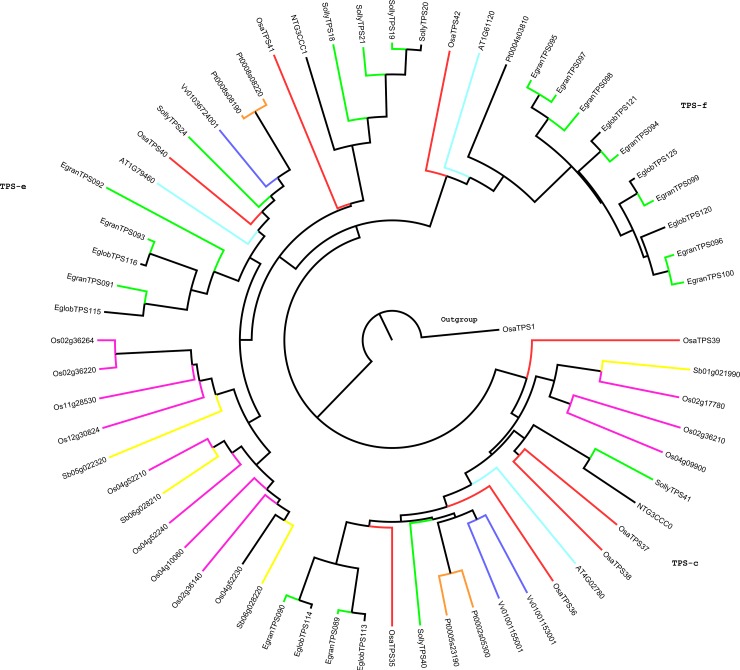
Holy basil (Ocimum sanctum L.) and sweet basil (Ocimum basilicum L.) are the most commonly grown basil species in India for essential oil production and biosynthesis of potentially volatile and non-volatile phytomolecules with commercial significance. The aroma, flavor and pharmaceutical value of Ocimum species is a significance of its essential oil, which contains most of the monoterpenes and sesquiterpenes. A large number of plants have been studied for characterization and identification of terpene synthase genes, involved in terpenoids biosynthesis. The goal of this study is to discover and identify the putative functional terpene synthase genes in O. sanctum. HMMER search was performed by using a set of 13 well sequenced and annotated plant genomes including the newly sequenced genome of O. sanctum with Pfam-A database locally, using HMMER 3.0 hmmsearch for the two Pfam domains (PF01397 and PF03936). Using this search method 81 putative terpene synthases genes (OsaTPS) were identified in O. sanctum; the study further reveals 47 OsaTPS were putatively functional genes, 19 partial OsaTPS, and 15 OsaTPS as probably pseudogenes. All these identified OsaTPS genes were compared with other plant species, and phylogenetic analysis reveals the subfamily classification of OsaTPS in TPS-a, -b, -c, -e, -f and TPS-g subfamilies clusters. This genome-wide identification of OsaTPS genes, their phylogenetic analysis and secondary metabolite pathway mapping predictions together provide a comprehensive understanding of the TPS gene family in Ocimum sanctum and offer opportunities for the characterization and functional validation of numbers of terpene synthase genes.
圣罗勒(Ocimum sanctum L.)和甜罗勒(Ocimum basilicum L.)是印度最常种植的两种罗勒品种,用于生产精油和具有商业意义的潜在挥发性和非挥发性植物生源分子的生物合成。罗勒属植物的香气、风味和药用价值是其精油的重要特征,精油中含有大部分单萜和倍半萜。大量植物已被用于萜烯合酶基因的特征描述和鉴定,这些基因参与萜类化合物的生物合成。本研究的目的是发现和鉴定 O. sanctum 中潜在的功能萜烯合酶基因。通过使用包括新测序的 O. sanctum 基因组在内的 13 个测序和注释良好的植物基因组数据集,在本地使用 Pfam-A 数据库,使用 HMMER 3.0 hmmsearch 对两个 Pfam 结构域(PF01397 和 PF03936)进行 HMMER 搜索,共鉴定出 81 个推定的萜烯合酶基因(OsaTPS)在 O. sanctum 中;研究进一步表明,47 个 OsaTPS 是推定的功能基因,19 个是部分 OsaTPS,15 个是可能的假基因。所有这些鉴定出的 OsaTPS 基因都与其他植物物种进行了比较,系统发育分析揭示了 OsaTPS 在 TPS-a、-b、-c、-e、-f 和 TPS-g 亚家族聚类中的亚家族分类。对 OsaTPS 基因的全基因组鉴定、系统发育分析和次生代谢途径预测一起提供了对 Ocimum sanctum 中 TPS 基因家族的全面了解,并为大量萜烯合酶基因的特征描述和功能验证提供了机会。