Laboratorio de Espectroscopia Atómica y Molecular (LEAM), Universidad Industrial de Santander, Carrera 27 Calle 9, Bucaramanga, Santander, 678, Colombia.
Networking Research Center on Bioengineering, Biomaterials and Nanomedicine (CIBER-BBN), 28029, Madrid, Spain.
Anal Bioanal Chem. 2021 Jul;413(17):4545-4555. doi: 10.1007/s00216-021-03424-2. Epub 2021 May 26.
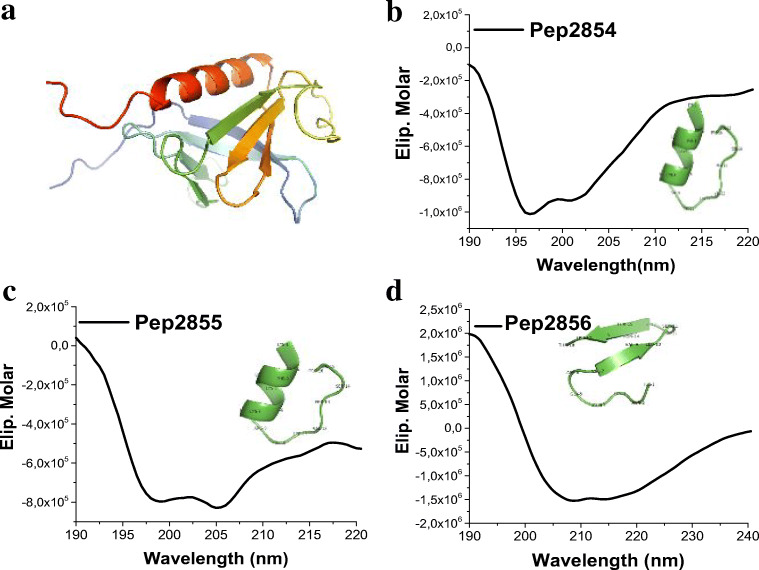
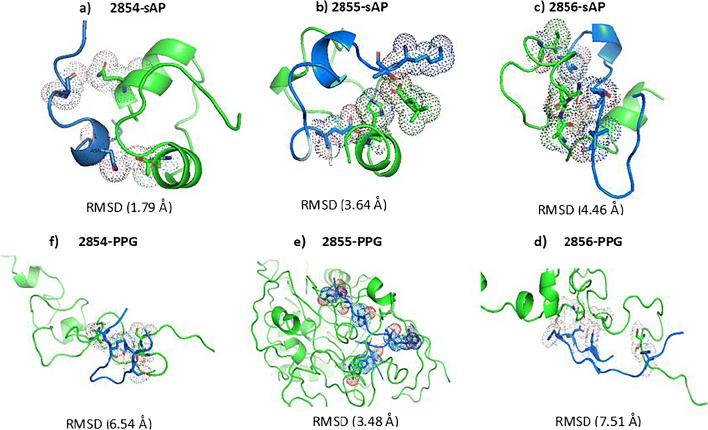
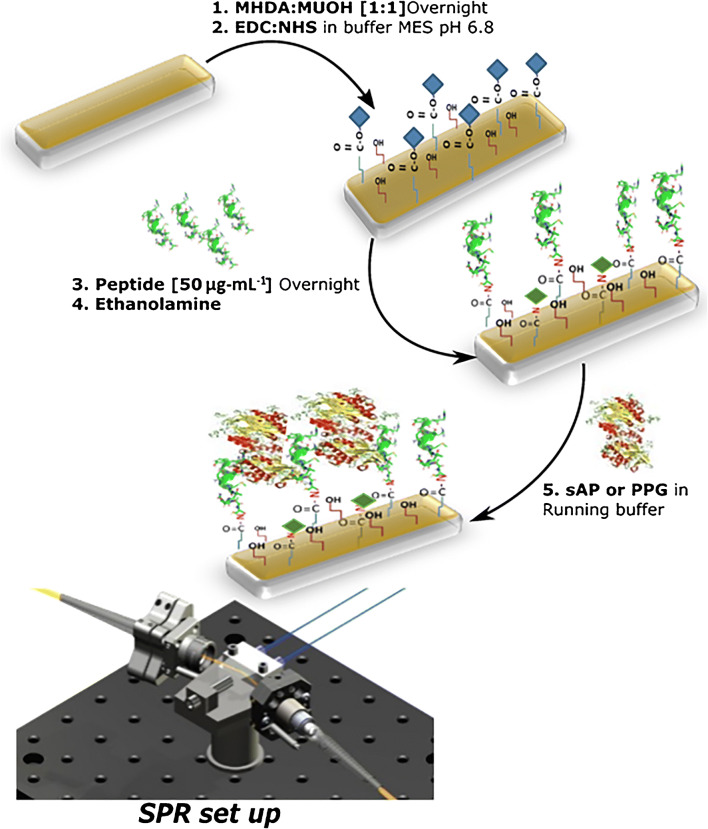
Cutaneous leishmaniasis (CL) is one of the illnesses caused by Leishmania parasite infection, which can be asymptomatic or severe according to the infecting Leishmania strain. CL is commonly diagnosed by directly detecting the parasites or their DNA in tissue samples. New diagnostic methodologies target specific proteins (biomarkers) secreted by the parasite during the infection process. However, specific bioreceptors for the in vivo or in vitro detection of these novel biomarkers are rather limited in terms of sensitivity and specificity. For this reason, we here introduce three novel peptides as bioreceptors for the highly sensitive and selective identification of acid phosphatase (sAP) and proteophosphoglycan (PPG), which have a crucial role in leishmaniasis infection. These high-affinity peptides have been designed from the conservative domains of the lectin family, holding the ability to interact with the biological target and produce the same effect than the original protein. The synthetic peptides have been characterized and the affinity and kinetic constants for their interaction with the targets (sAP and PPG) have been determined by a surface plasmon resonance biosensor. Values obtained for K are in the nanomolar range, which is comparable to high-affinity antibodies, with the additional advantage of a high biochemical stability and simpler production. Pep2854 exhibited a high affinity for sAP (K = 1.48 nM) while Pep2856 had a good affinity for PPG (K 1.76 nM). This study evidences that these peptidomimetics represent a novel alternative tool to the use of high molecular weight proteins for biorecognition in the diagnostic test and biosensor devices for CL.
皮肤利什曼病 (CL) 是由利什曼原虫感染引起的疾病之一,根据感染的利什曼原虫株的不同,该病的临床表现可以是无症状的,也可以是严重的。CL 通常通过直接检测组织样本中的寄生虫或其 DNA 来诊断。新的诊断方法针对的是寄生虫在感染过程中分泌的特定蛋白质(生物标志物)。然而,针对这些新型生物标志物的体内或体外检测的特定生物受体在灵敏度和特异性方面相当有限。出于这个原因,我们在这里介绍了三种新型肽作为生物受体,用于高度敏感和选择性地识别酸性磷酸酶 (sAP) 和蛋白磷酸聚糖 (PPG),这两种物质在利什曼病感染中起着至关重要的作用。这些高亲和力肽是从凝集素家族的保守结构域设计而来的,具有与生物靶标相互作用并产生与原始蛋白质相同效果的能力。已经对合成肽进行了表征,并通过表面等离子体共振生物传感器确定了它们与靶标(sAP 和 PPG)相互作用的亲和力和动力学常数。获得的 K 值在纳摩尔范围内,与高亲和力抗体相当,具有更高的生化稳定性和更简单的生产优势。Pep2854 对 sAP 表现出高亲和力(K=1.48 nM),而 Pep2856 对 PPG 具有良好的亲和力(K=1.76 nM)。这项研究表明,这些肽模拟物代表了一种新的替代工具,可以替代高分子量蛋白质用于生物识别,用于 CL 的诊断测试和生物传感器设备。