Global and Tropical Health Division, Menzies School of Health Research and Charles Darwin University, Darwin, Northern Territory, Australia.
Eijkman Institute for Molecular Biology, Jakarta, Indonesia.
PLoS Med. 2021 May 26;18(5):e1003632. doi: 10.1371/journal.pmed.1003632. eCollection 2021 May.
A very large biomass of intact asexual-stage malaria parasites accumulates in the spleen of asymptomatic human individuals infected with Plasmodium vivax. The mechanisms underlying this intense tropism are not clear. We hypothesised that immature reticulocytes, in which P. vivax develops, may display high densities in the spleen, thereby providing a niche for parasite survival.
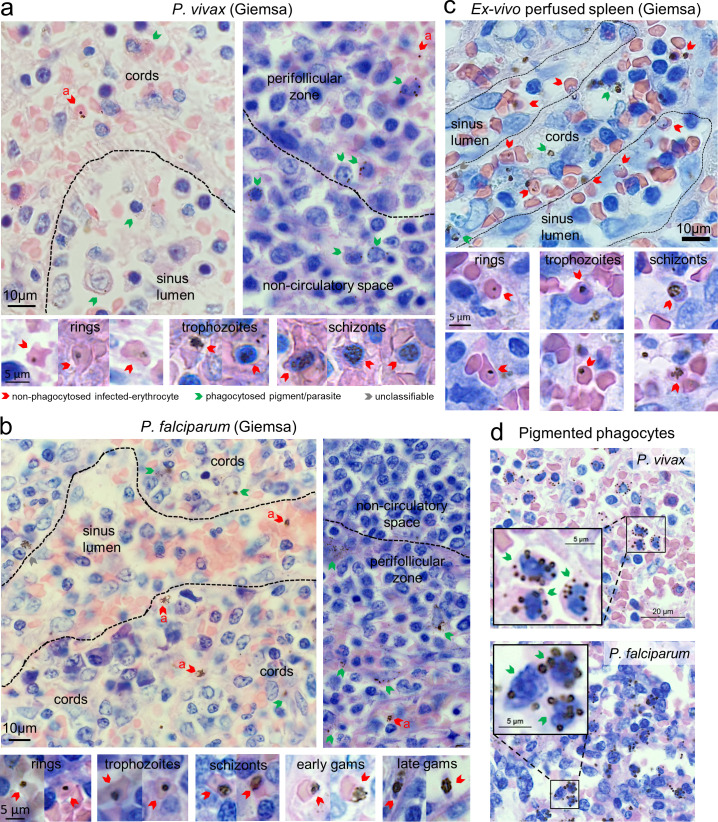
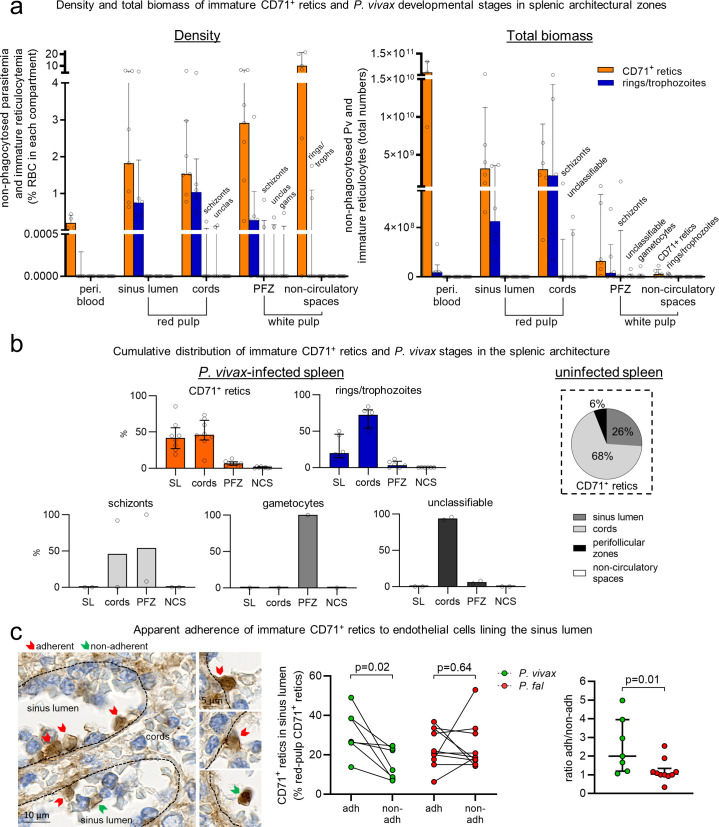
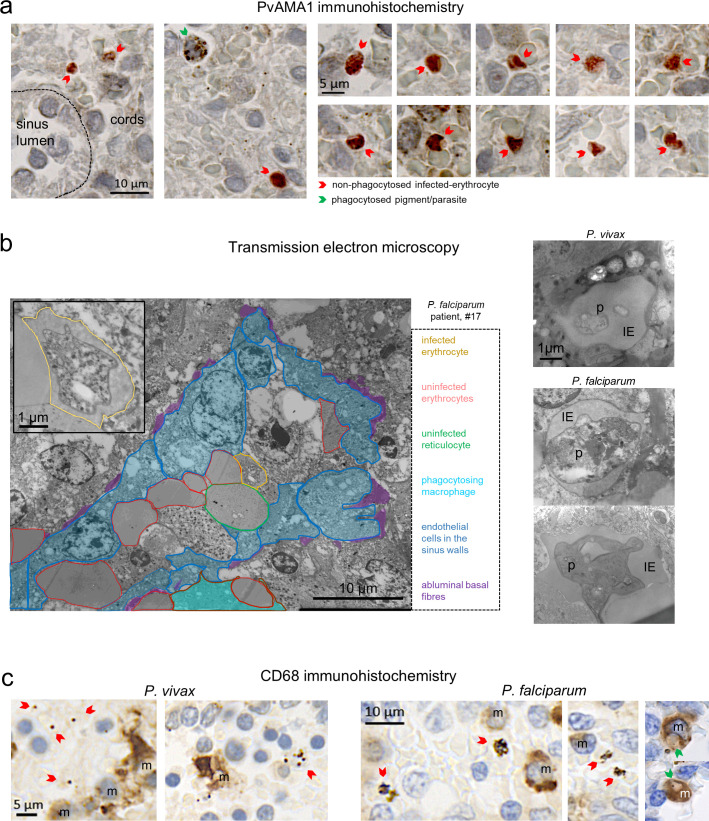
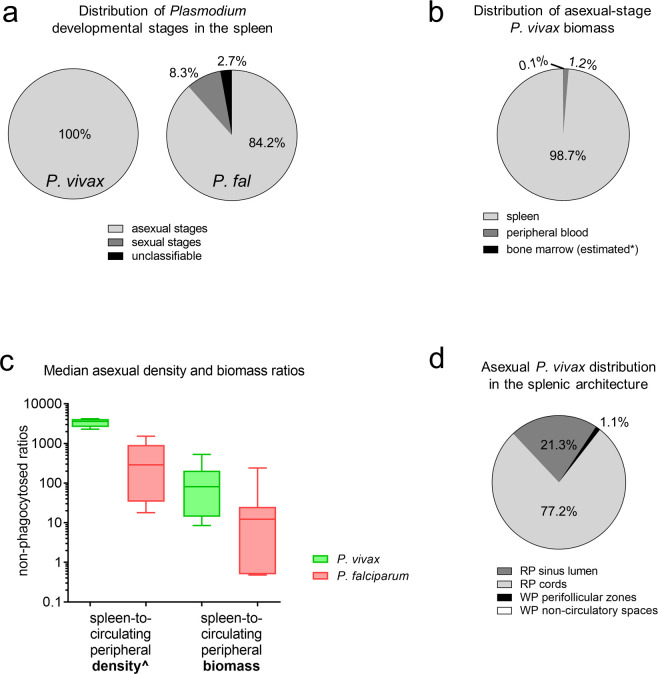
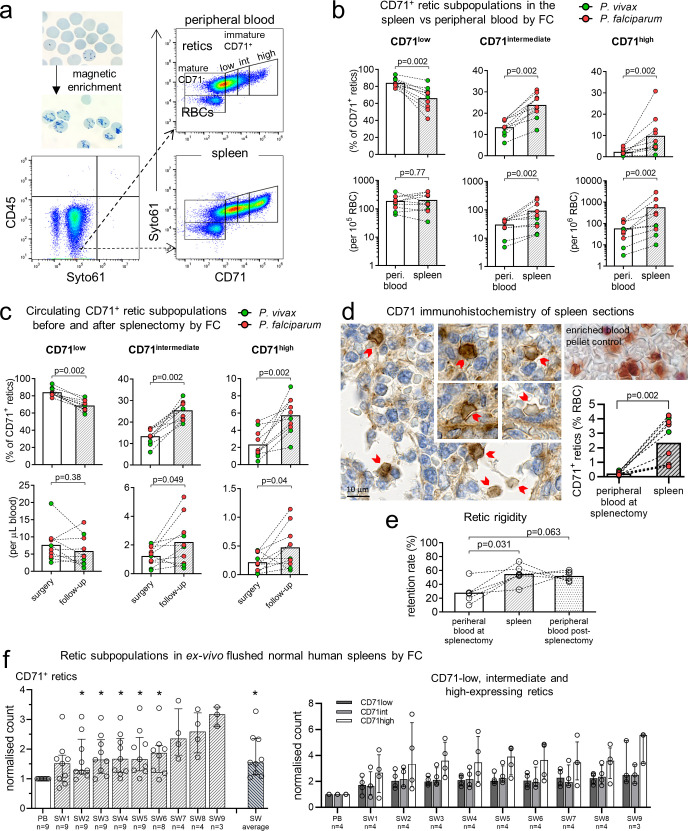
We examined spleen tissue in 22 mostly untreated individuals naturally exposed to P. vivax and Plasmodium falciparum undergoing splenectomy for any clinical indication in malaria-endemic Papua, Indonesia (2015 to 2017). Infection, parasite and immature reticulocyte density, and splenic distribution were analysed by optical microscopy, flow cytometry, and molecular assays. Nine non-endemic control spleens from individuals undergoing spleno-pancreatectomy in France (2017 to 2020) were also examined for reticulocyte densities. There were no exclusion criteria or sample size considerations in both patient cohorts for this demanding approach. In Indonesia, 95.5% (21/22) of splenectomy patients had asymptomatic splenic Plasmodium infection (7 P. vivax, 13 P. falciparum, and 1 mixed infection). Significant splenic accumulation of immature CD71 intermediate- and high-expressing reticulocytes was seen, with concentrations 11 times greater than in peripheral blood. Accordingly, in France, reticulocyte concentrations in the splenic effluent were higher than in peripheral blood. Greater rigidity of reticulocytes in splenic than in peripheral blood, and their higher densities in splenic cords both suggest a mechanical retention process. Asexual-stage P. vivax-infected erythrocytes of all developmental stages accumulated in the spleen, with non-phagocytosed parasite densities 3,590 times (IQR: 2,600 to 4,130) higher than in circulating blood, and median total splenic parasite loads 81 (IQR: 14 to 205) times greater, accounting for 98.7% (IQR: 95.1% to 98.9%) of the estimated total-body P. vivax biomass. More reticulocytes were in contact with sinus lumen endothelial cells in P. vivax- than in P. falciparum-infected spleens. Histological analyses revealed 96% of P. vivax rings/trophozoites and 46% of schizonts colocalised with 92% of immature reticulocytes in the cords and sinus lumens of the red pulp. Larger splenic cohort studies and similar investigations in untreated symptomatic malaria are warranted.
Immature CD71+ reticulocytes and splenic P. vivax-infected erythrocytes of all asexual stages accumulate in the same splenic compartments, suggesting the existence of a cryptic endosplenic lifecycle in chronic P. vivax infection. Findings provide insight into P. vivax-specific adaptions that have evolved to maximise survival and replication in the spleen.
无症状感染间日疟原虫的人体脾脏中会积累大量完整的无性生殖阶段疟原虫。这种强烈的嗜脾性的机制尚不清楚。我们假设幼稚网织红细胞(疟原虫在其中发育)在脾脏中可能显示出高密度,从而为寄生虫的存活提供了一个小生境。
我们在印度尼西亚巴布亚(2015 年至 2017 年)进行了任何临床指征的脾切除术的 22 名主要未经治疗的自然暴露于间日疟原虫和恶性疟原虫的个体的脾脏组织中进行了检查。通过光学显微镜、流式细胞术和分子检测分析了感染、寄生虫和幼稚网织红细胞密度以及脾脏分布。法国在 2017 年至 2020 年进行脾胰切除术的 9 名非流行地区对照脾脏也进行了网织红细胞密度检查。对于这种要求很高的方法,两组患者队列都没有排除标准或样本量考虑。在印度尼西亚,95.5%(21/22)的脾切除术患者存在无症状的脾疟原虫感染(7 例间日疟原虫、13 例恶性疟原虫和 1 例混合感染)。在脾脏中可以看到显著的幼稚 CD71 中表达和高表达网织红细胞的积聚,浓度比外周血高 11 倍。相应地,在法国,脾流出物中的网织红细胞浓度高于外周血。与外周血相比,脾内网织红细胞的刚性更大,脾内网织红细胞的密度更高,这都表明存在机械滞留过程。所有发育阶段的间日疟原虫感染的有性期红细胞都积聚在脾脏中,未被吞噬的寄生虫密度比循环血液高 3590 倍(IQR:2600 至 4130),总脾脏寄生虫负荷中位数高 81 倍(IQR:14 至 205),占估计的间日疟原虫总生物量的 98.7%(IQR:95.1%至 98.9%)。与恶性疟原虫感染的脾脏相比,间日疟原虫感染的脾脏中有更多的网织红细胞与窦腔内皮细胞接触。组织学分析显示,96%的间日疟原虫环/滋养体和 46%的裂殖体与红髓窦腔和索中的 92%幼稚网织红细胞共定位。需要进行更大规模的脾脏队列研究和对未经治疗的有症状疟疾进行类似的研究。
幼稚的 CD71+网织红细胞和所有无性生殖阶段的间日疟原虫感染的红细胞在相同的脾脏隔室中积聚,这表明在慢性间日疟原虫感染中存在隐匿性脾内生命周期。这些发现为间日疟原虫特有的适应提供了深入了解,这些适应已经进化到最大限度地提高了在脾脏中的生存和复制能力。