Leung M H Y, Tong X, Bøifot K O, Bezdan D, Butler D J, Danko D C, Gohli J, Green D C, Hernandez M T, Kelly F J, Levy S, Mason-Buck G, Nieto-Caballero M, Syndercombe-Court D, Udekwu K, Young B G, Mason C E, Dybwad M, Lee P K H
School of Energy and Environment, City University of Hong Kong, Hong Kong SAR, China.
Comprehensive Defence Division, Norwegian Defence Research Establishment FFI, Kjeller, Norway.
Microbiome. 2021 May 26;9(1):112. doi: 10.1186/s40168-021-01044-7.
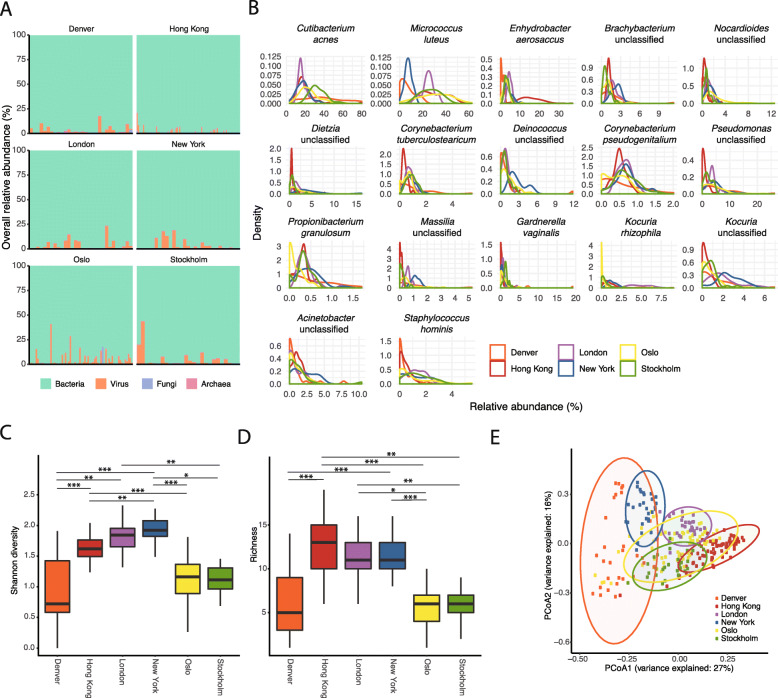
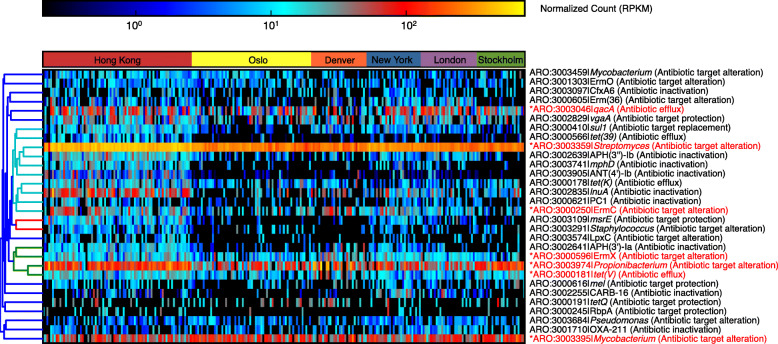
The public transit is a built environment with high occupant density across the globe, and identifying factors shaping public transit air microbiomes will help design strategies to minimize the transmission of pathogens. However, the majority of microbiome works dedicated to the public transit air are limited to amplicon sequencing, and our knowledge regarding the functional potentials and the repertoire of resistance genes (i.e. resistome) is limited. Furthermore, current air microbiome investigations on public transit systems are focused on single cities, and a multi-city assessment of the public transit air microbiome will allow a greater understanding of whether and how broad environmental, building, and anthropogenic factors shape the public transit air microbiome in an international scale. Therefore, in this study, the public transit air microbiomes and resistomes of six cities across three continents (Denver, Hong Kong, London, New York City, Oslo, Stockholm) were characterized.
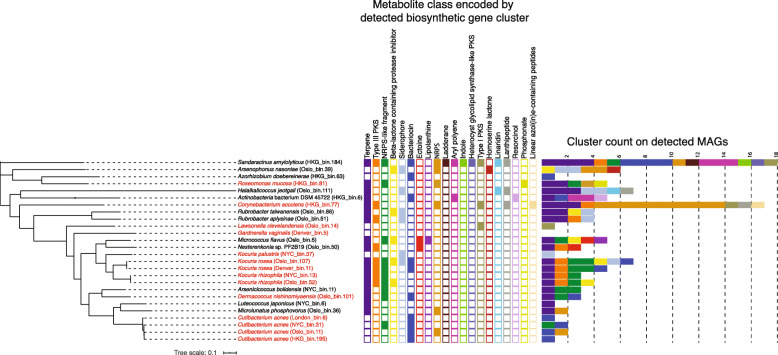
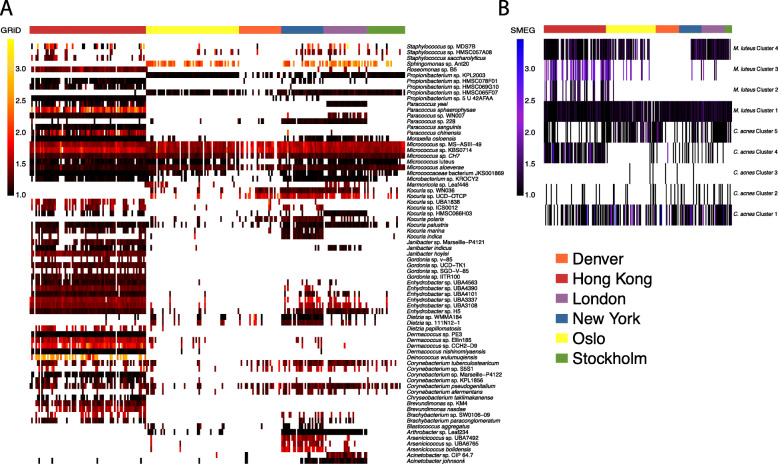
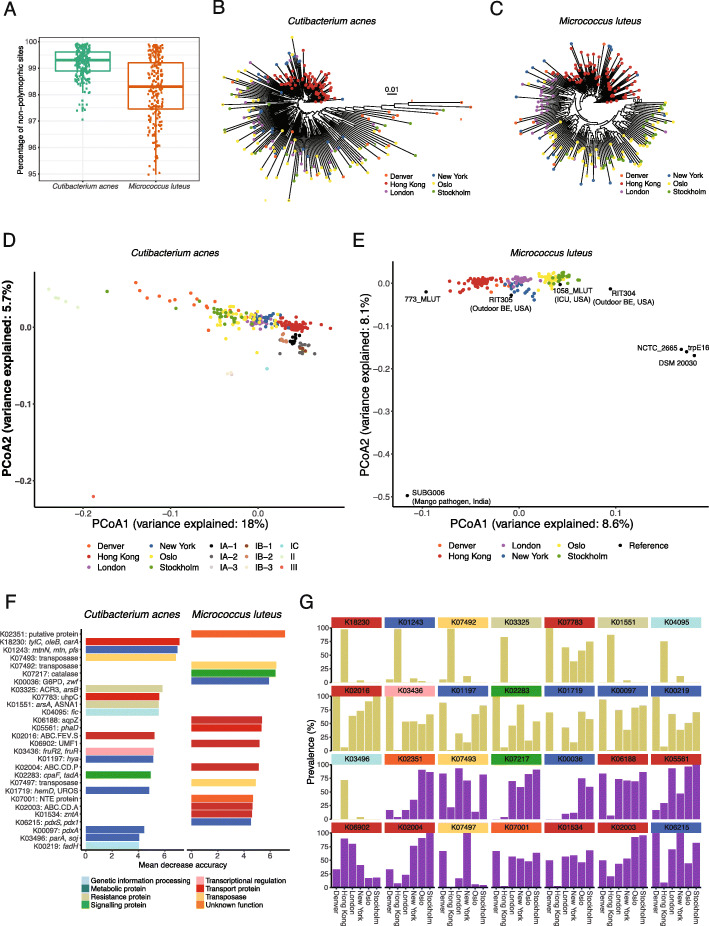
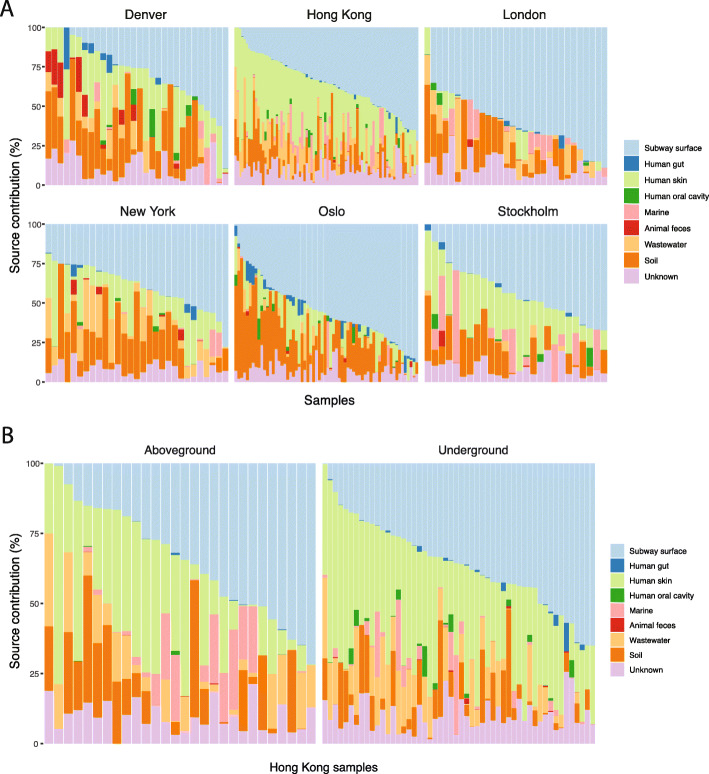
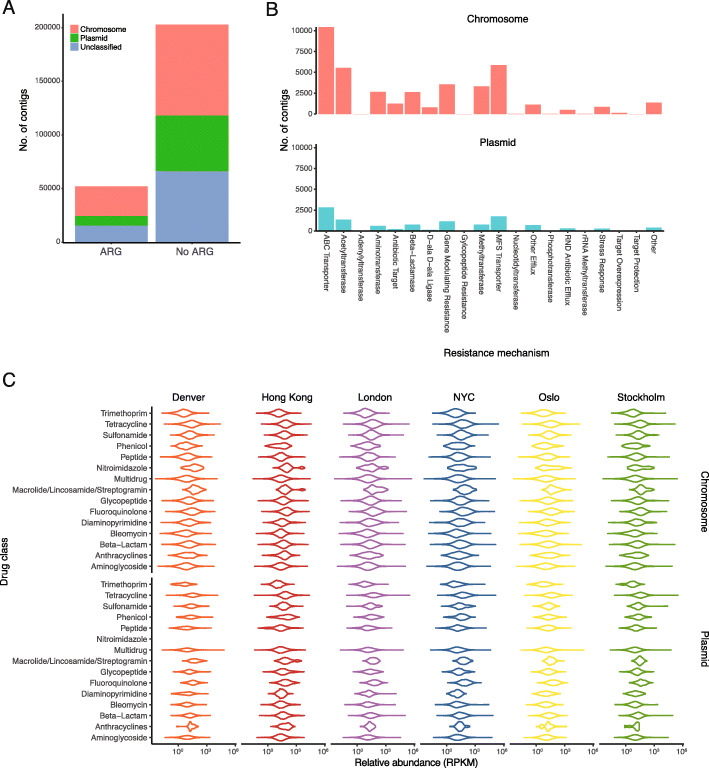
City was the sole factor associated with public transit air microbiome differences, with diverse taxa identified as drivers for geography-associated functional potentials, concomitant with geographical differences in species- and strain-level inferred growth profiles. Related bacterial strains differed among cities in genes encoding resistance, transposase, and other functions. Sourcetracking estimated that human skin, soil, and wastewater were major presumptive resistome sources of public transit air, and adjacent public transit surfaces may also be considered presumptive sources. Large proportions of detected resistance genes were co-located with mobile genetic elements including plasmids. Biosynthetic gene clusters and city-unique coding sequences were found in the metagenome-assembled genomes.
Overall, geographical specificity transcends multiple aspects of the public transit air microbiome, and future efforts on a global scale are warranted to increase our understanding of factors shaping the microbiome of this unique built environment.
公共交通是全球范围内人员密度较高的建筑环境,确定影响公共交通空气微生物群落的因素将有助于制定策略,以尽量减少病原体传播。然而,大多数致力于公共交通空气的微生物群落研究仅限于扩增子测序,我们对其功能潜力和抗性基因库(即抗性组)的了解有限。此外,目前对公共交通系统的空气微生物群落调查集中在单个城市,对公共交通空气微生物群落进行多城市评估将有助于更深入地了解广泛的环境、建筑和人为因素是否以及如何在国际范围内塑造公共交通空气微生物群落。因此,在本研究中,对三大洲六个城市(丹佛、香港、伦敦、纽约市、奥斯陆、斯德哥尔摩)的公共交通空气微生物群落和抗性组进行了表征。
城市是与公共交通空气微生物群落差异相关的唯一因素,不同的分类群被确定为地理相关功能潜力的驱动因素,同时在物种和菌株水平推断的生长概况上存在地理差异。编码抗性、转座酶和其他功能的基因在不同城市的相关细菌菌株中有所不同。溯源分析估计,人类皮肤、土壤和废水是公共交通空气主要的推定抗性组来源,相邻的公共交通表面也可能被视为推定来源。检测到的大部分抗性基因与包括质粒在内的移动遗传元件共定位。在宏基因组组装基因组中发现了生物合成基因簇和城市独特的编码序列。
总体而言,地理特异性在公共交通空气微生物群落的多个方面都有体现,未来有必要在全球范围内开展更多工作,以增进我们对塑造这一独特建筑环境微生物群落的因素的理解。