Chair for Inorganic Functional Materials, Faculty of Engineering, Kiel University, Kiel, Germany.
Mathematics Institute, University of Oxford, Oxford, UK.
Sci Rep. 2021 May 26;11(1):10988. doi: 10.1038/s41598-021-90217-3.
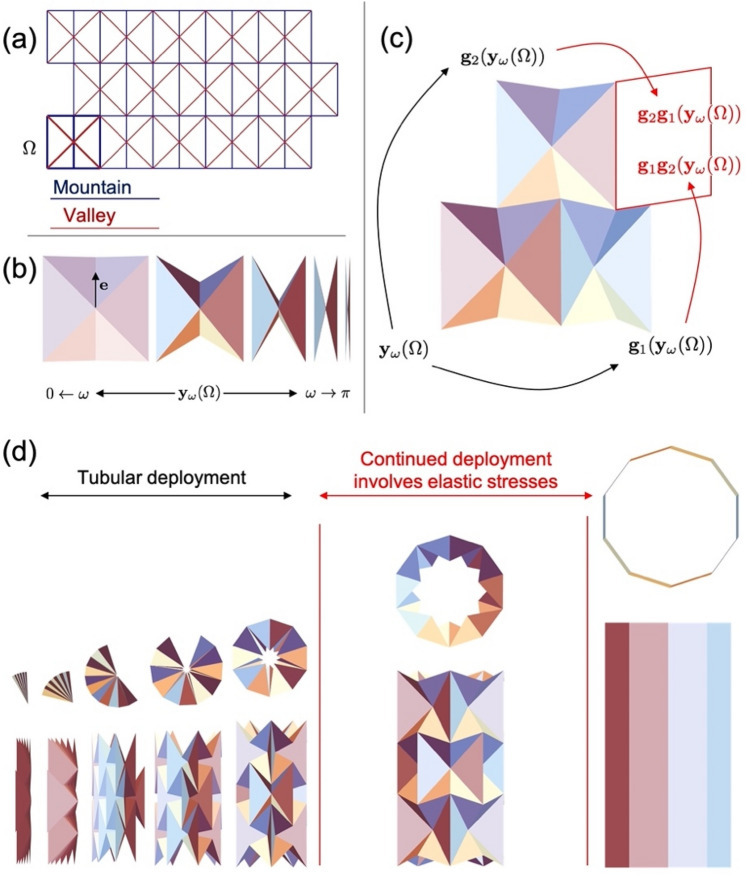
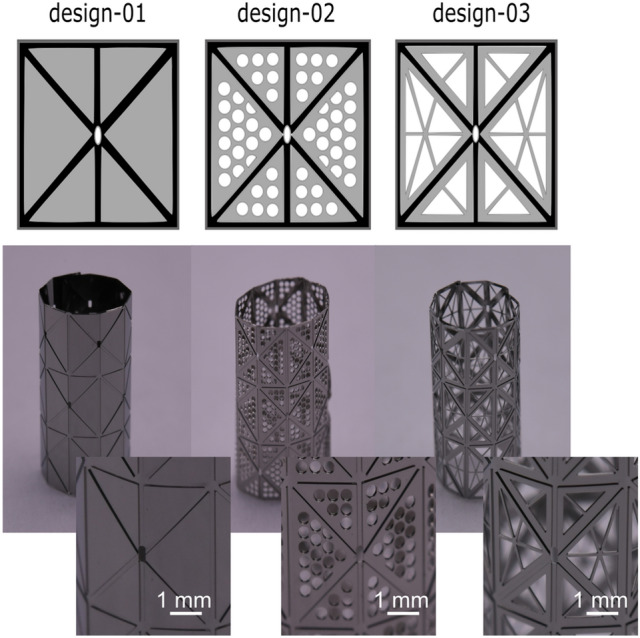
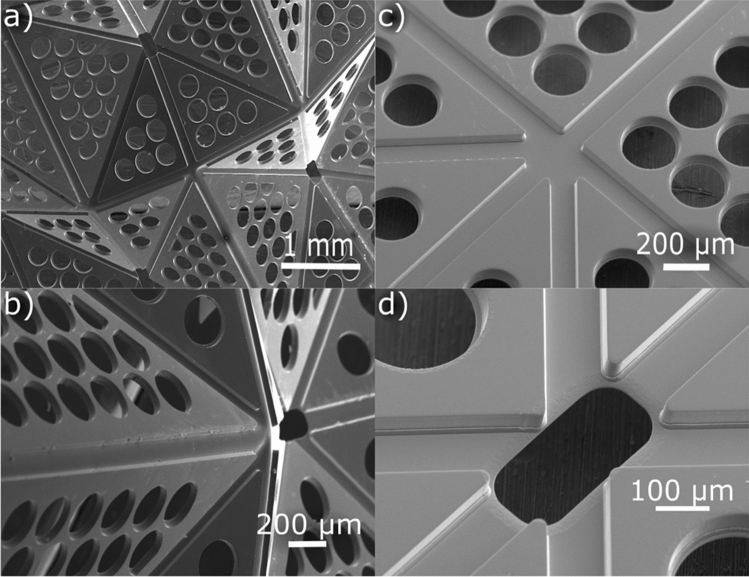
We describe the design and fabrication of miniaturized origami structures based on thin-film shape memory alloys. These devices are attractive for medical implants, as they overcome the opposing requirements of crimping the implant for insertion into an artery while keeping sensitive parts of the implant nearly stress-free. The designs are based on a group theory approach in which compatibility at a few creases implies the foldability of the whole structure. Importantly, this approach is versatile and thus provides a pathway for patient-specific treatment of brain aneurysms of differing shapes and sizes. The wafer-based monolithic fabrication method demonstrated here, which comprises thin-film deposition, lithography, and etching using sacrificial layers, is a prerequisite for any integrated self-folding mechanism or sensors and will revolutionize the availability of miniaturized implants, allowing for new and safer medical treatments.
我们描述了基于薄膜形状记忆合金的小型折纸结构的设计和制造。这些设备对于医疗植入物很有吸引力,因为它们克服了将植入物卷曲以插入动脉的同时保持植入物的敏感部分几乎无应力的要求。这些设计基于群论方法,其中在少数几个折痕处的兼容性意味着整个结构的可折叠性。重要的是,这种方法具有通用性,因此为针对不同形状和大小的脑动脉瘤的患者特定治疗提供了途径。这里展示的基于晶圆的整体制造方法包括使用牺牲层的薄膜沉积、光刻和蚀刻,这是任何集成自折叠机构或传感器的前提条件,将彻底改变小型植入物的可用性,为新的和更安全的医疗治疗方法提供可能。