Department of Pediatrics, Paracelsus Medical University, Nuremberg, Germany.
Department of Pediatrics, McMaster University, Hamilton, ON, Canada.
Pediatr Res. 2022 May;91(6):1350-1360. doi: 10.1038/s41390-021-01566-8. Epub 2021 May 26.
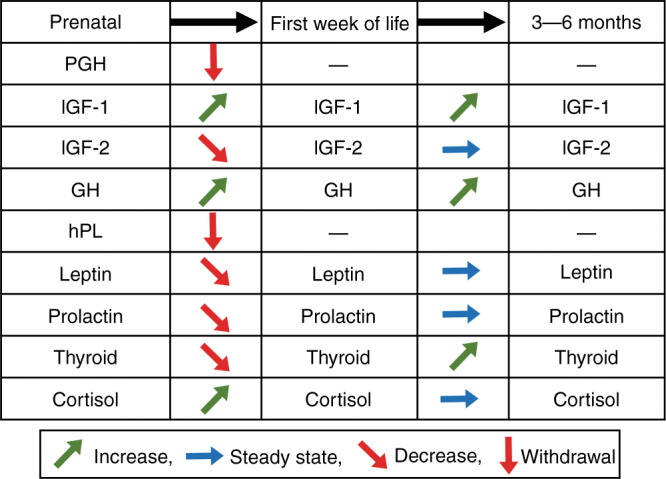
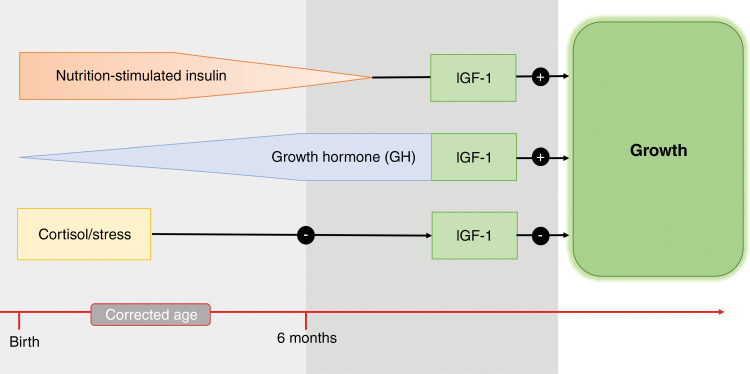
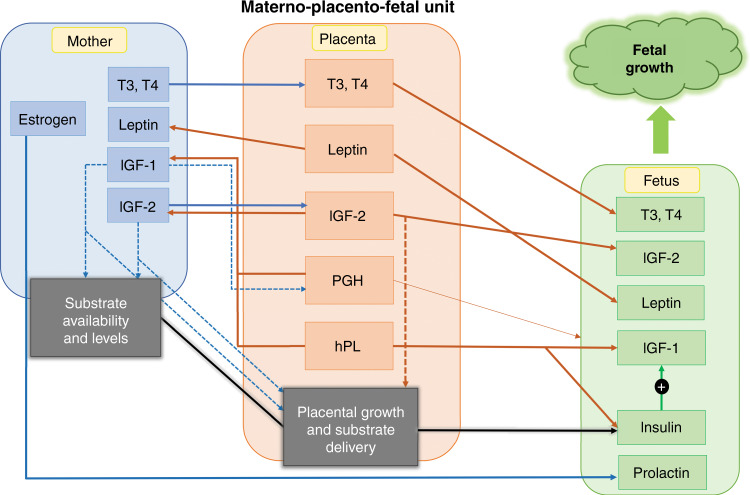
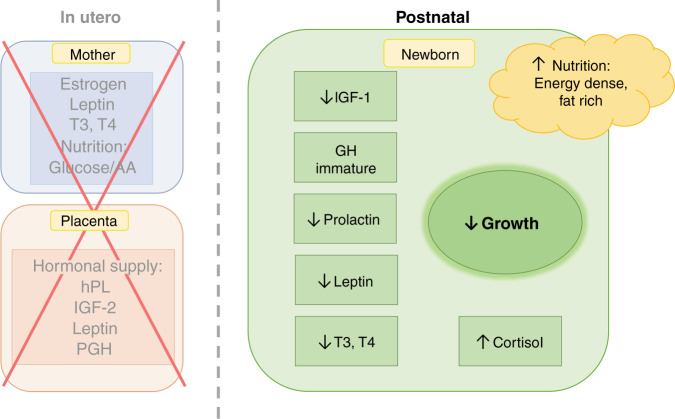
Despite optimized nutrition, preterm-born infants grow slowly and tend to over-accrete body fat. We hypothesize that the premature dissociation of the maternal-placental-fetal unit disrupts the maintenance of physiological endocrine function in the fetus, which has severe consequences for postnatal development. This review highlights the endocrine interactions of the maternal-placental-fetal unit and the early perinatal period in both preterm and term infants. We report on hormonal levels (including tissue, thyroid, adrenal, pancreatic, pituitary, and placental hormones) and nutritional supply and their impact on infant body composition. The data suggest that the premature dissociation of the maternal-placental-fetal unit leads to a clinical picture similar to panhypopituitarism. Further, we describe how the premature withdrawal of the maternal-placental unit, neonatal morbidities, and perinatal stress can cause differences in the levels of growth-promoting hormones, particularly insulin-like growth factors (IGF). In combination with the endocrine disruption that occurs following dissociation of the maternal-placental-fetal unit, the premature adaptation to the extrauterine environment leads to early and fast accretion of fat mass in an immature body. In addition, we report on interventional studies that have aimed to compensate for hormonal deficiencies in infants born preterm through IGF therapy, resulting in improved neonatal morbidity and growth. IMPACT: Preterm birth prematurely dissociates the maternal-placental-fetal unit and disrupts the metabolic-endocrine maintenance of the immature fetus with serious consequences for growth, body composition, and neonatal outcomes. The preterm metabolic-endocrine disruption induces symptoms resembling anterior pituitary failure (panhypopituitarism) with low levels of IGF-1, excessive postnatal fat mass accretion, poor longitudinal growth, and failure to thrive. Appropriate gestational age-adapted nutrition alone seems insufficient for the achievement of optimal growth of preterm infants. Preliminary results from interventional studies show promising effects of early IGF-1 supplementation on postnatal development and neonatal outcomes.
尽管进行了优化的营养支持,早产儿的生长仍然缓慢,并且往往会过度积累体脂肪。我们假设,母体-胎盘-胎儿单位的过早分离会破坏胎儿生理内分泌功能的维持,这对产后发育有严重影响。这篇综述强调了母体-胎盘-胎儿单位以及早产儿和足月儿的早期围产期的内分泌相互作用。我们报告了激素水平(包括组织、甲状腺、肾上腺、胰腺、垂体和胎盘激素)和营养供应及其对婴儿身体成分的影响。数据表明,母体-胎盘-胎儿单位的过早分离导致类似于全垂体功能减退症的临床症状。此外,我们还描述了母体-胎盘单位的过早退出、新生儿疾病和围产期应激如何导致促生长激素水平的差异,特别是胰岛素样生长因子(IGF)。结合母体-胎盘-胎儿单位分离后发生的内分泌紊乱,早产儿对宫外环境的过早适应导致不成熟身体中脂肪量的早期快速积累。此外,我们还报告了干预性研究,这些研究旨在通过 IGF 治疗补偿早产儿的激素缺乏,从而改善新生儿发病率和生长。影响:早产会过早地分离母体-胎盘-胎儿单位,并破坏未成熟胎儿的代谢-内分泌维持,对生长、身体成分和新生儿结局产生严重影响。早产的代谢-内分泌紊乱会导致类似于垂体前叶功能减退症(全垂体功能减退症)的症状,IGF-1 水平低、过多的产后脂肪量积累、纵向生长不良和生长不良。单独适当的胎龄适应营养似乎不足以实现早产儿的最佳生长。干预性研究的初步结果表明,早期 IGF-1 补充对新生儿发育和结局有积极影响。