
健康成人使用地塞米松泪小管植入剂后地塞米松的血浆药代动力学参数
Plasma Pharmacokinetic Parameters of Dexamethasone Following Administration of a Dexamethasone Intracanalicular Insert in Healthy Adults.
作者信息
Blizzard Charles, McLaurin Eugene B, Driscoll Arthur, Silva Fabiana Q, Vantipalli Srilatha, Metzinger Jamie Lynne, Goldstein Michael H
机构信息
Ocular Therapeutix, Inc., Bedford, MA, USA.
Total Eye Care, Memphis, TN, USA.
出版信息
Clin Ophthalmol. 2021 May 18;15:2055-2061. doi: 10.2147/OPTH.S307194. eCollection 2021.
PURPOSE
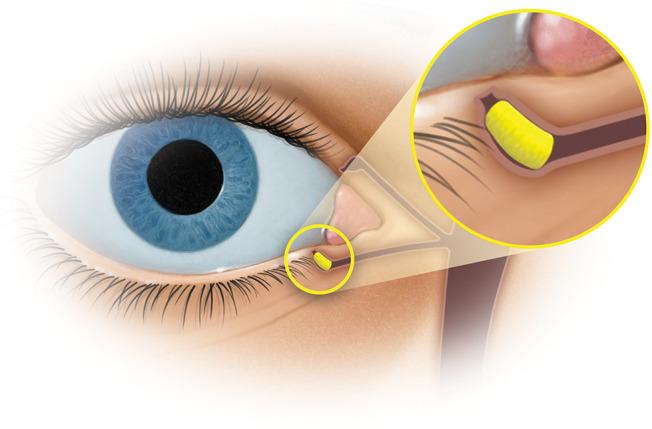
Intracanalicular dexamethasone insert is a resorbable sustained-release polyethylene glycol-based hydrogel insert delivering a 0.4 mg tapered dose of dexamethasone for up to 30 days to the ocular surface. It is FDA-approved for treating inflammation and pain after ocular surgery. It has also been studied for ocular surface diseases such as allergic conjunctivitis. This study assessed the plasma pharmacokinetic (PK) parameters of dexamethasone following intracanalicular insertion.
PATIENTS AND METHODS
Study subjects (N=16) were healthy adults. A dexamethasone insert was unilaterally placed into the canaliculus, and blood samples were obtained for analysis 1 hour prior to insertion and 1, 2, 4, 8, 16, 24 hours and 4, 8, 15, 22 and 29 days after insertion. Safety analyses included slit lamp and dilated fundus examinations, best corrected visual acuity, intraocular pressure (IOP) and adverse events (AEs).
RESULTS
Plasma results were below the lower limit of quantitation (LLOQ) at all time points in five subjects (31.3%). Among subjects with quantifiable plasma concentrations, C was <1 ng/mL (range, 0.05 to 0.81 ng/mL), AUC ranged from 0.13 to 7.18 h∙ng/mL, and T ranged from 4.0 to 163.0 hours. Mean (SD) IOP increased from 16.3 (1.4) mmHg at baseline to 19.3 (3.2) at Day 22 but returned to baseline after treatment. No changes occurred in dilated fundus, punctum, or visual acuity examinations.
CONCLUSION
The dexamethasone 0.4 mg insert results in minimal systemic exposure following intracanalicular administration.
目的
泪小管地塞米松植入剂是一种可吸收的缓释聚乙二醇基水凝胶植入剂,可向眼表递送0.4mg逐渐递减剂量的地塞米松,持续长达30天。它已获得美国食品药品监督管理局(FDA)批准,用于治疗眼科手术后的炎症和疼痛。它也已针对过敏性结膜炎等眼表疾病进行了研究。本研究评估了泪小管植入地塞米松后的血浆药代动力学(PK)参数。
患者和方法
研究对象(N = 16)为健康成年人。将地塞米松植入剂单侧放入泪小管,并在植入前1小时以及植入后1、2、4、8、16、24小时以及4、8、15、22和29天采集血样进行分析。安全性分析包括裂隙灯和散瞳眼底检查、最佳矫正视力、眼压(IOP)和不良事件(AE)。
结果
五名受试者(31.3%)在所有时间点的血浆结果均低于定量下限(LLOQ)。在血浆浓度可量化的受试者中,C<1ng/mL(范围为0.05至0.81ng/mL),AUC范围为0.13至7.18h∙ng/mL,T范围为4.0至163.0小时。平均(标准差)眼压从基线时的16.3(1.4)mmHg升高至第22天时的19.3(3.2)mmHg,但治疗后恢复至基线。散瞳眼底、泪点或视力检查未发生变化。
结论
0.4mg地塞米松植入剂经泪小管给药后全身暴露量极小。
 Zotero 插件