School of Rehabilitation Science, Shanghai University of Traditional Chinese Medicine, Shanghai, 201203, People's Republic of China.
Institute of Rehabilitation Medicine, Shanghai University of Traditional Chinese Medicine, Shanghai, 201203, People's Republic of China.
Clin Interv Aging. 2021 May 17;16:811-821. doi: 10.2147/CIA.S308893. eCollection 2021.
Sarcopenia is a syndrome characterized by the loss of skeletal muscle mass and strength. Most studies have focused on dynamic resistance exercises for preventing muscular decline and maintaining the muscle strength of older individuals. However, this training mode is impractical for older people with osteoarthritis and a limited range of motion. The static strength training mode is more suitable for older people. Therefore, a determination of the effect and mechanism of static strength training on sarcopenia is critical.
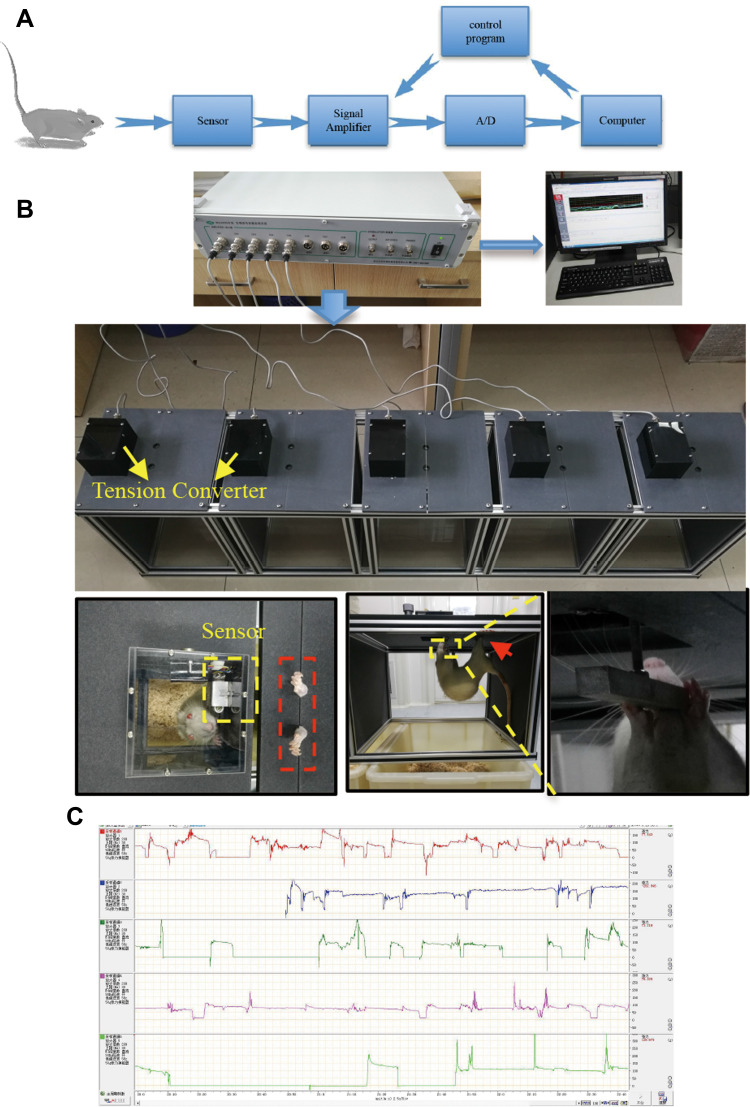
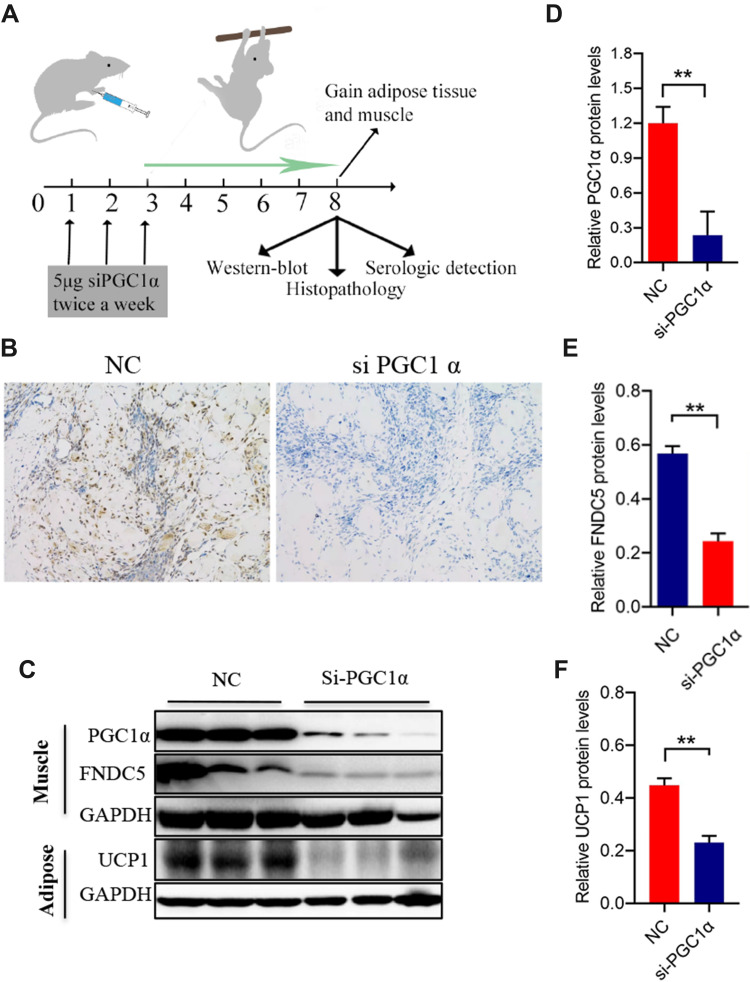
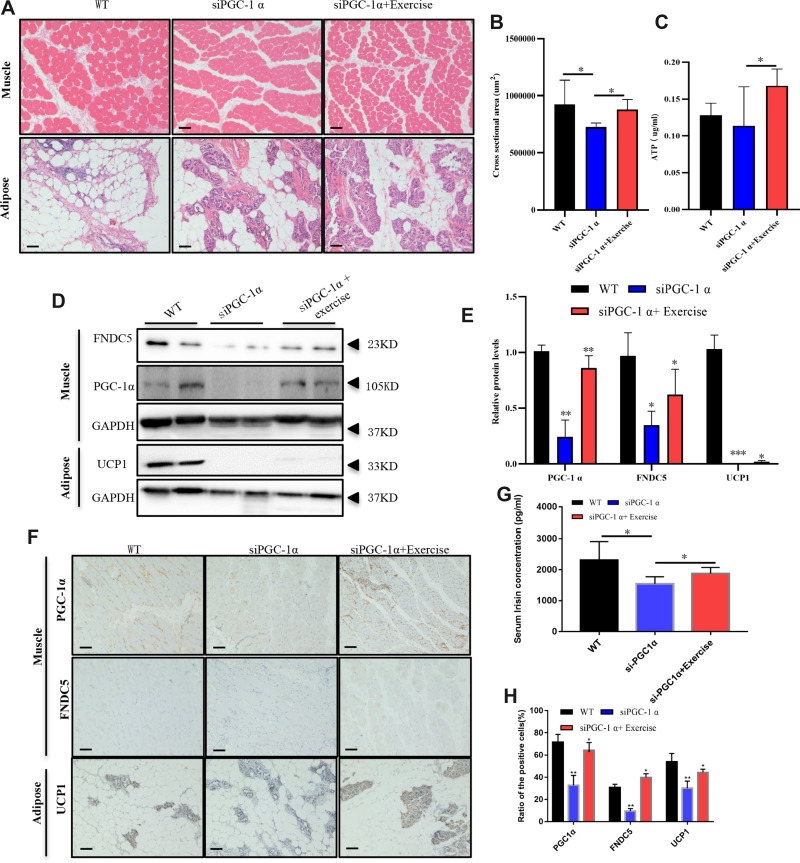
In this study, we developed a training device designed to collect training data and evaluate the effects of static training on the upper limbs of rats. The expression of PGC-1α was locally blocked by injecting a siRNA at the midpoint of the biceps to determine whether PGC-1α signal transduction participates in the effects of high-intensity interval static training on muscle strength. Then, the rat's motor capacity was measured after static strength training. Immunohistochemistry and Western blotting were applied to determine PGC-1α/FNDC5/UCP1 expression levels in the muscle and adipose tissue. The serum irisin level was also detected using an enzyme-linked immunosorbent assay (ELISA).
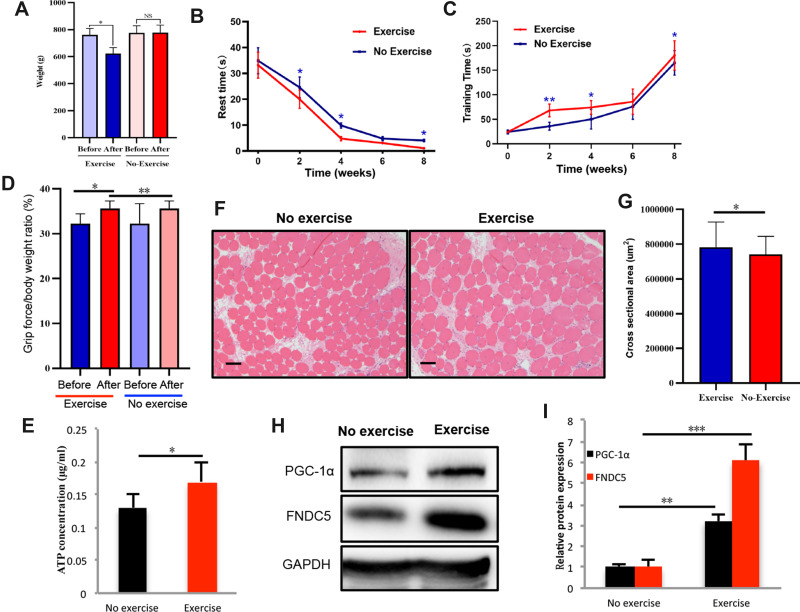
Increased levels of serum irisin and local expression of FNDC5, PGC-1α, and UCP1 were observed in the biceps brachii and surrounding fatty tissue after static strength training. Static strength training showed an advantage in reducing body weight and white fat accumulation while increasing the muscle fiber volume, which resulted in a longer training time and shorter rest time.
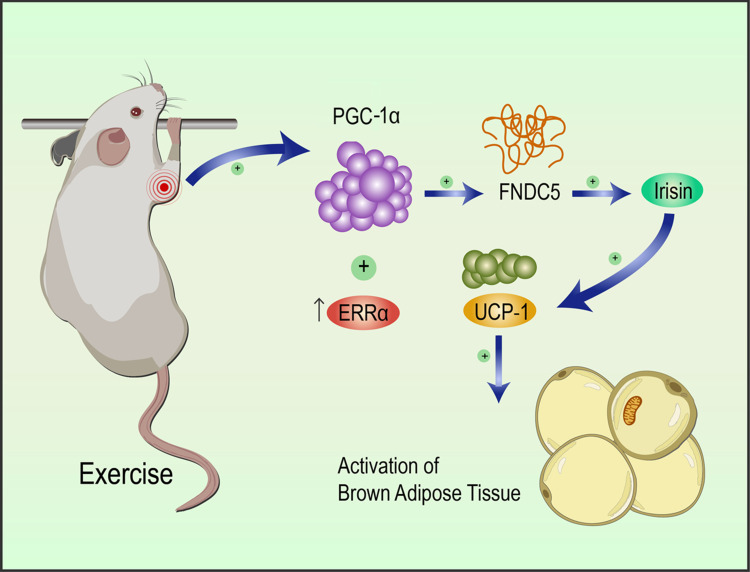
Overall, these results indicated that high-intensity interval static training prevents skeletal muscle atrophy and improves the motor function of aged rats through the PGC-1α/FNDC5/UCP1 signaling pathway.
肌少症是一种以骨骼肌质量和力量丧失为特征的综合征。大多数研究都集中在动态抗阻运动上,以预防肌肉衰退和维持老年人的肌肉力量。然而,这种训练模式对于患有骨关节炎和运动范围有限的老年人来说并不实际。静态力量训练模式更适合老年人。因此,确定静态力量训练对肌少症的效果和机制至关重要。
在这项研究中,我们开发了一种训练设备,用于收集训练数据并评估静态训练对上臂的影响。通过在肱二头肌中点注射 siRNA 局部阻断 PGC-1α 的表达,确定 PGC-1α 信号转导是否参与高强度间歇静态训练对肌肉力量的影响。然后,在进行静态力量训练后测量大鼠的运动能力。应用免疫组织化学和 Western blot 检测肌肉和脂肪组织中 PGC-1α/FNDC5/UCP1 的表达水平。还使用酶联免疫吸附测定(ELISA)检测血清鸢尾素水平。
在肱二头肌和周围脂肪组织中观察到,经过静态力量训练后,血清鸢尾素水平升高,局部表达 FNDC5、PGC-1α 和 UCP1。与动态抗阻运动相比,静态力量训练在减轻体重和白色脂肪积累方面具有优势,同时增加了肌肉纤维体积,从而延长了训练时间,缩短了休息时间。
总之,这些结果表明,高强度间歇静态训练通过 PGC-1α/FNDC5/UCP1 信号通路防止骨骼肌萎缩,改善老年大鼠的运动功能。