Jia Jie, Qiu Dandan, Lu Caixia, Wang Wenguang, Li Na, Han Yuanyuan, Tong Pinfen, Sun Xiaomei, Wu Min, Dai Jiejie
Institute of Medical Biology, Chinese Academy of Medical Science and Peking Union Medical College, Kunming, China.
Scientific Research Laboratory Center, The First Affiliated Hospital of Kunming Medical University, Kunming, China.
Front Genet. 2021 May 10;12:654955. doi: 10.3389/fgene.2021.654955. eCollection 2021.
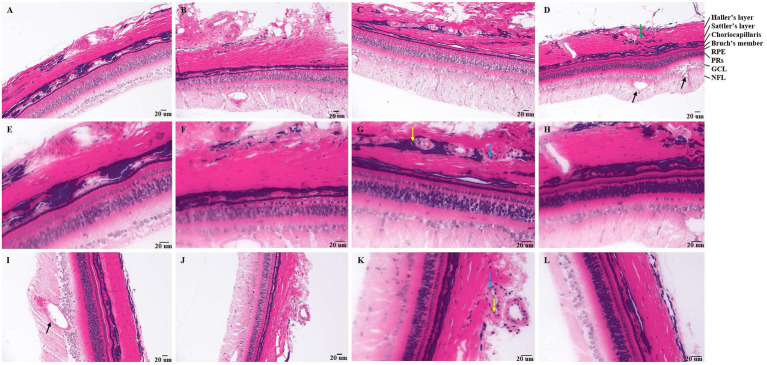
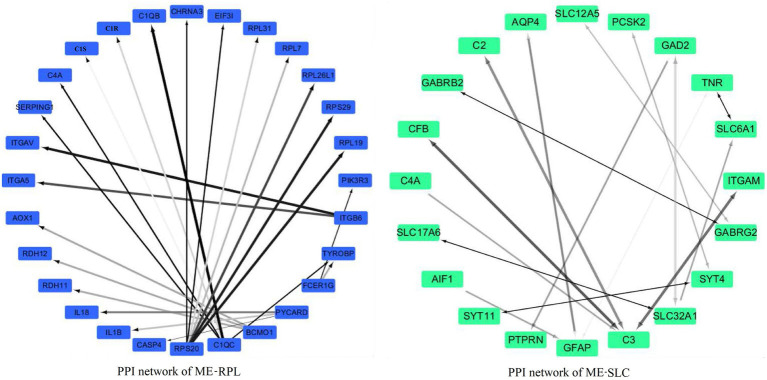
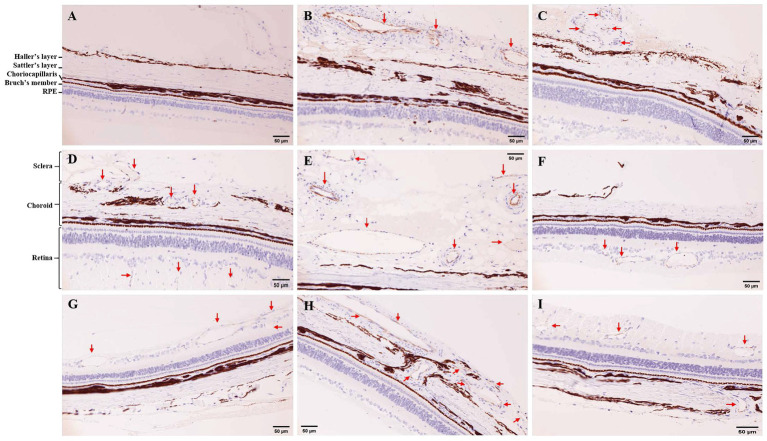
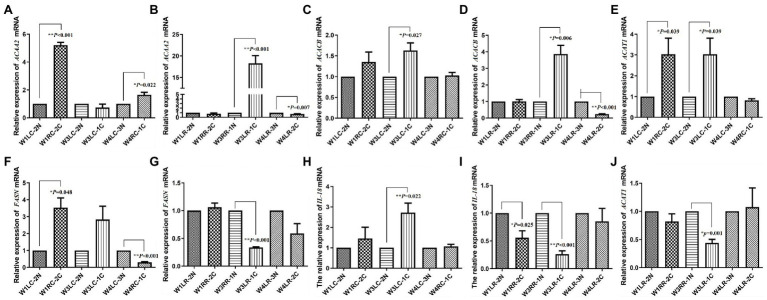
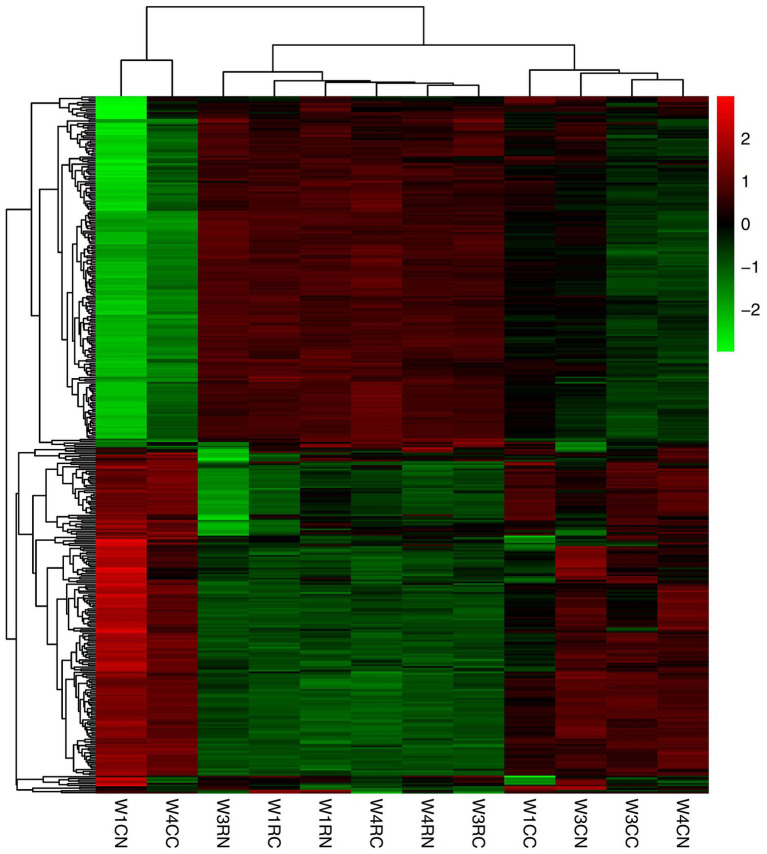
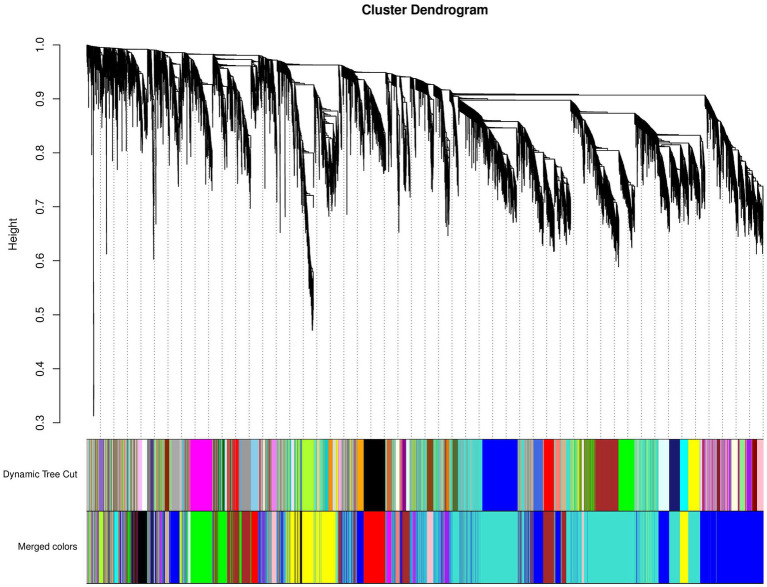
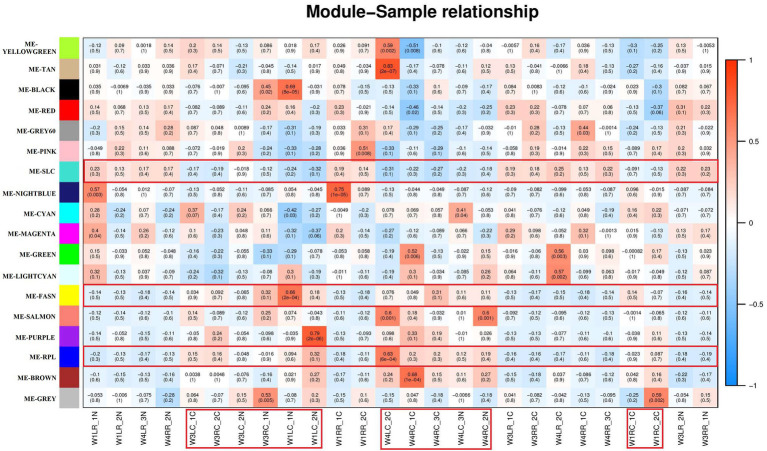
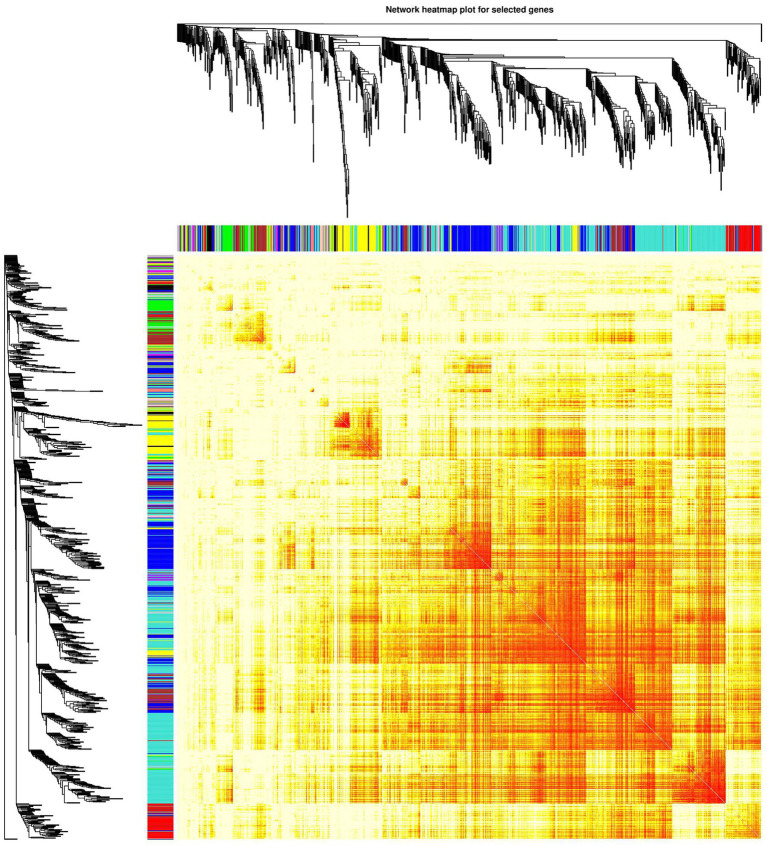
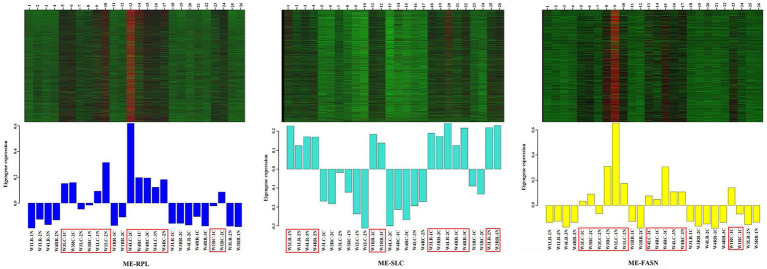
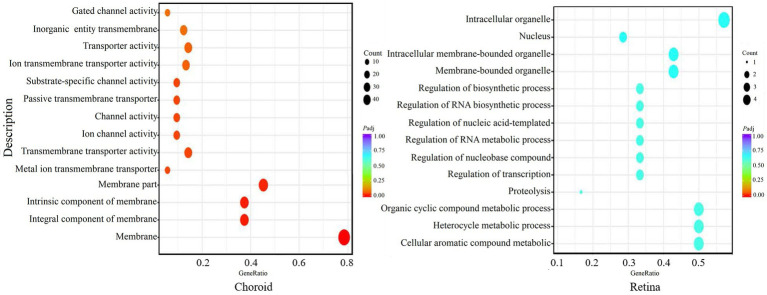
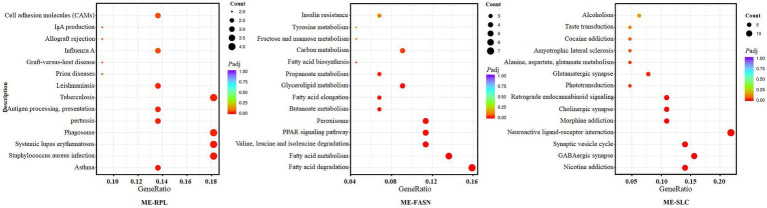
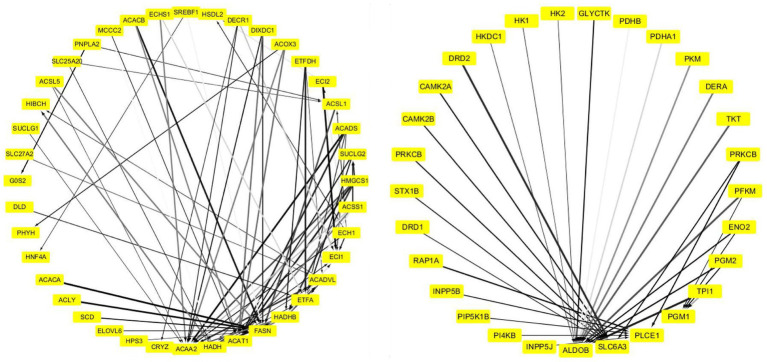
Pathological neovascularization in choroid, a leading cause of blindness, is a characteristic of many fundus diseases, such as diabetic retinopathy and age-related macular degeneration. The present study aimed to elucidate the key signaling pathways in choroidal neovascularization (CNV) by analyzing the mRNA profiles of choroid and retina in tree shrews with CNV. We induced choroidal angiogenesis by laser photocoagulation in 15 tree shrews and obtained mRNA profiles of their choroids and retinas by high-throughput transcriptome sequencing. Hierarchical cluster analysis, weighted gene co-expression network analysis (WGCNA), protein-protein interaction (PPI) network analysis, hematoxylin and eosin (HE) staining, CD31 immunohistochemistry (IHC), and reverse transcription quantitative PCR (RT-qPCR) were performed. After laser photocoagulation, we obtained a total of 350 differentially expressed genes (DEGs) in the choroid, including 59 genes in Module-FASN ("ME-FASN") module and 28 genes in Module-RPL ("ME-RPL") module. A total of 69 DEGs in retina, including 20 genes in Module-SLC ("ME-SLC") module. Bioinformatics analysis demonstrated that DEGs in choroid were mainly involved in membrane transport; DEGs in "ME-RPL" were prominent in pathways associated with IgA production, antigen presentation, and cell adhesion molecules (CAMs) signaling. DEGs in "ME-FASN" were involved in fatty acid metabolism and PPAR signaling pathway, while DEGs in "ME-SLC" were involved in GABAergic synapse, neuroactive life receptor interaction, cholinergic synapse, and retrograde endocannabinoid signaling pathway. PPI network analysis demonstrated that the ribosomal protein family genes ( and ) are key factors of "ME-RPL," acyl-CoA superfamily genes ( and ) and are key factors of "ME-FASN" and superfamily of solid carrier genes ( and ) and complement genes ( and ) are key factors of "ME-SLC." In conclusion, the present study discovered the important signal transductions (fatty acid metabolic pathway and CAMs signaling) and genes (ribosomal protein family and the complement system) in tree shrew CNV. We consider that our findings hold implications in unraveling molecular mechanisms that underlie occurrence and development of CNV.
脉络膜病理性新生血管形成是导致失明的主要原因,是许多眼底疾病的特征,如糖尿病视网膜病变和年龄相关性黄斑变性。本研究旨在通过分析患有脉络膜新生血管(CNV)的树鼩脉络膜和视网膜的mRNA谱,阐明脉络膜新生血管形成中的关键信号通路。我们通过激光光凝诱导15只树鼩脉络膜血管生成,并通过高通量转录组测序获得其脉络膜和视网膜的mRNA谱。进行了层次聚类分析、加权基因共表达网络分析(WGCNA)、蛋白质-蛋白质相互作用(PPI)网络分析、苏木精和伊红(HE)染色、CD31免疫组织化学(IHC)以及逆转录定量PCR(RT-qPCR)。激光光凝后,我们在脉络膜中总共获得了350个差异表达基因(DEG),包括模块-FASN(“ME-FASN”)模块中的59个基因和模块-RPL(“ME-RPL”)模块中的28个基因。视网膜中共有69个DEG,包括模块-SLC(“ME-SLC”)模块中的20个基因。生物信息学分析表明,脉络膜中的DEG主要参与膜转运;“ME-RPL”中的DEG在与IgA产生、抗原呈递和细胞粘附分子(CAM)信号相关的通路中突出。“ME-FASN”中的DEG参与脂肪酸代谢和PPAR信号通路,但“ME-SLC”中的DEG参与GABA能突触、神经活性生命受体相互作用、胆碱能突触和逆行内源性大麻素信号通路。PPI网络分析表明,核糖体蛋白家族基因(和)是“ME-RPL”的关键因子,酰基辅酶A超家族基因(和)和是“ME-FASN”的关键因子,固体载体基因超家族(和)和补体基因(和)是“ME-SLC”的关键因子。总之,本研究发现了树鼩CNV中的重要信号转导(脂肪酸代谢途径和CAM信号)和基因(核糖体蛋白家族和补体系统)。我们认为我们的发现对揭示CNV发生和发展的分子机制具有重要意义。