UCLA Cannabis Research Initiative, Jane and Terry Semel Institute for Neuroscience and Human Behavior, Department of Psychiatry and Biobehavioral Sciences, David Geffen School of Medicine, University of California.
Department of Anesthesiology and Perioperative Medicine, David Geffen School of Medicine, University of California.
Exp Clin Psychopharmacol. 2021 Apr;29(2):137-146. doi: 10.1037/pha0000457.
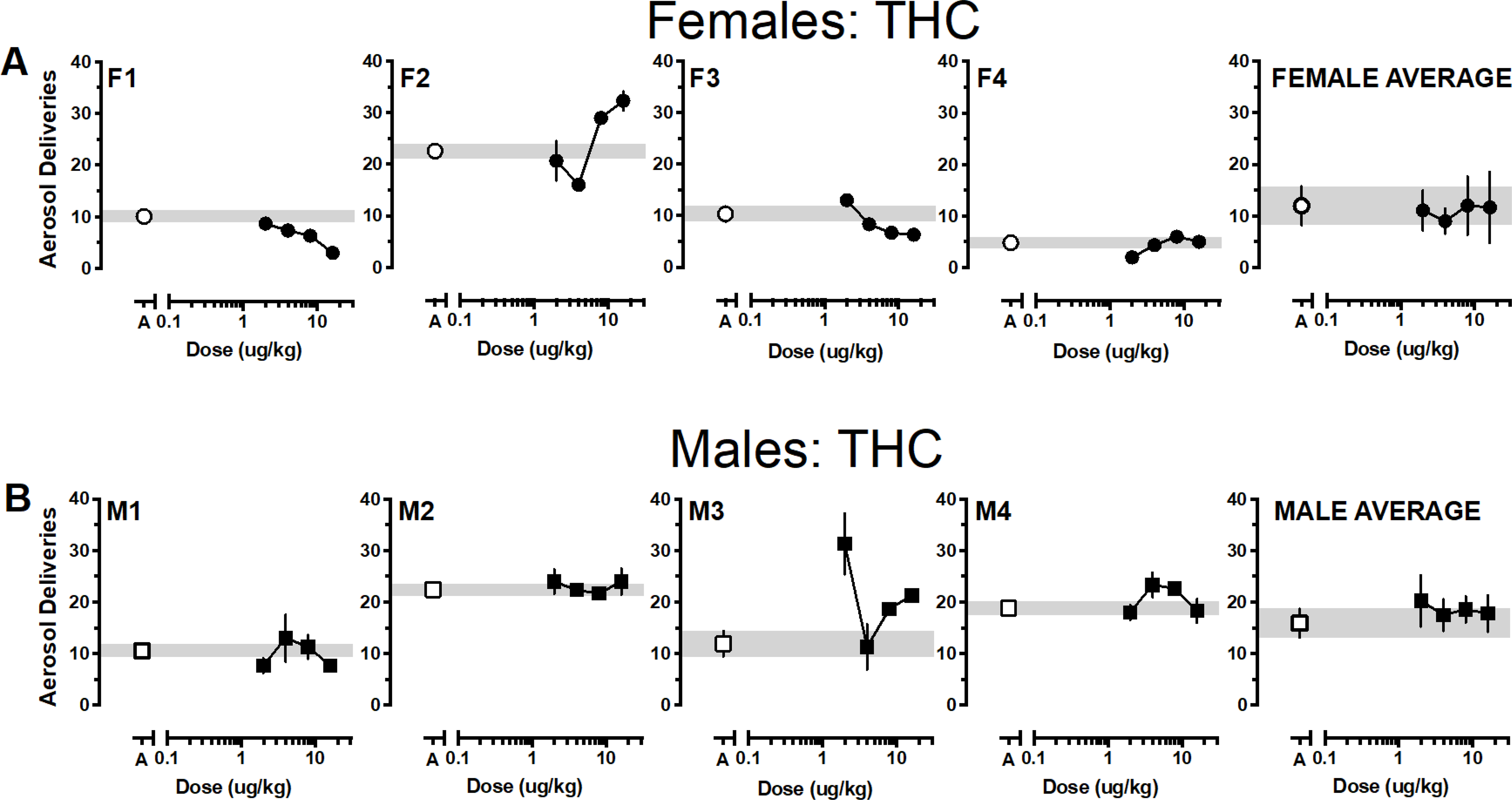
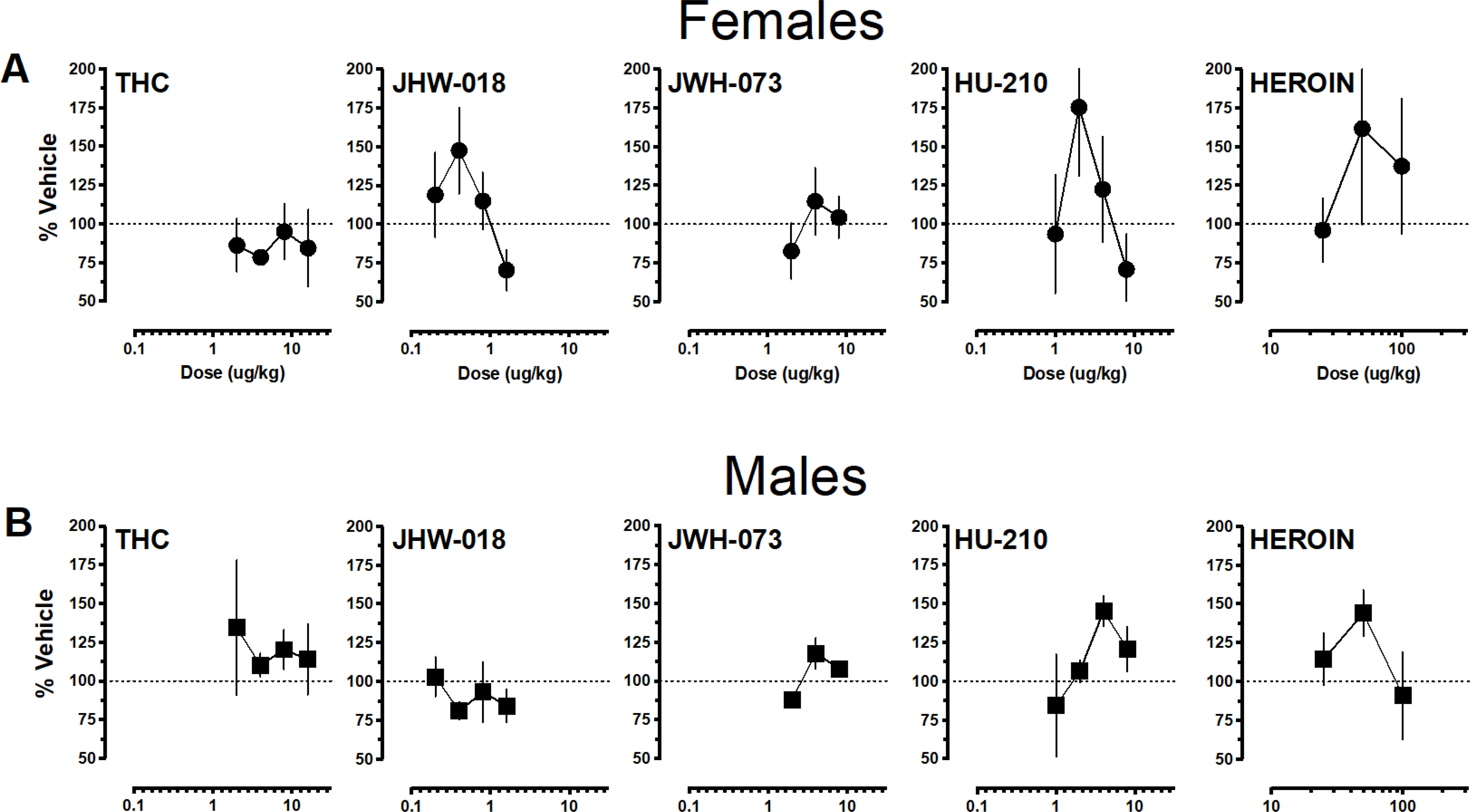
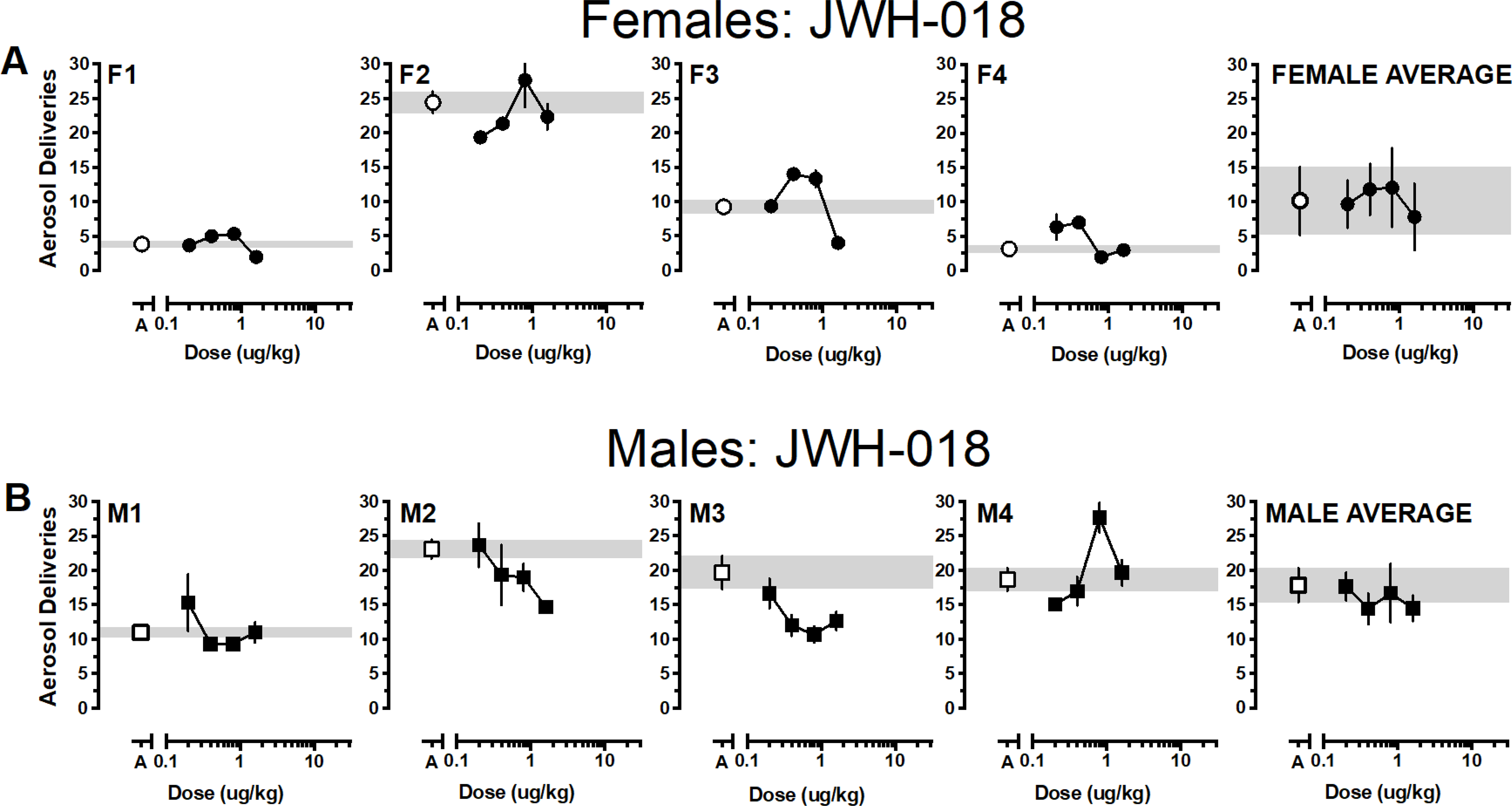
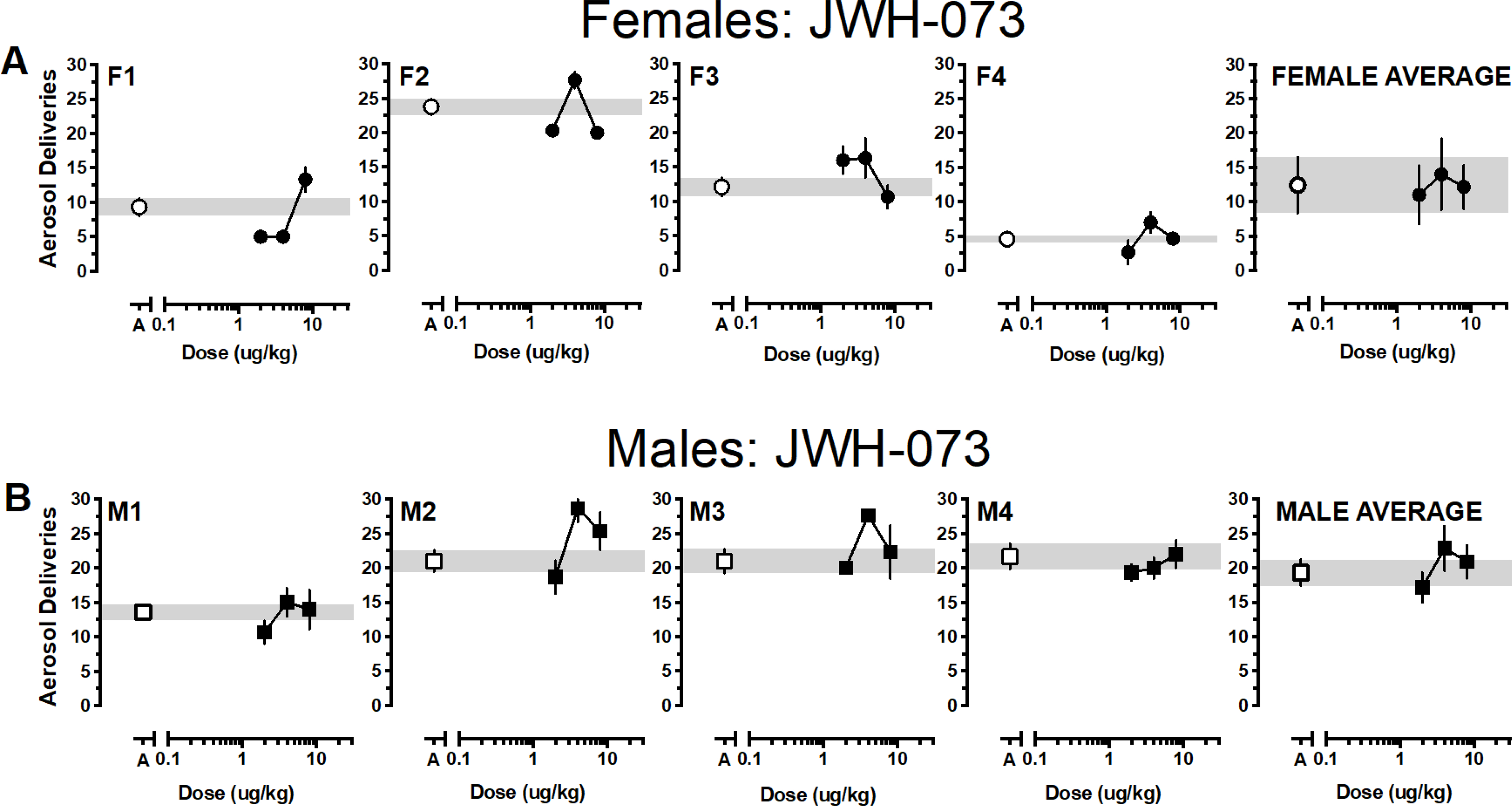
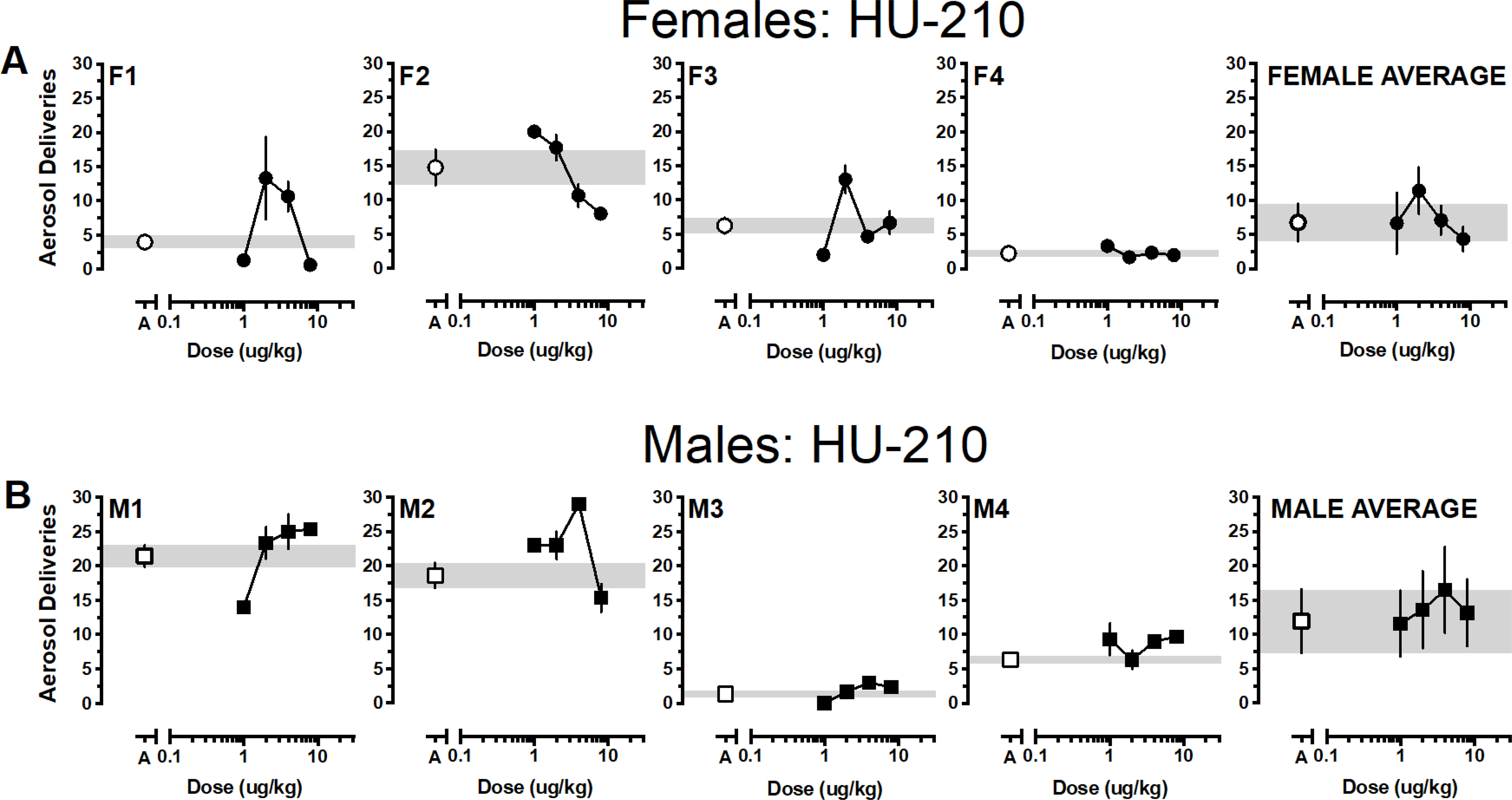
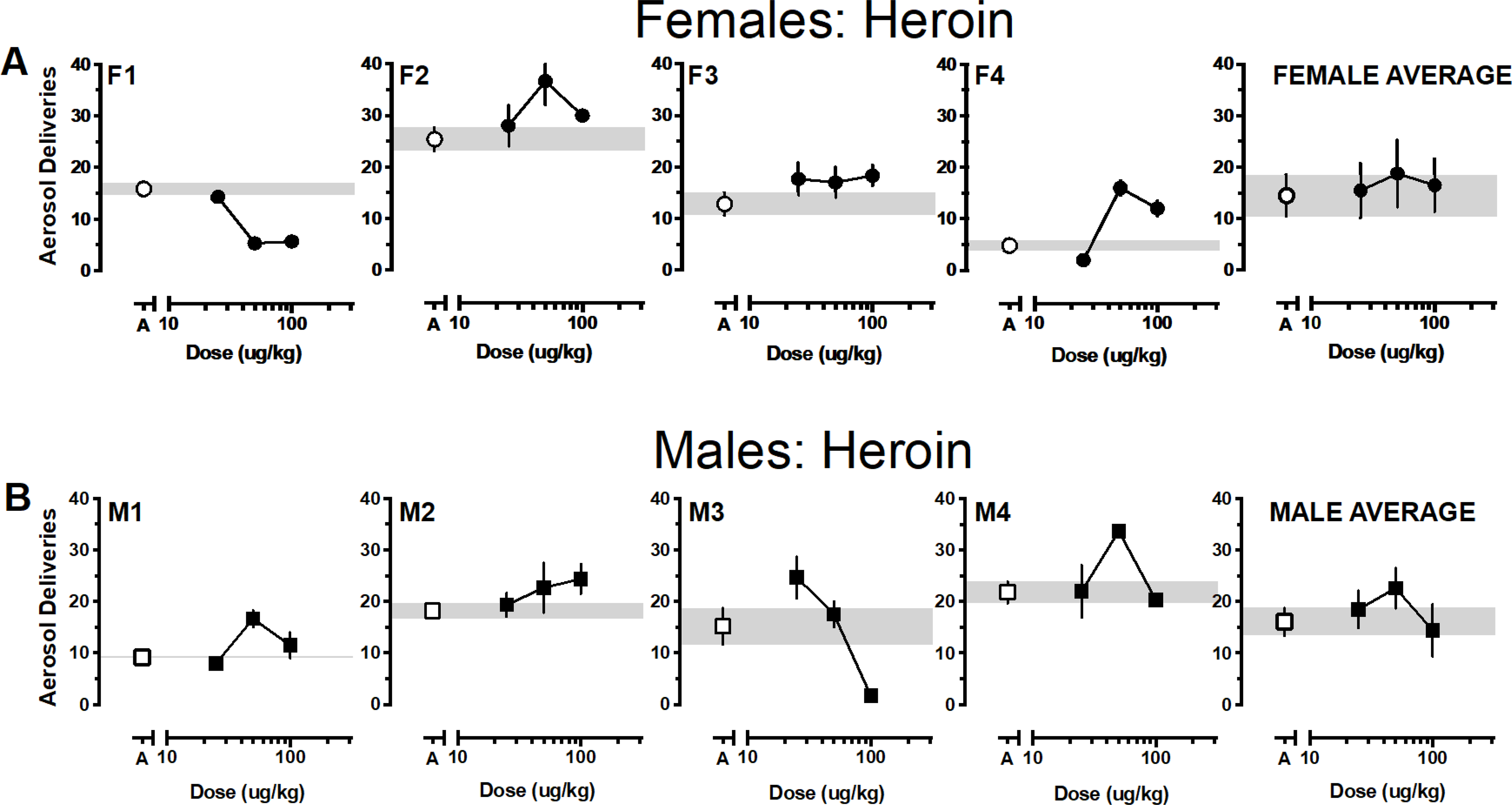
Cannabis and synthetic cannabinoids are abused in spite of possible adverse health consequences. The current study investigated the reinforcing effects of an ecologically relevant mode of administration (inhalation) of delta-9-tetrahydrocannabinol (THC), the primary psychoactive component of cannabis, and three synthetic cannabinoids detected in synthetic cannabinoid products (JWH-018, JWH-073, and HU-210) in non-human primates (NHPs). Male and female (N = 4 each) rhesus macaques were trained to inhale warm air via a metal stem to receive a candy reinforcer, an alcohol aerosol vehicle was then paired with the candy. Dose-dependent responding for inhaled aerosols of THC (2.0-16.0 μg/kg/inhalation), JWH-018 (0.2-1.6 μg/kg/inhalation), JWH-073 (2.0-8.0 μg/kg/inhalation), and HU-210 (1.0-8.0 μg/kg/inhalation) was established using a fixed-ratio five schedule of reinforcement and compared to vehicle (alcohol) self-administration. Dose-dependent responding for inhaled heroin (25.0-100.0 μg/kg/inhalation), a known reinforcer in NHPs, was also established. Responding approximated vehicle levels for many drug doses tested, but at least half of the monkeys responded for ≥ one dose of each cannabinoid and heroin above vehicle, with the exception of THC. Drug deliveries calculated as percent vehicle followed a prototypical inverted-U shaped dose-response curve for cannabinoids and heroin except for THC and JWH-018 (in males). Grouped data according to sex demonstrated that peak percent of vehicle reinforcers earned for THC was greater in males than females, whereas peak percent of vehicle reinforcers earned for JWH-018, HU-210, and heroin were greater in females than males. These findings indicate minimal reinforcing effects of CB1 receptor agonists when self-administered by NHPs via aerosol inhalation. (PsycInfo Database Record (c) 2021 APA, all rights reserved).
尽管大麻和合成大麻素可能会对健康造成不良后果,但仍有人滥用。本研究在非人类灵长类动物(NHP)中调查了大麻中主要精神活性成分 Δ-9-四氢大麻酚(THC)以及在合成大麻素产品中检测到的三种合成大麻素(JWH-018、JWH-073 和 HU-210)以一种生态相关的给药方式(吸入)的强化作用。雄性和雌性(N = 4 只)恒河猴通过金属杆吸入热空气以获得糖果强化物,然后将酒精气雾剂与糖果配对。使用固定比率五次强化程序建立了 THC(2.0-16.0 μg/kg/吸入)、JWH-018(0.2-1.6 μg/kg/吸入)、JWH-073(2.0-8.0 μg/kg/吸入)和 HU-210(1.0-8.0 μg/kg/吸入)吸入剂剂量依赖性反应,并与载体(酒精)自我给药进行了比较。还建立了吸入海洛因(25.0-100.0 μg/kg/吸入)的剂量依赖性反应,海洛因是 NHP 中的一种已知强化物。对于测试的许多药物剂量,反应接近载体水平,但至少有一半的猴子对每种大麻素和海洛因的至少一个剂量的反应高于载体,除了 THC。除了 THC 和 JWH-018(雄性)外,作为吸入剂的 THC 和海洛因的药物输送量计算为载体的百分比,遵循典型的倒置 U 形剂量反应曲线。根据性别对数据进行分组表明,雄性获得的 THC 载体强化物的峰值百分比高于雌性,而雌性获得的 JWH-018、HU-210 和海洛因载体强化物的峰值百分比高于雄性。这些发现表明,当 NHP 通过气溶胶吸入自行给药时,CB1 受体激动剂的强化作用很小。(PsycInfo 数据库记录(c)2021 APA,保留所有权利)。