EA4660, C3S Culture Sport Health Society, UPFR Sports, 31, Chemin de l'Epitaphe, 25000, Besançon, France.
Université de Bourgogne-Franche-Comté, Besançon, France.
BMC Public Health. 2021 May 27;21(1):1001. doi: 10.1186/s12889-021-11074-3.
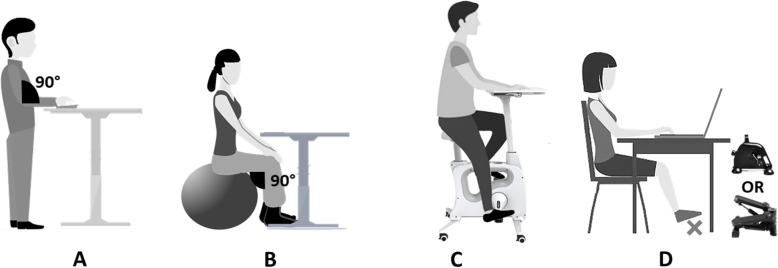
Sedentary lifestyles plague today's society in terms of physical, psychosocial and cognitive health. Students are particularly at risk because they spend most of their daily time sitting and inactive. The current pedagogical model must be rethought in order to promote students' health, well-being and therefore their success. The objective of this project was to equip one classroom of the sport science department at a university with various active workstations (standing desks, Swiss balls, cycling desks, pedal- or stepper-board) and to evaluate the feasibility and influence of these types of active workstations on the cognitive and psychological factors of the students, and to collect the feedback of lecturers during this experience.
Participation in the study was voluntary and students had the opportunity to choose or not to use an active workstation during lectures. A total of 663 students and 14 lecturers completed a survey to evaluate subjective feelings about physical, psycho-cognitive and academic aspects after their first experience with active workstations in the classroom.
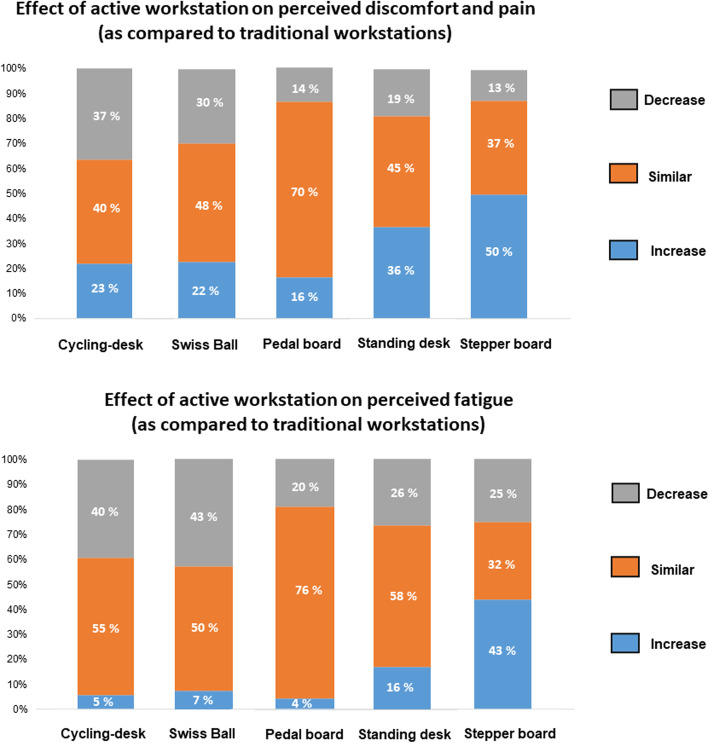
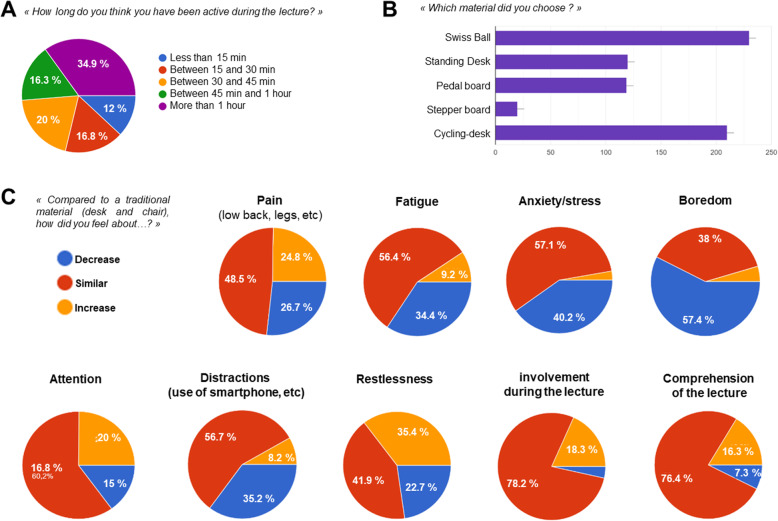
The majority of students and lecturers reported positive effects of active workstations in reducing fatigue, distraction, and boredom. The preferred active workstations were the cycling desks and the Swiss balls. Finally, 89.4% of students favoured using active workstations in future lectures if they had the option, as well as 71% of lecturers, demonstrating the acceptance of such active workstations.
The present study brings promising results toward a more general implementation of active workstations in universities. Once a familiarisation period is observed, having such workstations in the classroom could help prevent the deleterious effect of sedentary behaviour and promote a more active daily life for the future.
就身体、心理社会和认知健康而言,久坐的生活方式是当今社会的一大问题。学生尤其处于危险之中,因为他们大部分时间都在坐着不动。为了促进学生的健康、幸福,从而提高他们的成功,必须重新思考当前的教学模式。本项目的目的是在大学体育科学系的一个教室配备各种活动工作站(站立式办公桌、瑞士球、自行车办公桌、脚踏板或踏步板),并评估这些类型的活动工作站对学生认知和心理因素的可行性和影响,并在这一过程中收集讲师的反馈。
参与研究是自愿的,学生有机会选择在上课时使用或不使用活动工作站。共有 663 名学生和 14 名讲师完成了一项调查,以评估他们在课堂上首次使用活动工作站后的身体、心理认知和学术方面的主观感受。
大多数学生和讲师报告说,活动工作站减少疲劳、注意力分散和无聊感的效果显著。最受欢迎的活动工作站是自行车办公桌和瑞士球。最后,如果有选择的话,89.4%的学生希望在未来的讲座中使用活动工作站,71%的讲师也表示支持,这表明他们接受了这种活动工作站。
本研究为更广泛地在大学中实施活动工作站带来了有希望的结果。一旦观察到适应期,在课堂上设置这样的工作站可能有助于防止久坐行为的有害影响,并促进未来更积极的日常生活。