Department of Pulmonary Rehabilitation, Istituto Auxologico Italiano IRCCS, Verbania (VB), Italy.
Division of General Medicine, Ospedale S. Giuseppe, Istituto Auxologico Italiano, via Cadorna 90, 28824, Piancavallo Di Oggebbio (VB), Italy.
Acta Diabetol. 2021 Oct;58(10):1329-1341. doi: 10.1007/s00592-021-01747-1. Epub 2021 May 28.
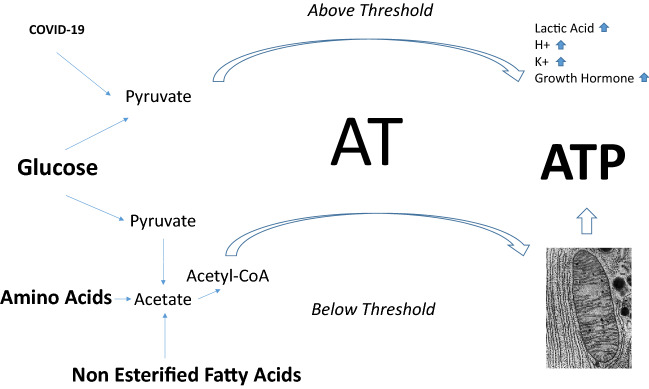
Obesity is a condition that generally limits work capacity and predisposes to a number of comorbidities and related diseases, the last being COVID-19 and its complications and sequelae. Physical exercise, together with diet, is a milestone in its management and rehabilitation, although there is still a debate on intensity and duration of training. Anaerobic threshold (AT) is a broad term often used either as ventilatory threshold or as lactate threshold, respectively, detected by respiratory ventilation and/or respiratory gases (VCO and VO), and by blood lactic acid.
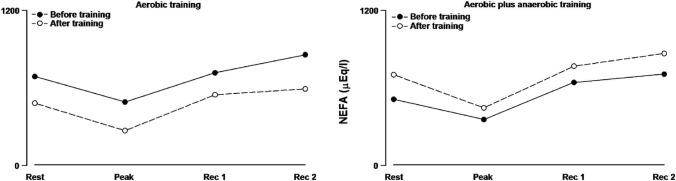
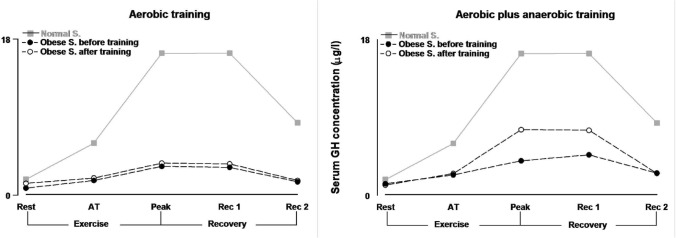
This review outlines the role of AT and of the different variations of growth hormone and catecholamine, in subjects with obesity vs normal weight individuals below and beyond AT, during a progressive increase in exercise training. We present a re-evaluation of the effects of physical activity on body mass and metabolism of individuals with obesity in light of potential benefits and pitfalls during COVID-19 pandemic. Comparison of a training program at moderate-intensity exercise (< AT) with training performed at moderate intensity (< AT) plus a final bout of high-intensity (> AT) exercise at the end of the aerobic session will be discussed.
Based on our data and considerations, a tailored strategy for individuals with obesity concerning the most appropriate intensity of training in the context of rehabilitation is proposed, with special regard to potential benefits of work program above AT.
Adding bouts of exercise above AT may improve lactic acid and H disposal and improve growth hormone. Long-term aerobic exercise may improve leptin reduction. In this way, the propensity of subjects with obesity to encounter a serious prognosis of COVID-19 may be counteracted and the systemic and cardiorespiratory sequelae that may ensue after COVID-19, can be overcome. Individuals with serious comorbidities associated with obesity should avoid excessive exercise intensity.
肥胖是一种通常会限制工作能力并导致多种合并症和相关疾病的状况,其中最后一种是 COVID-19 及其并发症和后遗症。运动与饮食一起是其管理和康复的里程碑,尽管对于训练的强度和持续时间仍存在争议。无氧阈(AT)是一个常用术语,它可以分别表示呼吸阈值或乳酸阈值,通过呼吸通气和/或呼吸气体(VCO 和 VO)以及血液乳酸来检测。
本综述概述了 AT 以及生长激素和儿茶酚胺的不同变化在肥胖和正常体重个体中的作用,这些个体在运动训练逐渐增加时处于 AT 以下和以上。我们重新评估了在 COVID-19 大流行期间,体力活动对肥胖个体体重和新陈代谢的影响,考虑了潜在的益处和陷阱。将中等强度(< AT)运动训练方案与在有氧运动结束时进行的中等强度(< AT)加最后一次高强度(> AT)运动训练方案进行比较。
基于我们的数据和考虑,针对肥胖个体的康复提出了一种针对最适当训练强度的个性化策略,特别考虑了 AT 以上工作方案的潜在益处。
在 AT 以上增加运动可能会改善乳酸和 H 的清除,并提高生长激素。长期有氧运动可能会降低瘦素。通过这种方式,可以抵消肥胖个体遇到 COVID-19 严重预后的倾向,并克服 COVID-19 后可能出现的全身和心肺后遗症。肥胖相关严重合并症的个体应避免过度的运动强度。