Virus-Cell Interactions Laboratory, Lady Davis Institute for Medical Research, Montréal, Canada.
RNA Trafficking Laboratory, Lady Davis Institute for Medical Research, Montréal, Canada.
PLoS Negl Trop Dis. 2021 May 28;15(5):e0009425. doi: 10.1371/journal.pntd.0009425. eCollection 2021 May.
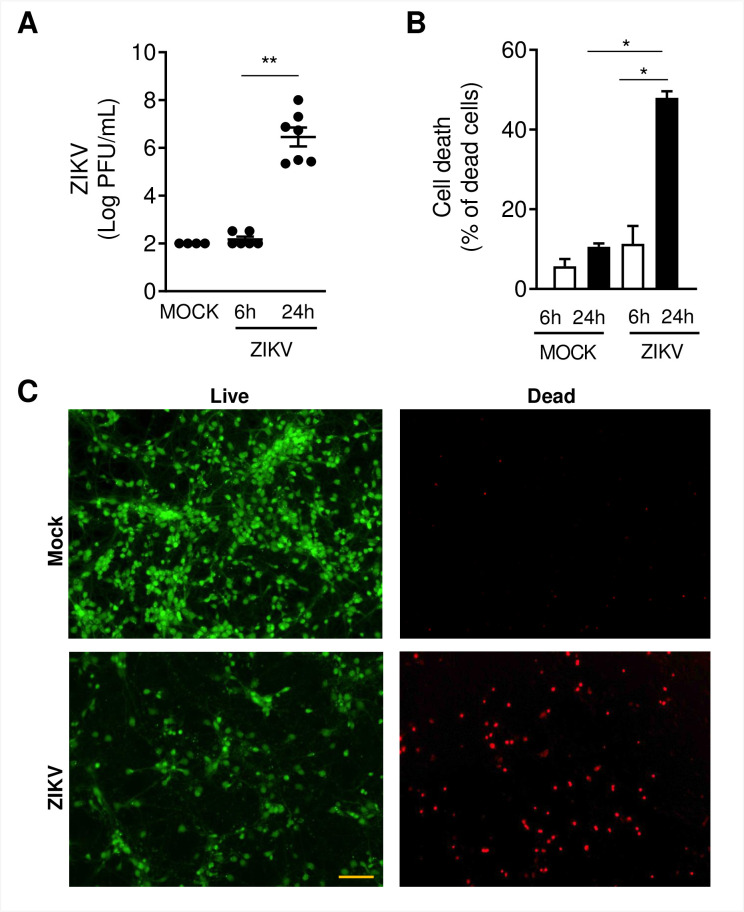
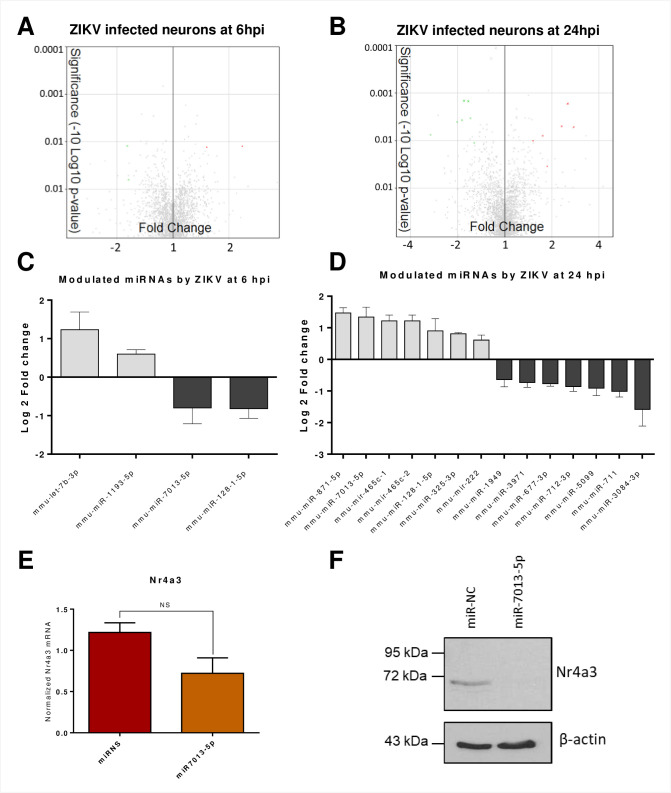
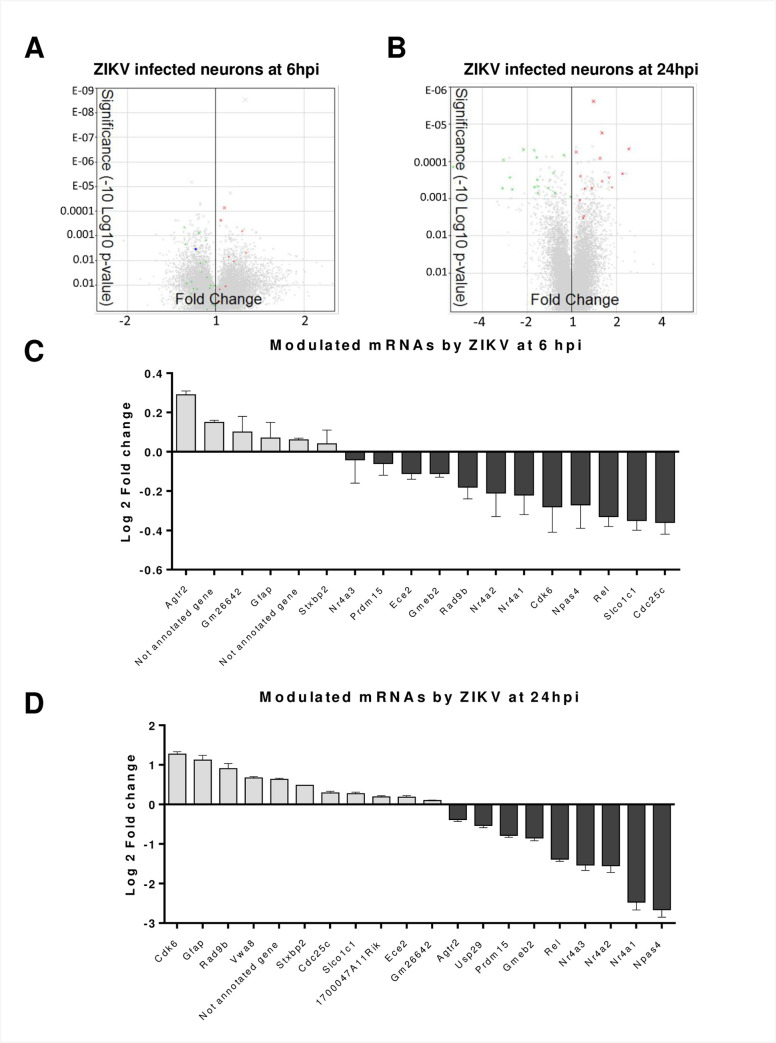
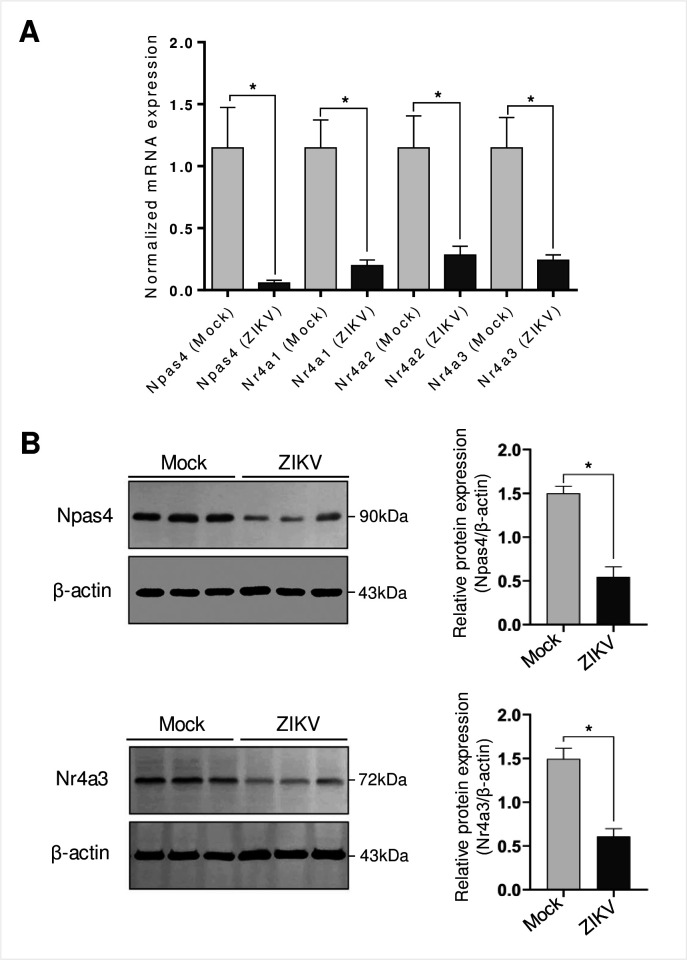
Zika virus (ZIKV) infection of neurons leads to neurological complications and congenital malformations of the brain of neonates. To date, ZIKV mechanism of infection and pathogenesis is not entirely understood and different studies on gene regulation of ZIKV-infected cells have identified a dysregulation of inflammatory and stem cell maintenance pathways. MicroRNAs (miRNAs) are post-transcriptional regulators of cellular genes and they contribute to cell development in normal function and disease. Previous reports with integrative analyses of messenger RNAs (mRNAs) and miRNAs during ZIKV infection have not identified neurological pathway defects. We hypothesized that dysregulation of pathways involved in neurological functions will be identified by RNA profiling of ZIKV-infected fetal neurons. We therefore used microarrays to analyze gene expression levels following ZIKV infection of fetal murine neurons. We observed that the expression levels of transcription factors such as neural PAS domain protein 4 (Npas4) and of three members of the orphan nuclear receptor 4 (Nr4a) were severely decreased after viral infection. We confirmed that their downregulation was at both the mRNA level and at the protein level. The dysregulation of these transcription factors has been previously linked to aberrant neural functions and development. We next examined the miRNA expression profile in infected primary murine neurons by microarray and found that various miRNAs were dysregulated upon ZIKV infection. An integrative analysis of the differentially expressed miRNAs and mRNAs indicated that miR-7013-5p targets Nr4a3 gene. Using miRmimics, we corroborated that miR-7013-5p downregulates Nr4a3 mRNA and protein levels. Our data identify a profound dysregulation of neural transcription factors with an overexpression of miR-7013-5p that results in decreased Nr4a3 expression, likely a main contributor to ZIKV-induced neuronal dysfunction.
寨卡病毒(ZIKV)感染神经元会导致新生儿大脑的神经并发症和先天畸形。迄今为止,ZIKV 的感染机制和发病机制尚未完全阐明,不同的关于 ZIKV 感染细胞基因调控的研究已经确定了炎症和干细胞维持途径的失调。microRNAs(miRNAs)是细胞基因的转录后调节因子,它们在正常功能和疾病中有助于细胞发育。之前对 ZIKV 感染细胞的信使 RNA(mRNA)和 miRNA 的综合分析报告并未发现神经通路缺陷。我们假设,通过对 ZIKV 感染胎儿神经元的 RNA 谱进行分析,可以鉴定出与神经功能相关的途径失调。因此,我们使用微阵列分析了 ZIKV 感染胎儿鼠神经元后的基因表达水平。我们观察到,转录因子的表达水平,如神经 PAS 结构域蛋白 4(Npas4)和孤儿核受体 4(Nr4a)的三个成员,在病毒感染后严重降低。我们证实,它们的下调既发生在 mRNA 水平,也发生在蛋白质水平。这些转录因子的失调先前与异常的神经功能和发育有关。接下来,我们通过微阵列检查了感染的原代鼠神经元中的 miRNA 表达谱,发现 ZIKV 感染后各种 miRNA 失调。差异表达的 miRNA 和 mRNA 的综合分析表明,miR-7013-5p 靶向 Nr4a3 基因。使用 miRmimics,我们证实 miR-7013-5p 下调 Nr4a3 mRNA 和蛋白水平。我们的数据确定了神经转录因子的深刻失调,miR-7013-5p 的过度表达导致 Nr4a3 表达降低,这可能是 ZIKV 诱导神经元功能障碍的主要原因。