Department of Dermatology, University of California, San Diego, San Diego, California, USA.
Department of Bioengineering and Chemistry, University of California Los Angeles, Los Angeles, Louisiana, USA.
J Biol Chem. 2021 Jul;297(1):100828. doi: 10.1016/j.jbc.2021.100828. Epub 2021 May 26.
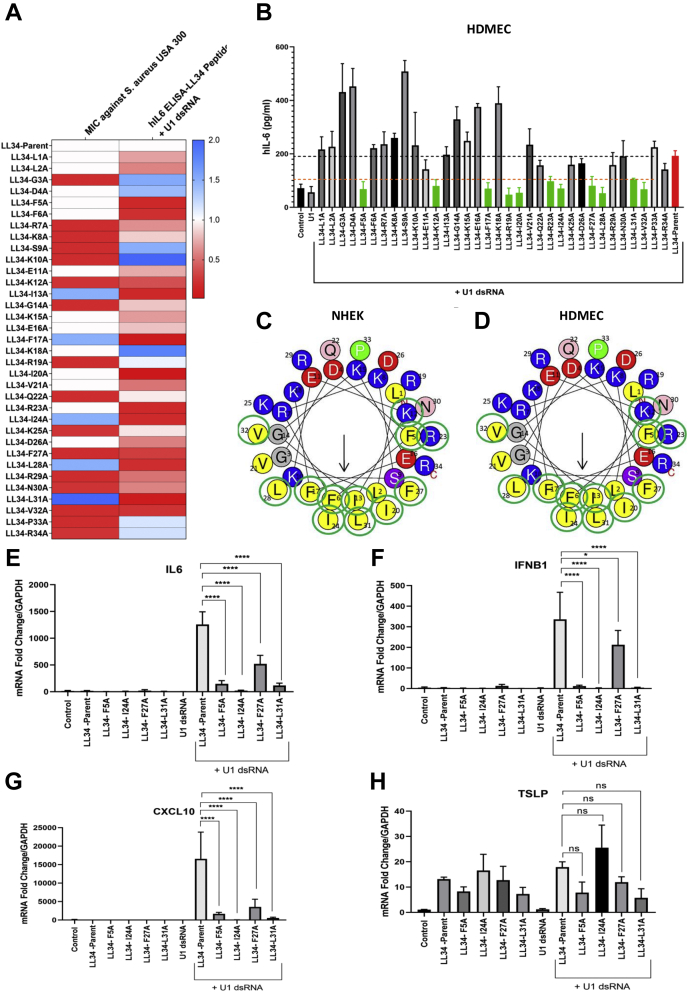
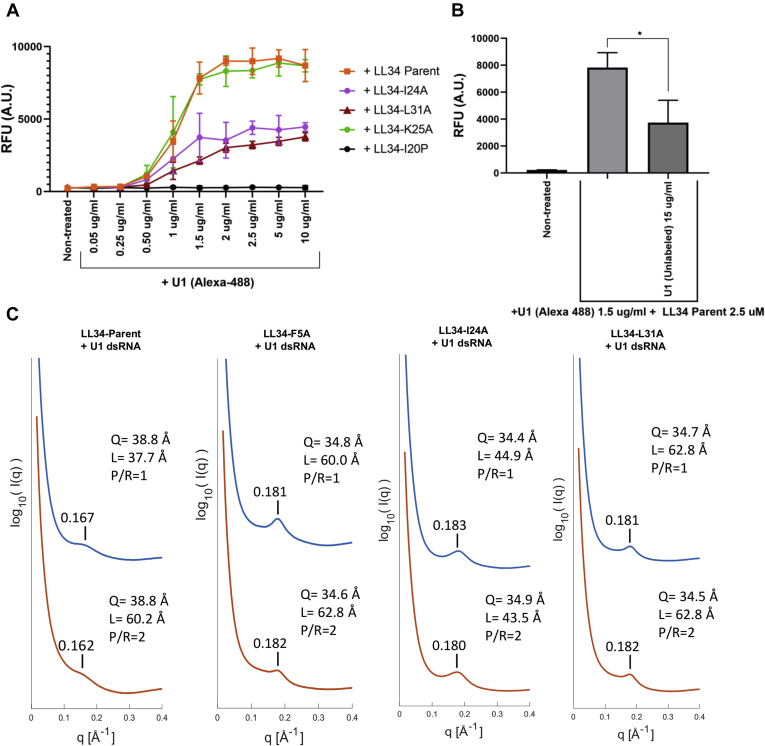
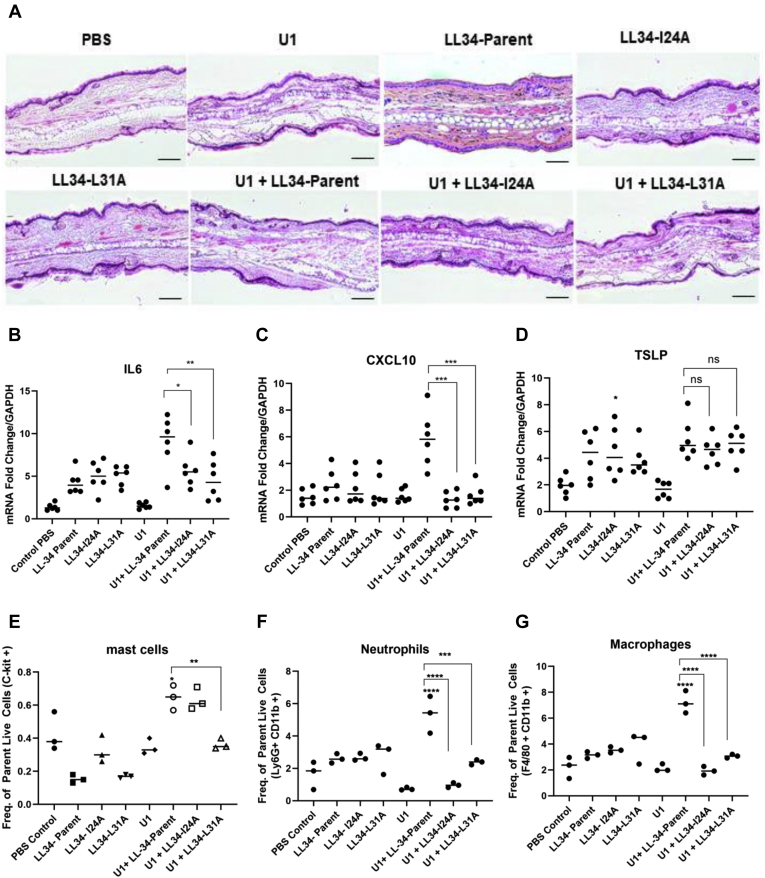
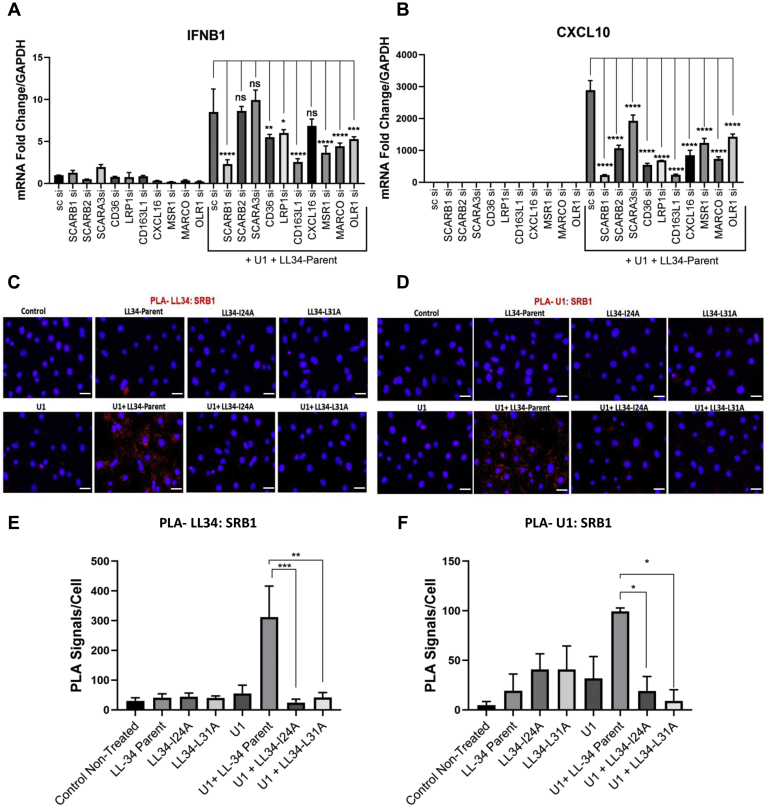
Cathelicidins such as the human 37-amino acid peptide (LL-37) are peptides that not only potently kill microbes but also trigger inflammation by enabling immune recognition of endogenous nucleic acids. Here, a detailed structure-function analysis of LL-37 was performed to understand the details of this process. Alanine scanning of 34-amino acid peptide (LL-34) showed that some variants displayed increased antimicrobial activity against Staphylococcus aureus and group A Streptococcus. In contrast, different substitutions clustered on the hydrophobic face of the LL-34 alpha helix inhibited the ability of those variants to promote type 1 interferon expression in response to U1 RNA or to present U1 to the scavenger receptor (SR) B1 on the keratinocyte cell surface. Small-angle X-ray scattering experiments of the LL-34 variants LL-34, F5A, I24A, and L31A demonstrated that these peptides form cognate supramolecular structures with U1 characterized by inter-dsRNA spacings of approximately 3.5 nm, a range that has been previously shown to activate toll-like receptor 3 by the parent peptide LL-37. Therefore, while alanine substitutions on the hydrophobic face of LL-34 led to loss of binding to SRs and the complete loss of autoinflammatory responses in epithelial and endothelial cells, they did not inhibit the ability to organize with U1 RNA in solution to associate with toll-like receptor 3. These observations advance our understanding of how cathelicidin mediates the process of innate immune self-recognition to enable inert nucleic acids to trigger inflammation. We introduce the term "innate immune vetting" to describe the capacity of peptides such as LL-37 to enable certain nucleic acids to become an inflammatory stimulus through SR binding prior to cell internalization.
抗菌肽,如人类的 37 个氨基酸肽(LL-37),不仅具有强大的杀菌能力,还能通过识别内源性核酸来触发炎症反应。在这里,我们对 LL-37 的结构-功能进行了详细分析,以了解这一过程的细节。对 34 个氨基酸肽(LL-34)的丙氨酸扫描显示,一些变体对金黄色葡萄球菌和 A 组链球菌的抗菌活性增强。相比之下,在 LL-34α螺旋疏水面上的不同取代物会抑制这些变体在 U1 RNA 刺激下诱导 1 型干扰素表达和在角质形成细胞表面向清道夫受体(SR)B1 呈递 U1 的能力。LL-34 变体 LL-34、F5A、I24A 和 L31A 的小角度 X 射线散射实验表明,这些肽与 U1 形成同源超分子结构,dsRNA 之间的间隔约为 3.5nm,这一范围先前已被证明可通过母体肽 LL-37 激活 TLR3。因此,虽然 LL-34 疏水面上的丙氨酸取代导致与 SRs 结合丧失和上皮细胞和内皮细胞中自身炎症反应完全丧失,但它们并未抑制在溶液中与 U1 RNA 形成与 TLR3 相关的能力。这些观察结果加深了我们对抗菌肽介导固有免疫自我识别过程的理解,使无活性的核酸能够引发炎症。我们引入了“固有免疫审查”一词来描述抗菌肽(如 LL-37)的能力,使某些核酸在细胞内化之前通过与 SR 结合成为炎症刺激物。