• 文献检索
  • 文档翻译
  • 深度研究
  • 学术资讯
  • Suppr Zotero 插件Zotero 插件
  • 邀请有礼
  • 套餐&价格
  • 历史记录
应用&插件
Suppr Zotero 插件Zotero 插件浏览器插件Mac 客户端Windows 客户端微信小程序
定价
高级版会员购买积分包购买API积分包
服务
文献检索文档翻译深度研究API 文档MCP 服务
关于我们
关于 Suppr公司介绍联系我们用户协议隐私条款
关注我们

Suppr 超能文献

核心技术专利:CN118964589B侵权必究
粤ICP备2023148730 号-1Suppr @ 2026

文献检索

告别复杂PubMed语法,用中文像聊天一样搜索,搜遍4000万医学文献。AI智能推荐,让科研检索更轻松。

立即免费搜索

文件翻译

保留排版,准确专业,支持PDF/Word/PPT等文件格式,支持 12+语言互译。

免费翻译文档

深度研究

AI帮你快速写综述,25分钟生成高质量综述,智能提取关键信息,辅助科研写作。

立即免费体验

肾素-血管紧张素抑制剂缓解 COVID-19 的假说。

Hypothesis for renin-angiotensin inhibitor mitigation of COVID-19.

机构信息

Department of Physiology and Biophysics & Center for Proteomics and Molecular Therapeutics, The Chicago Medical School, Rosalind Franklin University, North Chicago, IL, United States.

出版信息

Med Hypotheses. 2021 Jul;152:110609. doi: 10.1016/j.mehy.2021.110609. Epub 2021 May 12.

DOI:10.1016/j.mehy.2021.110609
PMID:34048987
原文链接:https://pmc.ncbi.nlm.nih.gov/articles/PMC8114589/
Abstract

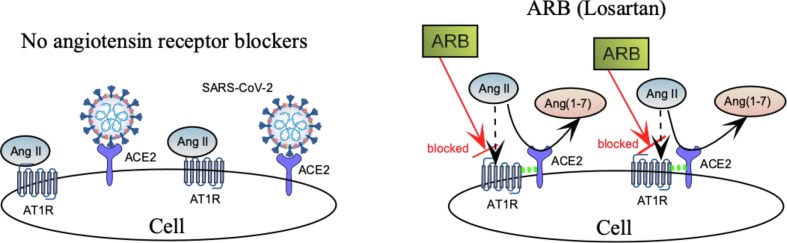
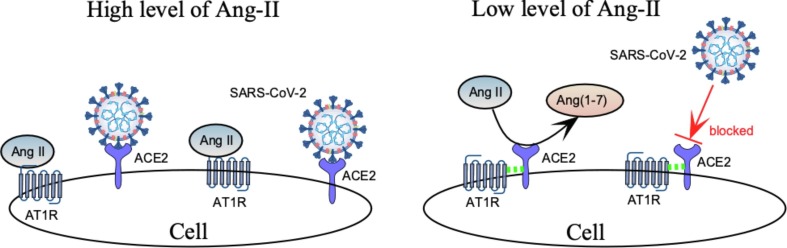
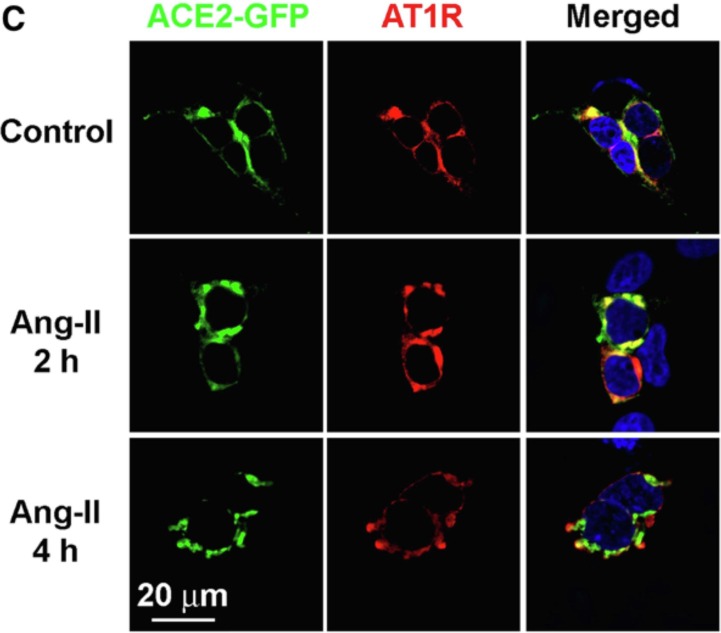
Preexisting hypertension is a known risk factor for severe COVID-19. Abnormal activation of RAS upregulates angiotensin II (Ang-II) and contributes to severe manifestations of COVID-19. Although RAS inhibitors (RASi) are a mainstay of antihypertensive therapy, they have been associated (in some animal studies) with an increase in angiotensin converting enzyme 2 (ACE2) receptors that facilitate cellular entry of the SARS-CoV-2 virus. Nonetheless, current medical practice does not recommend curtailing RASi to protect hypertensive patients from COVID. On the contrary, there is clinical evidence to support a beneficial effect of RASi for hypertensive patients in the midst of a COVID-19 pandemic, although the precise mechanism for this is unclear. In this paper, we hypothesize that RASi reduces the severity of COVID-19 by promoting ACE2-AT1R complex formation at the cell surface, where AT1R mediates the major vasopressor effects of Ang-II. Furthermore, we propose that the interaction between ACE2 and AT1R impedes binding of SARS-CoV-2 to ACE2, thereby allowing ACE2 to convert Ang-II to the more beneficial Ang(1-7), that has vasodilator and anti-inflammatory activity. Evidence for ACE2-AT1R complex formation during reduced Ang-II comes from receptor colocalization studies in isolated HEK293 cells, but this has not been confirmed in cells having endogenous expression of ACE2 and AT1R. Since the SARS-CoV-2 virus attacks the kidney, as well as the heart and lung, our hypothesis for the effect of RASi on COVID-19 could be tested in vitro using human proximal tubule cells (HK-2), having ACE2 and AT1 receptors. Specifically, colocalization of fluorescent labelled: SARS-CoV-2 spike protein, ACE2, and AT1R in HK-2 cells can be used to clarify the mechanism of RASi action in renal and lung epithelia, which could lead to protocols for reducing the severity of COVID-19 in both hypertensive and normotensive patients.

摘要

先前存在的高血压是 COVID-19 重症的已知危险因素。RAS 的异常激活会上调血管紧张素 II(Ang-II),并导致 COVID-19 的严重表现。尽管 RAS 抑制剂(RASi)是抗高血压治疗的主要药物,但它们与增加血管紧张素转化酶 2(ACE2)受体有关,这有助于 SARS-CoV-2 病毒进入细胞。尽管如此,目前的医疗实践并不建议为了保护高血压患者免受 COVID 的影响而停止使用 RASi。相反,有临床证据支持 RASi 对 COVID-19 大流行期间的高血压患者有益,尽管其确切机制尚不清楚。在本文中,我们假设 RASi 通过促进细胞表面 ACE2-AT1R 复合物的形成来减轻 COVID-19 的严重程度,其中 AT1R 介导 Ang-II 的主要血管加压作用。此外,我们提出 ACE2 和 AT1R 之间的相互作用会阻碍 SARS-CoV-2 与 ACE2 的结合,从而使 ACE2 将 Ang-II 转化为更有益的 Ang(1-7),后者具有血管扩张和抗炎作用。在 Ang-II 减少时 ACE2-AT1R 复合物形成的证据来自于在分离的 HEK293 细胞中进行的受体共定位研究,但这在具有内源性表达 ACE2 和 AT1R 的细胞中尚未得到证实。由于 SARS-CoV-2 病毒攻击肾脏以及心脏和肺部,我们对 RASi 对 COVID-19 影响的假设可以在体外使用具有 ACE2 和 AT1 受体的人近端肾小管细胞 (HK-2) 进行测试。具体来说,可以使用共定位荧光标记的 SARS-CoV-2 刺突蛋白、ACE2 和 AT1R 来澄清 RASi 在肾和肺上皮细胞中的作用机制,这可能会导致减少高血压和正常血压患者 COVID-19 严重程度的方案。
https://cdn.ncbi.nlm.nih.gov/pmc/blobs/8284/8114589/ed89d06ebb70/gr4_lrg.jpg
https://cdn.ncbi.nlm.nih.gov/pmc/blobs/8284/8114589/43043535b215/gr1_lrg.jpg
https://cdn.ncbi.nlm.nih.gov/pmc/blobs/8284/8114589/c90670b1ae2f/gr2_lrg.jpg
https://cdn.ncbi.nlm.nih.gov/pmc/blobs/8284/8114589/5d8e7a991de7/gr3_lrg.jpg
https://cdn.ncbi.nlm.nih.gov/pmc/blobs/8284/8114589/ed89d06ebb70/gr4_lrg.jpg
https://cdn.ncbi.nlm.nih.gov/pmc/blobs/8284/8114589/43043535b215/gr1_lrg.jpg
https://cdn.ncbi.nlm.nih.gov/pmc/blobs/8284/8114589/c90670b1ae2f/gr2_lrg.jpg
https://cdn.ncbi.nlm.nih.gov/pmc/blobs/8284/8114589/5d8e7a991de7/gr3_lrg.jpg
https://cdn.ncbi.nlm.nih.gov/pmc/blobs/8284/8114589/ed89d06ebb70/gr4_lrg.jpg

相似文献

1
Hypothesis for renin-angiotensin inhibitor mitigation of COVID-19.肾素-血管紧张素抑制剂缓解 COVID-19 的假说。
Med Hypotheses. 2021 Jul;152:110609. doi: 10.1016/j.mehy.2021.110609. Epub 2021 May 12.
2
Angiotensin I and II Stimulate Cell Invasion of SARS-CoV-2: Potential Mechanism via Inhibition of ACE2 Arm of RAS.血管紧张素I和II刺激新型冠状病毒的细胞侵袭:通过抑制肾素-血管紧张素系统的血管紧张素转换酶2分支的潜在机制。
Physiol Res. 2024 Mar 11;73(1):27-35. doi: 10.33549/physiolres.935198.
3
Disequilibrium between the classic renin-angiotensin system and its opposing arm in SARS-CoV-2-related lung injury.新型冠状病毒相关肺损伤中经典肾素-血管紧张素系统与其拮抗系统之间的失衡。
Am J Physiol Lung Cell Mol Physiol. 2020 Aug 1;319(2):L325-L336. doi: 10.1152/ajplung.00189.2020. Epub 2020 Jul 8.
4
The mechanistic overview of SARS-CoV-2 using angiotensin-converting enzyme 2 to enter the cell for replication: possible treatment options related to the renin-angiotensin system.SARS-CoV-2 利用血管紧张素转换酶 2 进入细胞进行复制的机制概述:与肾素-血管紧张素系统相关的可能治疗选择。
Eur Heart J Cardiovasc Pharmacother. 2020 Sep 1;6(5):317-325. doi: 10.1093/ehjcvp/pvaa053.
5
Two hits to the renin-angiotensin system may play a key role in severe COVID-19.肾素-血管紧张素系统的双重打击可能在重症 COVID-19 中发挥关键作用。
Kaohsiung J Med Sci. 2020 Jun;36(6):389-392. doi: 10.1002/kjm2.12237. Epub 2020 Jun 3.
6
Angiotensin II receptors: Impact for COVID-19 severity.血管紧张素 II 受体:对 COVID-19 严重程度的影响。
Dermatol Ther. 2020 Nov;33(6):e13989. doi: 10.1111/dth.13989. Epub 2020 Jul 27.
7
The spike effect of acute respiratory syndrome coronavirus 2 and coronavirus disease 2019 vaccines on blood pressure.急性呼吸综合征冠状病毒 2 型和 2019 年冠状病毒病疫苗对血压的尖峰效应。
Eur J Intern Med. 2023 Mar;109:12-21. doi: 10.1016/j.ejim.2022.12.004. Epub 2022 Dec 13.
8
A pressor dose of angiotensin II has no influence on the angiotensin-converting enzyme 2 and other molecules associated with SARS-CoV-2 infection in mice.血管紧张素 II 的升压剂量对 ACE2 及与 SARS-CoV-2 感染相关的其他分子在小鼠体内没有影响。
FASEB J. 2021 Mar;35(3):e21419. doi: 10.1096/fj.202100016R.
9
Correcting the imbalanced protective RAS in COVID-19 with angiotensin AT2-receptor agonists.用血管紧张素 AT2 受体激动剂纠正 COVID-19 中失衡的保护性 RAS。
Clin Sci (Lond). 2020 Nov 27;134(22):2987-3006. doi: 10.1042/CS20200922.
10
Sex-Specific Modulation of Blood Pressure and the Renin-Angiotensin System by ACE (Angiotensin-Converting Enzyme) 2.血管紧张素转换酶 2 通过(血管紧张素转化酶)对血压和肾素-血管紧张素系统的性别特异性调节。
Hypertension. 2020 Aug;76(2):478-487. doi: 10.1161/HYPERTENSIONAHA.120.15276. Epub 2020 Jun 22.

引用本文的文献

1
Fasudil inhibits α-synuclein aggregation through ROCK-inhibition-mediated mechanisms.法舒地尔通过ROCK抑制介导的机制抑制α-突触核蛋白聚集。
Neurotherapeutics. 2025 Mar;22(2):e00544. doi: 10.1016/j.neurot.2025.e00544. Epub 2025 Feb 5.
2
Angiotensin Converting Enzyme 1 Expression in the Leukocytes of Adults Aged 64 to 67 Years.64至67岁成年人白细胞中血管紧张素转换酶1的表达
JMIRx Med. 2023 Jan 20;4:e45220. doi: 10.2196/45220.
3
Molecular pathways involved in COVID-19 and potential pathway-based therapeutic targets.新型冠状病毒肺炎涉及的分子途径及基于途径的潜在治疗靶点。

本文引用的文献

1
Effect of Discontinuing vs Continuing Angiotensin-Converting Enzyme Inhibitors and Angiotensin II Receptor Blockers on Days Alive and Out of the Hospital in Patients Admitted With COVID-19: A Randomized Clinical Trial.COVID-19 患者入院后停用与继续使用血管紧张素转换酶抑制剂和血管紧张素 II 受体阻滞剂对存活日数和出院日数的影响:一项随机临床试验。
JAMA. 2021 Jan 19;325(3):254-264. doi: 10.1001/jama.2020.25864.
2
Renin-angiotensin system blockers and susceptibility to COVID-19: an international, open science, cohort analysis.肾素-血管紧张素系统阻滞剂与 COVID-19 易感性的关系:一项国际、开放科学、队列分析。
Lancet Digit Health. 2021 Feb;3(2):e98-e114. doi: 10.1016/S2589-7500(20)30289-2. Epub 2020 Dec 17.
3
Biomed Pharmacother. 2022 Jan;145:112420. doi: 10.1016/j.biopha.2021.112420. Epub 2021 Nov 12.
Effects of ACEI and ARB on COVID-19 patients: A meta-analysis.
血管紧张素转换酶抑制剂(ACEI)和血管紧张素受体阻滞剂(ARB)对 COVID-19 患者的影响:一项荟萃分析。
J Renin Angiotensin Aldosterone Syst. 2020 Oct-Dec;21(4):1470320320981321. doi: 10.1177/1470320320981321.
4
Association of Use of Angiotensin-Converting Enzyme Inhibitors and Angiotensin II Receptor Blockers With Testing Positive for Coronavirus Disease 2019 (COVID-19).血管紧张素转换酶抑制剂和血管紧张素 II 受体阻滞剂的使用与新型冠状病毒病 2019(COVID-19)检测阳性的关联。
JAMA Cardiol. 2020 Sep 1;5(9):1020-1026. doi: 10.1001/jamacardio.2020.1855.
5
Renin-Angiotensin System Blockade and Mortality in Patients With Hypertension and COVID-19 Infection.肾素-血管紧张素系统阻断剂与 COVID-19 感染合并高血压患者的死亡率。
J Cardiovasc Pharmacol Ther. 2020 Nov;25(6):503-507. doi: 10.1177/1074248420947628. Epub 2020 Aug 4.
6
A systematic review and meta-analysis to evaluate the clinical outcomes in COVID-19 patients on angiotensin-converting enzyme inhibitors or angiotensin receptor blockers.系统评价和荟萃分析评估 COVID-19 患者使用血管紧张素转换酶抑制剂或血管紧张素受体阻滞剂的临床结局。
Eur Heart J Cardiovasc Pharmacother. 2021 Mar 15;7(2):148-157. doi: 10.1093/ehjcvp/pvaa064.
7
Comment on 'Can angiotensin receptor-blocking drugs perhaps be harmful in the COVID-19 pandemic?'.关于《血管紧张素受体阻断药物在新冠疫情中是否可能有害?》的评论
J Hypertens. 2020 Jun;38(6):1189-1198. doi: 10.1097/HJH.0000000000002481.
8
A hypothesis for pathobiology and treatment of COVID-19: The centrality of ACE1/ACE2 imbalance.关于 COVID-19 的病理生物学和治疗的假说:ACE1/ACE2 失衡的核心地位。
Br J Pharmacol. 2020 Nov;177(21):4825-4844. doi: 10.1111/bph.15082. Epub 2020 May 22.
9
Renal histopathological analysis of 26 postmortem findings of patients with COVID-19 in China.中国 26 例 COVID-19 死亡患者的肾脏组织病理分析。
Kidney Int. 2020 Jul;98(1):219-227. doi: 10.1016/j.kint.2020.04.003. Epub 2020 Apr 9.
10
Association of Renin-Angiotensin System Inhibitors With Severity or Risk of Death in Patients With Hypertension Hospitalized for Coronavirus Disease 2019 (COVID-19) Infection in Wuhan, China.中国武汉因 2019 年冠状病毒病(COVID-19)感染而住院的高血压患者中,肾素-血管紧张素系统抑制剂与严重程度或死亡风险的关系。
JAMA Cardiol. 2020 Jul 1;5(7):825-830. doi: 10.1001/jamacardio.2020.1624.