Department of Cardiology, Ataturk Training and Research Hospital, Izmir Katip Celebi University, Izmir, Turkey.
Department of Cardiology, Balikesir University Medical School, Balikesir, Turkey.
J Thromb Thrombolysis. 2022 Feb;53(2):321-334. doi: 10.1007/s11239-021-02487-3. Epub 2021 May 29.
We aimed to investigate both the impact of COVID-19 pandemic on ST-segment elevation myocardial infarction (STEMI) admission, and demographic, angiographic, procedural characteristics, and in-hospital clinical outcomes of patients with COVID-19 positive STEMI in Turkey.
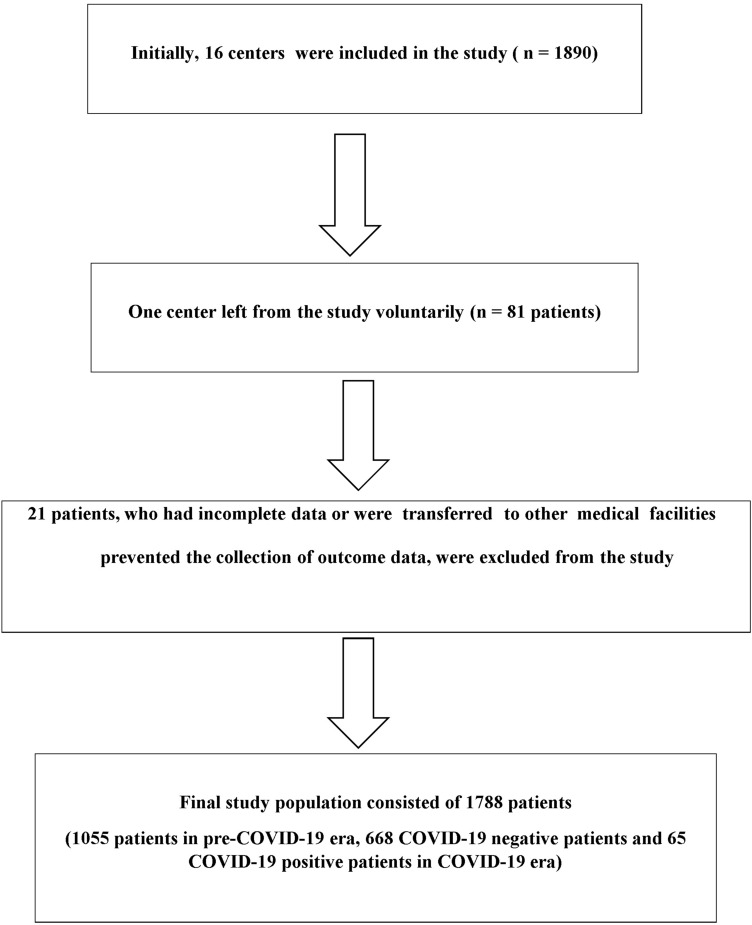
This was a multi-center and cross-sectional observational study. The study population included 1788 STEMI patients from 15 centers in Turkey. The patients were divided into two groups: COVID-19 era (March 11st-May 15st, 2020; n = 733) or pre- COVID-19 era group (March 11st-May 15st, 2019; n = 1055). Also, the patients in COVID-19 era were grouped as COVID-19 positive (n = 65) or negative (n = 668).
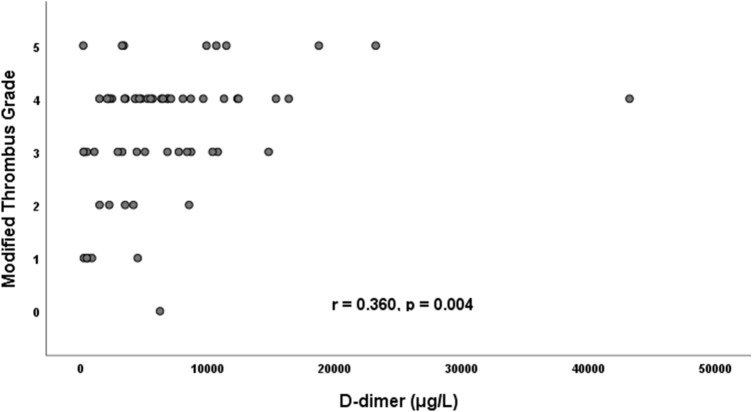
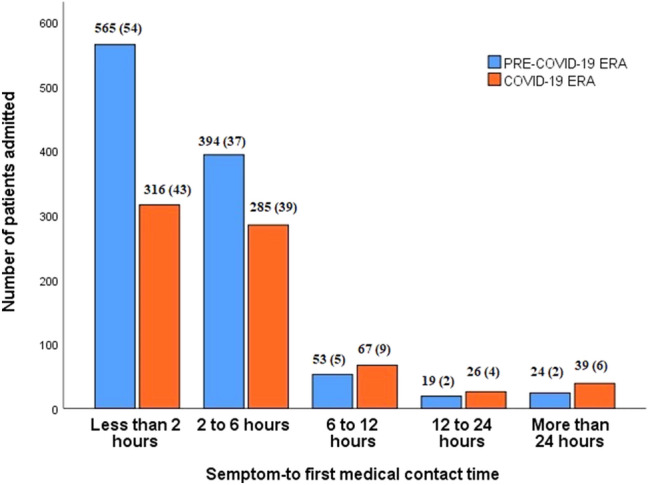
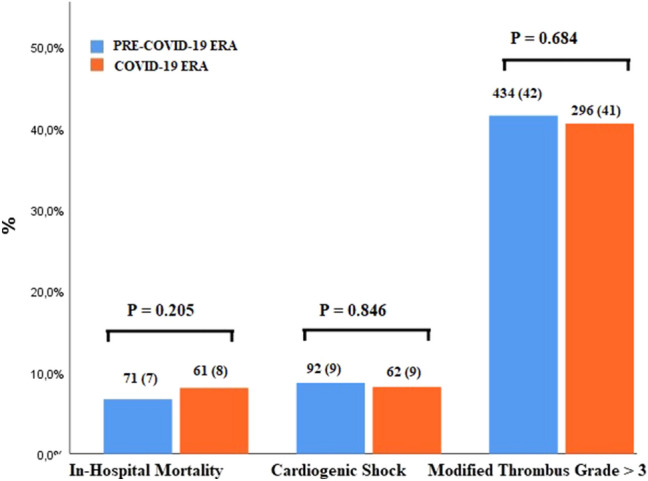
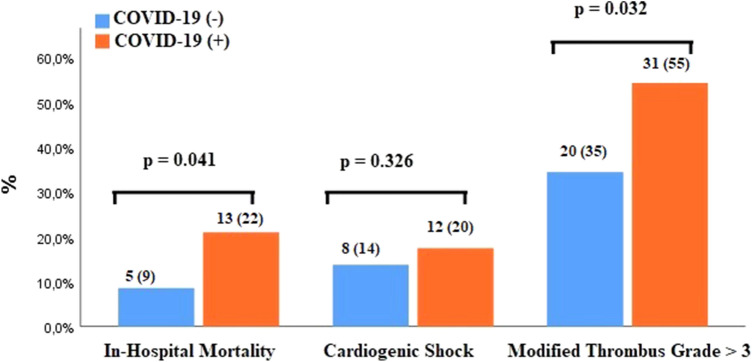
There was a 30.5% drop in STEMI admission during COVID-19 era in comparison to pre-COVID-19 era. The patients admitted to the medical centers during COVID-19 era had a longer symptom-to-first medical contact time [120 (75-240) vs. 100 (60-180) minutes, p < 0.001]. COVID-19 positive STEMI patients had higher thrombus grade and lower left ventricular ejection fraction compared to COVID-19 negative patients. COVID-19 positive patients had higher mortality (28% vs. 6%, p < 0.001) and cardiogenic shock (20% vs. 7%, p < 0.001) rates compared with those without COVID-19. Matching based on propensity scores showed higher mortality and high thrombus grade in STEMI patients who were infected by SARS-COV-2 (each p < 0.05).
We detected significantly lower STEMI hospitalization rates and significant delay in duration of symptom onset to first medical contact in the context of Turkey during the COVID-19 outbreak. Moreover, high thrombus grade and mortality were more common in COVID-19 positive STEMI patients.
本研究旨在调查 COVID-19 大流行对土耳其 ST 段抬高型心肌梗死(STEMI)入院的影响,以及 COVID-19 阳性 STEMI 患者的人口统计学、血管造影、手术特征和住院临床结局。
这是一项多中心、横断面观察性研究。研究人群包括来自土耳其 15 个中心的 1788 例 STEMI 患者。患者分为两组:COVID-19 时代(2020 年 3 月 11 日至 5 月 15 日;n=733)或 COVID-19 前时代组(2019 年 3 月 11 日至 5 月 15 日;n=1055)。此外,COVID-19 时代的患者分为 COVID-19 阳性(n=65)或阴性(n=668)。
与 COVID-19 前时代相比,COVID-19 时代 STEMI 入院率下降了 30.5%。COVID-19 时代入住医疗中心的患者症状至首次医疗接触时间更长[120(75-240)分钟比 100(60-180)分钟,p<0.001]。与 COVID-19 阴性患者相比,COVID-19 阳性 STEMI 患者血栓分级更高,左心室射血分数更低。COVID-19 阳性患者的死亡率(28%比 6%,p<0.001)和心源性休克(20%比 7%,p<0.001)均高于无 COVID-19 的患者。基于倾向评分匹配后发现,感染 SARS-COV-2 的 STEMI 患者死亡率更高,血栓分级更高(均 p<0.05)。
我们发现,在 COVID-19 大流行期间,土耳其 STEMI 住院率显著下降,症状发作至首次医疗接触的时间明显延迟。此外,COVID-19 阳性 STEMI 患者的血栓分级更高,死亡率更高。