U.S. Food and Drug Administration, National Center for Toxicological Research, Jefferson, Arkansas, USA.
Toxicologic Pathology Associates, Jefferson, Arkansas, USA.
Environ Mol Mutagen. 2021 Jun;62(5):306-318. doi: 10.1002/em.22444. Epub 2021 Jun 14.
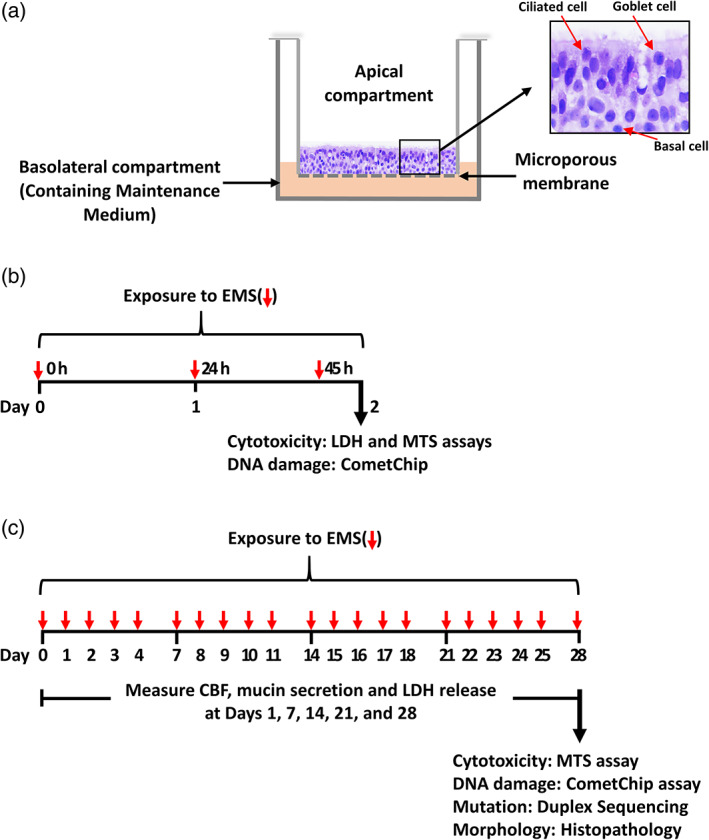
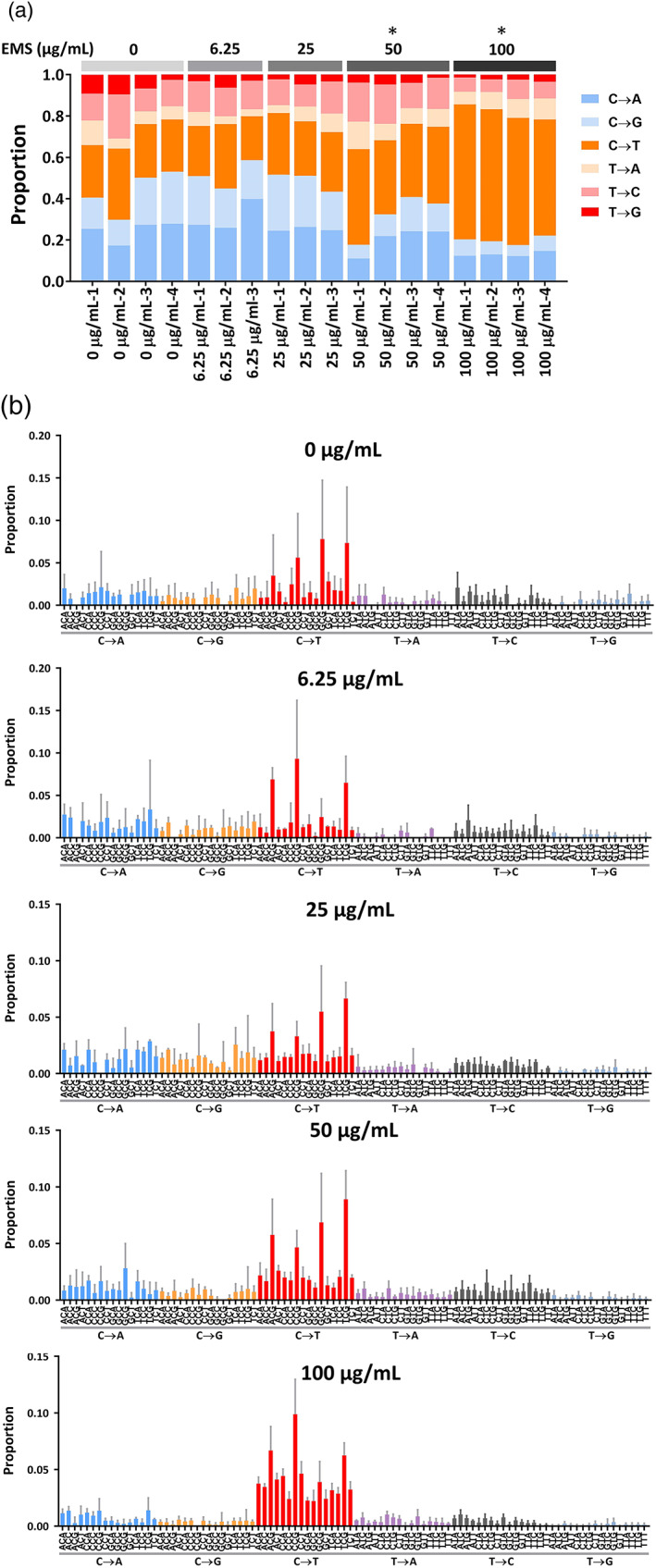
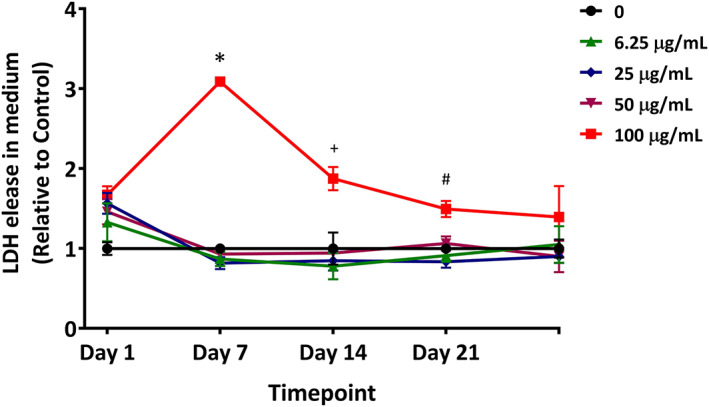
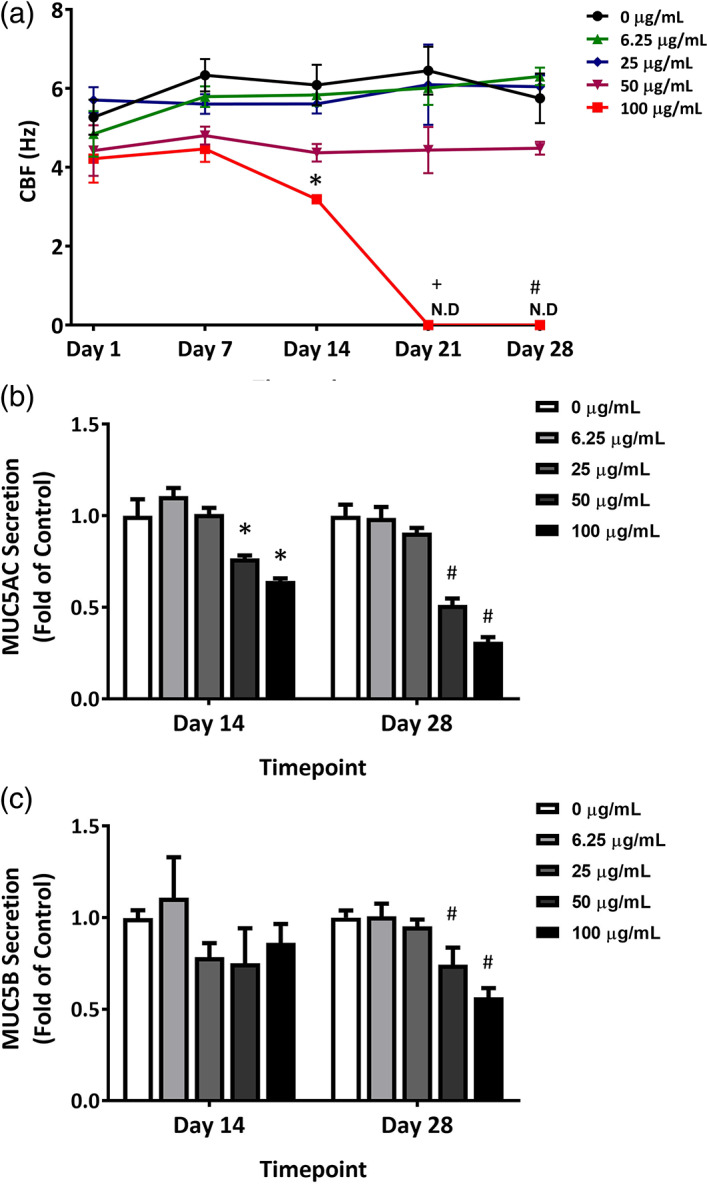
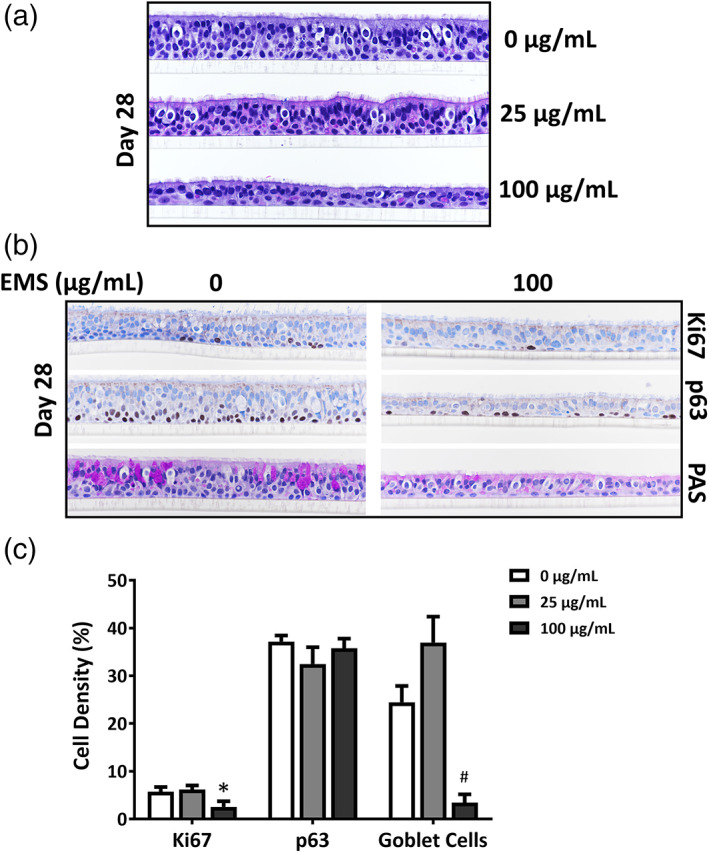
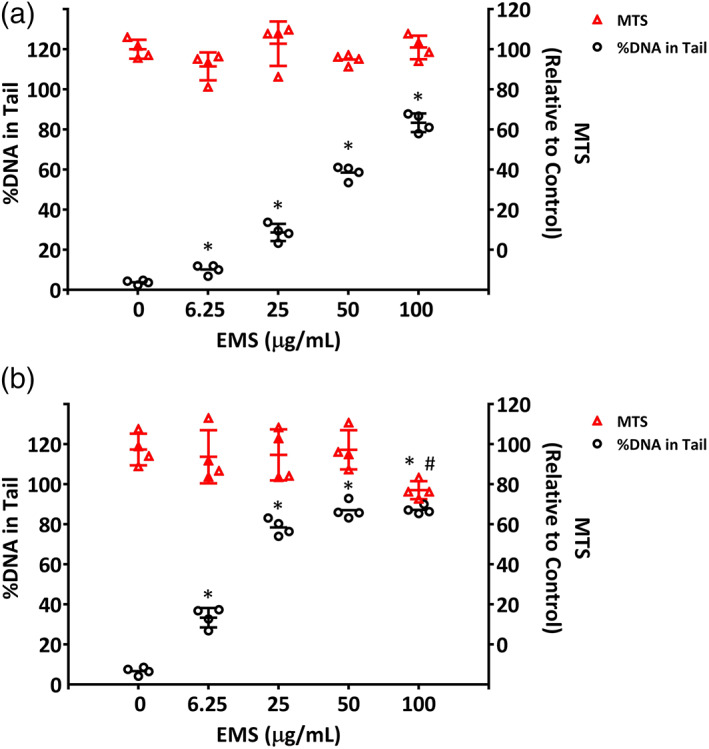
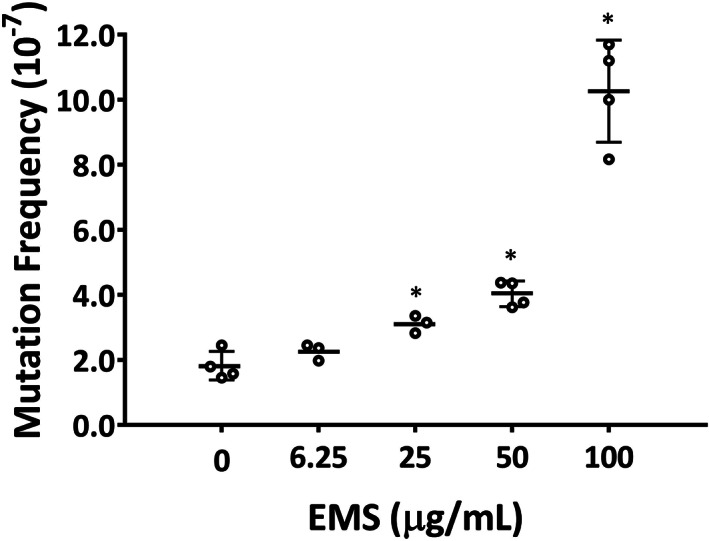
The organotypic human air-liquid-interface (ALI) airway tissue model has been used as an in vitro cell culture system for evaluating the toxicity of inhaled substances. ALI airway cultures are highly differentiated, which has made it challenging to evaluate genetic toxicology endpoints. In the current study, we assayed DNA damage with the high-throughput CometChip assay and quantified mutagenesis with Duplex Sequencing, an error-corrected next-generation sequencing method capable of detecting a single mutation per 10 base pairs. Fully differentiated human ALI airway cultures were treated from the basolateral side with 6.25 to 100 μg/mL ethyl methanesulfonate (EMS) over a period of 28 days. CometChip assays were conducted after 3 and 28 days of treatment, and Duplex Sequencing after 28 days of treatment. Treating the airway cultures with EMS resulted in time- and concentration-dependent increases in DNA damage and a concentration-dependent increase in mutant frequency. The mutations observed in the EMS-treated cultures were predominantly C → T transitions and exhibited a unique trinucleotide signature relative to the negative control. Measurement of physiological endpoints indicated that the EMS treatments had no effect on anti-p63-positive basal cell frequency, but produced concentration-responsive increases in cytotoxicity and perturbations in cell morphology, along with concentration-responsive decreases in culture viability, goblet cell and anti-Ki67-positive proliferating cell frequency, cilia beating frequency, and mucin secretion. The results indicate that a unified 28-day study can be used to measure several important safety endpoints in physiologically relevant human in vitro ALI airway cultures, including DNA damage, mutagenicity, and tissue-specific general toxicity.
器官型人液-气界面 (ALI) 气道组织模型已被用作评估吸入物质毒性的体外细胞培养系统。ALI 气道培养物高度分化,这使得评估遗传毒性终点变得具有挑战性。在当前的研究中,我们使用高通量彗星芯片测定法测定 DNA 损伤,并使用双链测序法(一种能够检测每 10 个碱基对中单个突变的纠错下一代测序方法)定量突变。用乙基甲磺酸(EMS)从基底外侧处理完全分化的人 ALI 气道培养物,浓度为 6.25 至 100μg/mL,持续 28 天。在处理 3 天和 28 天后进行彗星芯片测定,在处理 28 天后进行双链测序。用 EMS 处理气道培养物导致 DNA 损伤随时间和浓度的增加而增加,并且突变频率随浓度的增加而增加。在 EMS 处理的培养物中观察到的突变主要是 C→T 转换,与阴性对照相比表现出独特的三核苷酸特征。对生理终点的测量表明,EMS 处理对抗 p63 阳性基底细胞频率没有影响,但会导致细胞毒性的浓度反应性增加,细胞形态的改变,以及培养物活力、杯状细胞和抗 Ki67 阳性增殖细胞频率、纤毛摆动频率和粘蛋白分泌的浓度反应性降低。结果表明,一个统一的 28 天研究可以用于测量生理相关的人液-气界面 ALI 气道培养物中的几个重要安全终点,包括 DNA 损伤、致突变性和组织特异性一般毒性。