Department of Geriatric Respiratory and Sleep, The First Affiliated Hospital of Zhengzhou University, No.1, Jianshe East Road, Erqi District, Zhengzhou, 450000, Henan Province, China.
Department of Anesthesiology, The First Affiliated Hospital of Zhengzhou University, Zhengzhou, China.
Mol Med. 2021 May 30;27(1):53. doi: 10.1186/s10020-021-00309-z.
Chronic obstructive pulmonary disease (COPD) is characterized by airway obstruction and progressive lung inflammation. As the primary ingredient of a traditional Chinese medical herb, Baicalin has been previously shown to possess anti-inflammatory abilities. Thus, the current study aimed to elucidate the mechanism by which baicalin alleviates COPD.
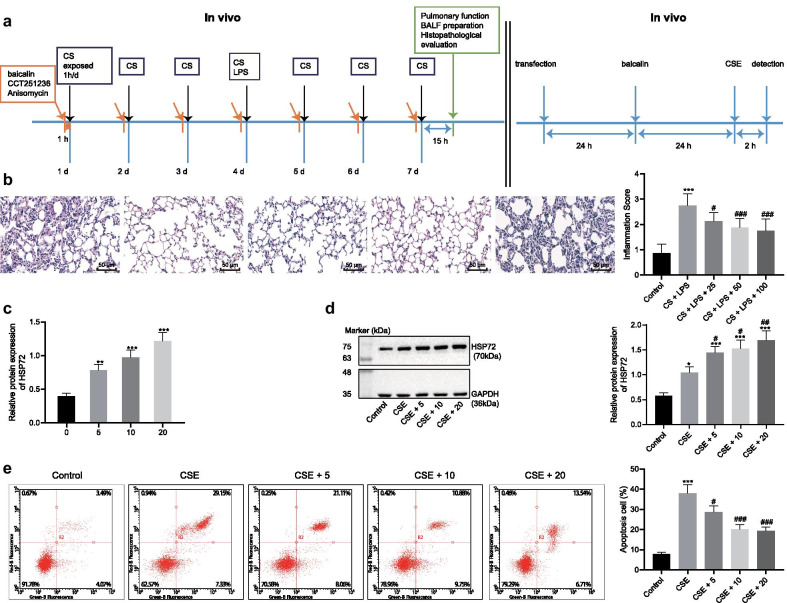
Baicalin was adopted to treat cigarette smoke in extract-exposed MLE-12 cells after which cell viability and apoptosis were determined. The production of tumor necrosis factor alpha (TNF-α), interleukin-6 (IL-6), IL-8 were determined by enzyme-linked immunoassay. A COPD mouse model was constructed via exposure to cigarette smoke and lipopolysaccharide, baicalin treatment. Lung function and inflammatory cell infiltration were determined and the production of Muc5AC, TNF-α, IL-6, IL-8 in the bronchoalveolar lavage fluid (BALF) was assayed by ELISA. The effect of HSP72 and JNK on COPD following treatment with baicalin was assessed both in vivo and in vitro by conducting loss- and gain- function experiments.
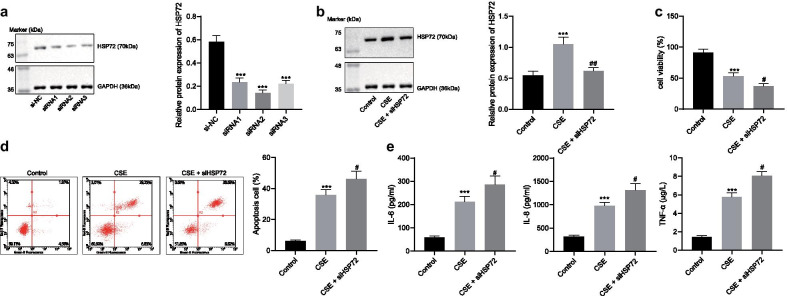
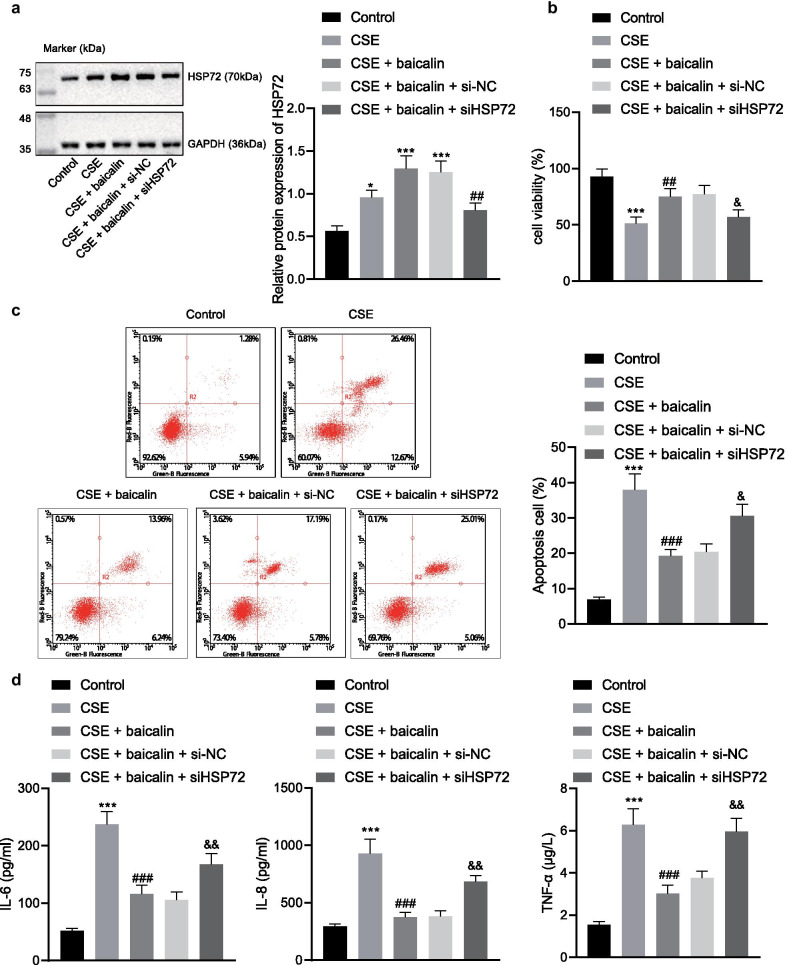
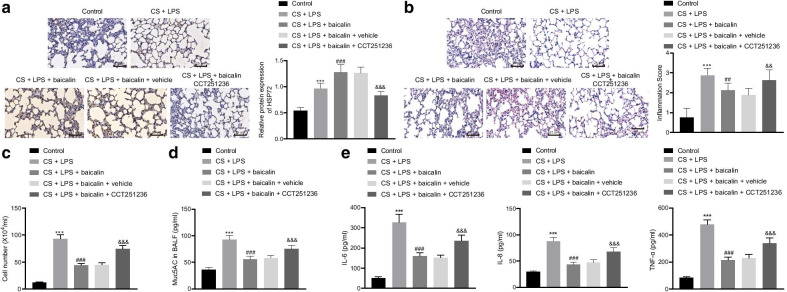
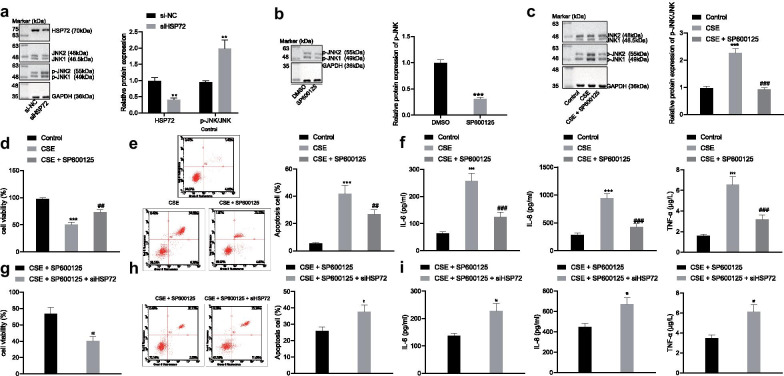
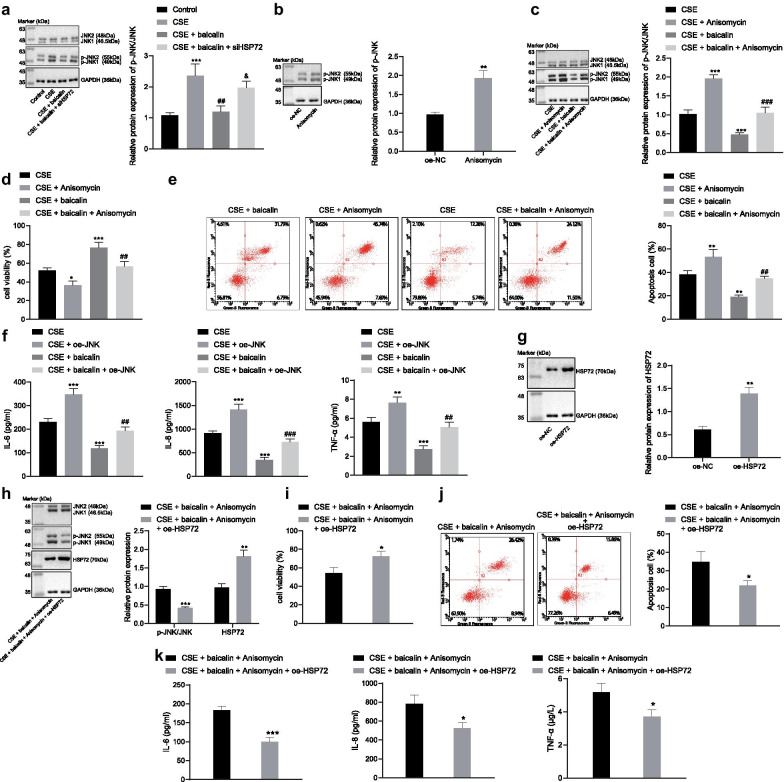
Baicalin improved lung function evidenced by reduction in inflammatory cell infiltration and Muc5AC, TNF-α, IL-6 and IL-8 levels observed in BALF in mice. Baicalin was further observed to elevate cell viability while inhibited apoptosis and TNF-α, IL-6 and IL-8 levels in MLE-12 cells. Baicalin treatment increased HSP72 expression, while its depletion reversed the effect of baicalin on COPD. HSP72 inhibited the activation of JNK, while JNK activation was found to inhibit the effect of baicalin on COPD.
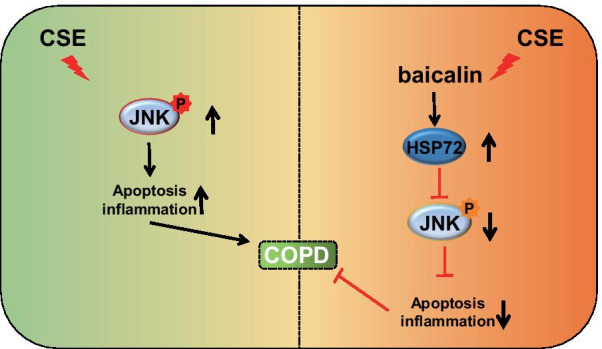
Baicalin upregulated the expression of HSP72, resulting in the inhibition of JNK signaling activation, which ultimately alleviates COPD.
慢性阻塞性肺疾病(COPD)的特征是气道阻塞和进行性肺部炎症。黄芩苷作为一种传统中药的主要成分,先前已被证明具有抗炎能力。因此,本研究旨在阐明黄芩苷缓解 COPD 的机制。
采用黄芩苷治疗香烟烟雾暴露的 MLE-12 细胞后,测定细胞活力和细胞凋亡。酶联免疫吸附试验测定肿瘤坏死因子-α(TNF-α)、白细胞介素-6(IL-6)、白细胞介素-8(IL-8)的产生。通过香烟烟雾和脂多糖暴露构建 COPD 小鼠模型,并给予黄芩苷治疗。测定肺功能和炎性细胞浸润,酶联免疫吸附试验测定支气管肺泡灌洗液(BALF)中 Muc5AC、TNF-α、IL-6、IL-8 的产生。通过进行失活和功能获得实验,评估 HSP72 和 JNK 对 COPD 的影响。
黄芩苷改善了肺功能,表现为炎性细胞浸润减少,BALF 中 Muc5AC、TNF-α、IL-6 和 IL-8 水平降低。进一步观察到黄芩苷可提高细胞活力,同时抑制 MLE-12 细胞中 TNF-α、IL-6 和 IL-8 的产生。黄芩苷治疗可增加 HSP72 的表达,而 HSP72 的耗竭则逆转了黄芩苷对 COPD 的作用。HSP72 抑制 JNK 信号的激活,而 JNK 激活则抑制了黄芩苷对 COPD 的作用。
黄芩苷上调 HSP72 的表达,抑制 JNK 信号通路的激活,从而缓解 COPD。