Xie Yuxiu, Wang Men, Xu Peng, Deng Yujiao, Zheng Yi, Yang Si, Wu Ying, Zhai Zhen, Zhang Dai, Li Na, Wang Nan, Cheng Jing, Dai Zhijun
Department of Breast Surgery, The First Affiliated Hospital, College of Medicine, Zhejiang University, Hangzhou, China.
Cancer Center, Union Hospital, Tongji Medical College, Huazhong University of Science and Technology, Wuhan, China.
Front Pharmacol. 2021 May 13;12:609901. doi: 10.3389/fphar.2021.609901. eCollection 2021.
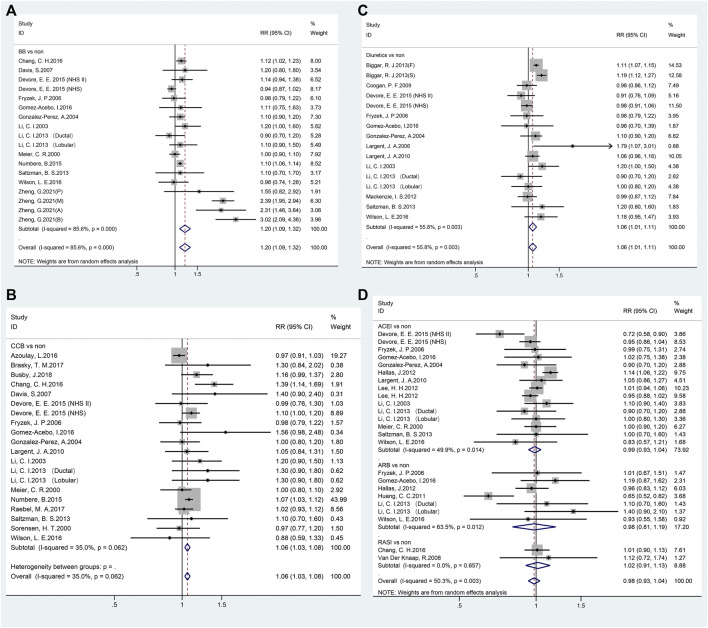
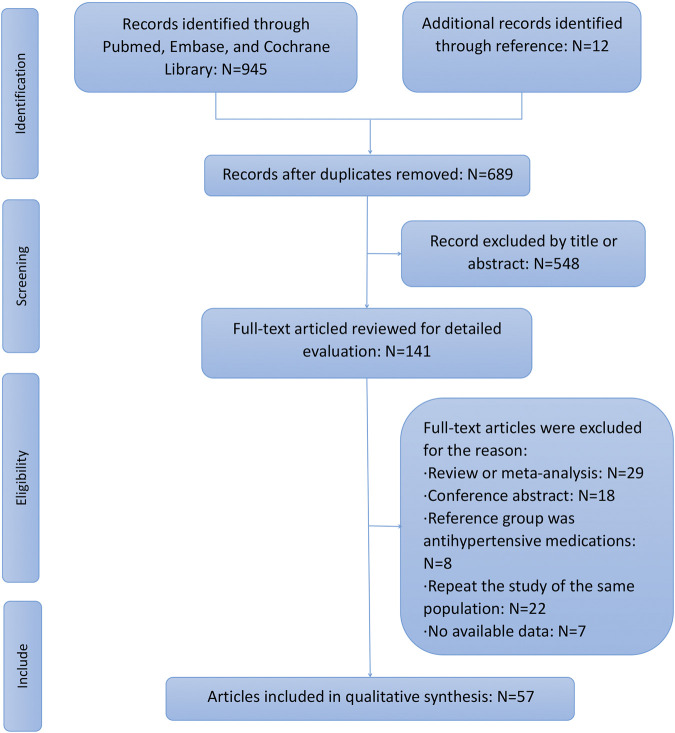
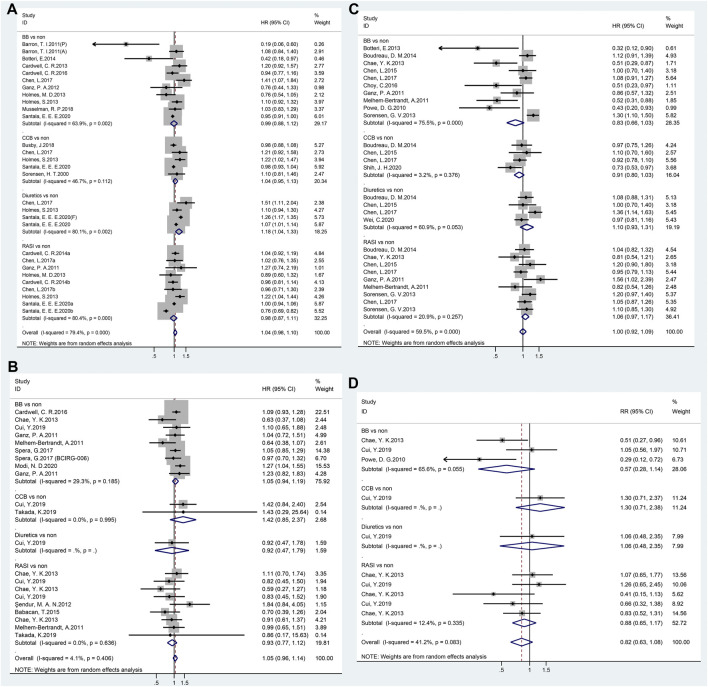
The prevalence rate of hypertension and breast cancer increases with advancing age. Renin-angiotensin system inhibitors (RASIs), β-blockers (BBs), calcium channel blockers (CCBs), and diuretics are widely used to treat patients with hypertension. Although, the association between the use of antihypertensive medication and breast cancer has been highly debated, recent evidence supporting this association remains controversial. To evaluate the association between the use of antihypertensive medication and the risk of breast cancer and its prognosis. This study was conducted using data from the PubMed, Embase, and Cochrane Library databases retrieved for the period from January 2000 to April 2021. Articles and their references were checked and summary effects were calculated using random- and fixed-effects models. Heterogeneity test and sensitivity analysis were also performed. This meta-analysis included 57 articles, which were all related to breast cancer risk or prognosis. Assessment of breast cancer risk using the pooled data showed that the use of BBs or CCBs or diuretics was associated with increased cancer risk [BB: relative risk (RR) = 1.20, 95% confidence interval (CI) = 1.09-1.32; CCBs: RR = 1.06, 95% CI 1.03-1.08; diuretics: RR = 1.06, 95% CI 1.01-1.11]. Long-term use of diuretic increased the risk of breast cancer (RR = 1.10, 95% CI 1.01-1.20), whereas long-term RASIs treatment reduced the risk (RR = 0.78, 95% CI 0.68-0.91). In addition, we found that diuretic users may be related to elevated breast cancer-specific mortality [hazard ratio (HR) = 1.18, 95% CI 1.04-1.33], whereas using other antihypertensive medications was not associated with this prognosis in patients with breast cancer. Using CCBs, BBs, and diuretics increased the risk of breast cancer. In addition, diuretics may elevate the risk of breast cancer-specific mortality. The long-term use of RASIs was associated with a significantly lower breast cancer risk, compared with non-users. Thus, this analysis provides evidence to support the benefits of the routine use of RASIs in patients with hypertension, which has important public health implications.
高血压和乳腺癌的患病率均随年龄增长而上升。肾素 - 血管紧张素系统抑制剂(RASIs)、β受体阻滞剂(BBs)、钙通道阻滞剂(CCBs)和利尿剂被广泛用于治疗高血压患者。尽管抗高血压药物的使用与乳腺癌之间的关联一直备受争议,但近期支持这种关联的证据仍存在争议。为了评估抗高血压药物的使用与乳腺癌风险及其预后之间的关联。本研究使用从2000年1月至2021年4月期间检索的PubMed、Embase和Cochrane图书馆数据库中的数据进行。对文章及其参考文献进行检查,并使用随机效应模型和固定效应模型计算汇总效应。还进行了异质性检验和敏感性分析。这项荟萃分析纳入了57篇文章,这些文章均与乳腺癌风险或预后相关。使用汇总数据评估乳腺癌风险显示,使用BBs、CCBs或利尿剂与癌症风险增加相关[BBs:相对风险(RR)= 1.20,95%置信区间(CI)= 1.09 - 1.32;CCBs:RR = 1.06,95% CI 1.03 - 1.08;利尿剂:RR = 1.06,95% CI 1.01 - 1.11]。长期使用利尿剂会增加乳腺癌风险(RR = 1.10,95% CI 1.01 - 1.20),而长期使用RASIs治疗可降低风险(RR = 0.78,95% CI 0.68 - 0.91)。此外,我们发现使用利尿剂的患者可能与乳腺癌特异性死亡率升高有关[风险比(HR)= 1.18,95% CI 1.04 - 1.33],而使用其他抗高血压药物与乳腺癌患者的这种预后无关。使用CCBs、BBs和利尿剂会增加乳腺癌风险。此外,利尿剂可能会提高乳腺癌特异性死亡率。与未使用者相比,长期使用RASIs与显著降低的乳腺癌风险相关。因此,本分析提供了证据支持在高血压患者中常规使用RASIs的益处,这具有重要的公共卫生意义。