Department of Pediatrics, University of Cincinnati College of Medicine, Cincinnati, OH, United States.
Division of Infectious Diseases, Cincinnati Children's Hospital Medical Center, Cincinnati, OH, United States.
Front Immunol. 2021 May 14;12:653571. doi: 10.3389/fimmu.2021.653571. eCollection 2021.
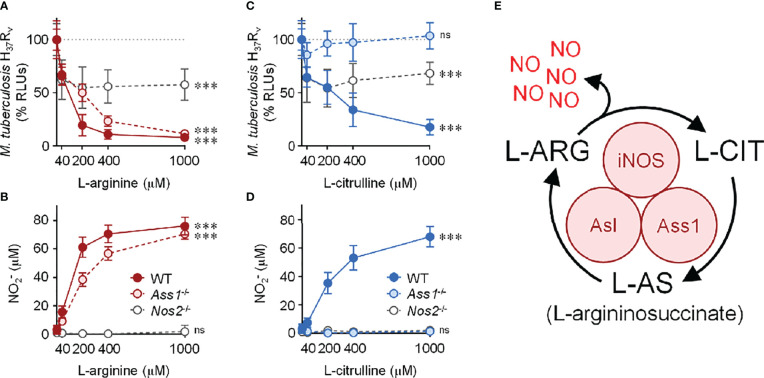
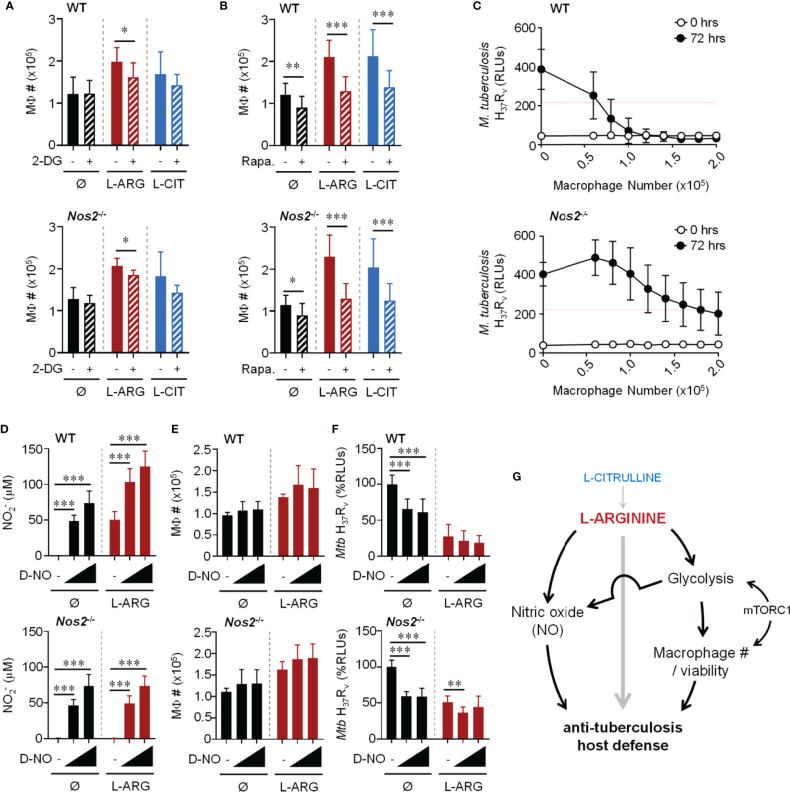
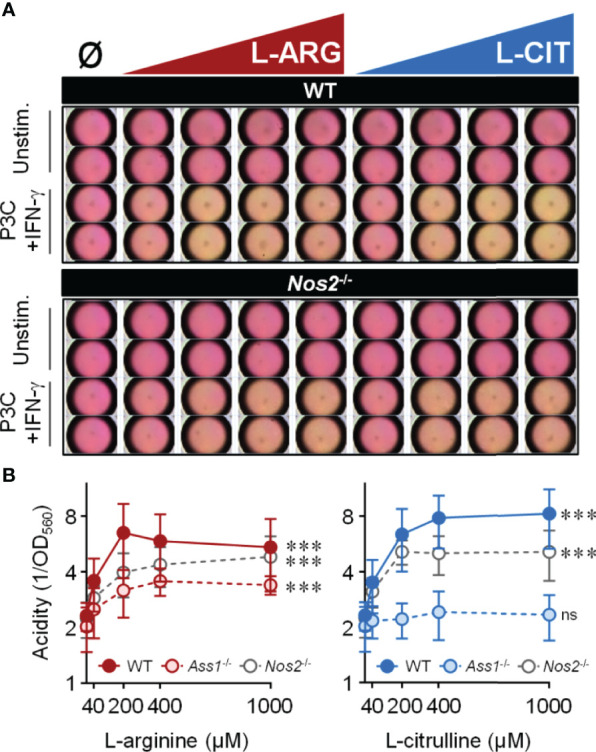
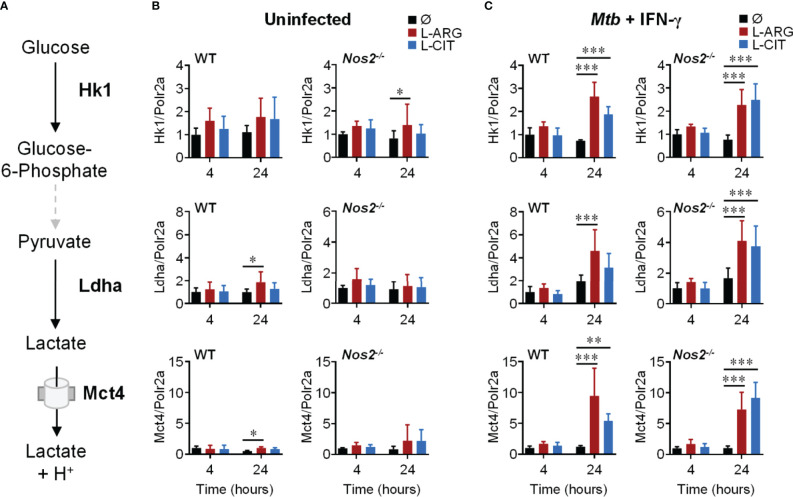
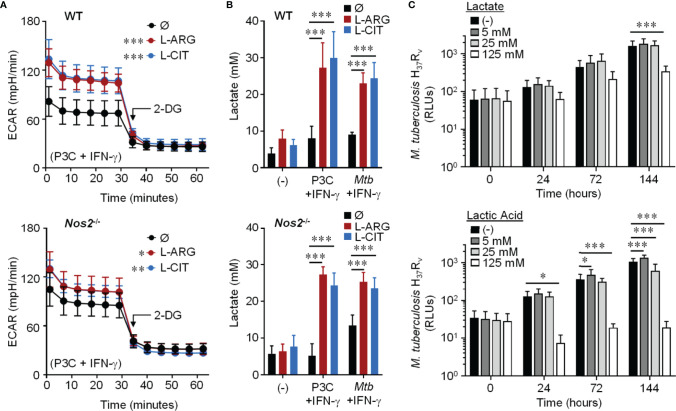
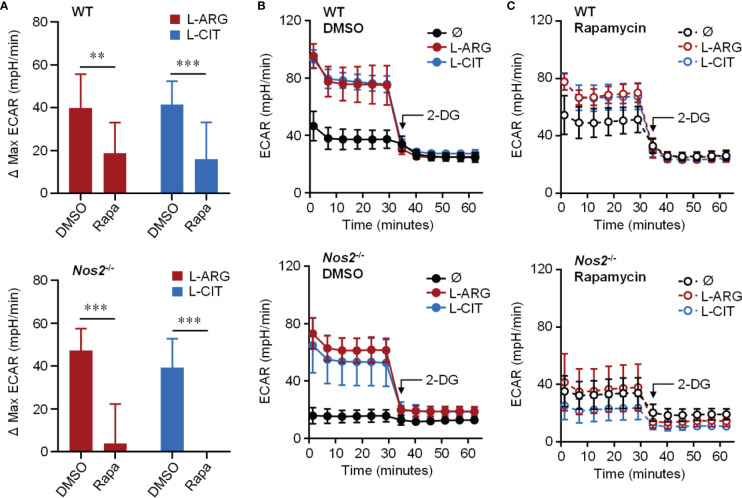
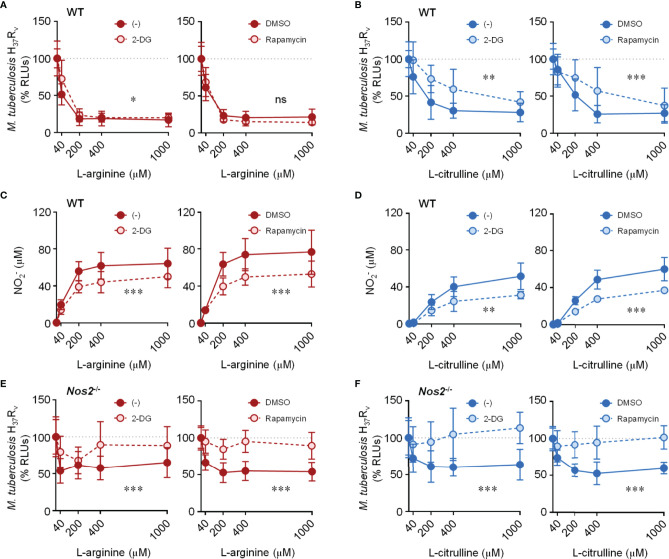
Macrophages are indispensable immune cells tasked at eliminating intracellular pathogens. (), one of the most virulent intracellular bacterial pathogens known to man, infects and resides within macrophages. While macrophages can be provoked by extracellular stimuli to inhibit and kill bacilli, these host defense mechanisms can be blocked by limiting nutritional metabolites, such as amino acids. The amino acid L-arginine has been well described to enhance immune function, especially in the context of driving macrophage nitric oxide (NO) production in mice. In this study, we aimed to establish the necessity of L-arginine on anti- macrophage function of NO. Utilizing an system, we identified that macrophages relied on NO for only half of their L-arginine-mediated host defenses and this L-arginine-mediated defense in the absence of NO was associated with enhanced macrophage numbers and viability. Additionally, we observed macrophage glycolysis to be driven by both L-arginine and mechanistic target of rapamycin (mTOR), and inhibition of glycolysis or mTOR reduced macrophage control of as well as macrophage number and viability in the presence of L-arginine. Our data underscore L-arginine as an essential nutrient for macrophage function, not only by fueling anti-mycobacterial NO production, but also as a central regulator of macrophage metabolism and additional host defense mechanisms.
巨噬细胞是不可或缺的免疫细胞,负责清除细胞内病原体。( )是已知对人类最具毒性的细胞内细菌病原体之一,感染并存在于巨噬细胞内。虽然巨噬细胞可以被细胞外刺激物激活以抑制和杀死 杆菌,但这些宿主防御机制可以被限制营养代谢物(如氨基酸)所阻断。氨基酸 L-精氨酸已被很好地描述为增强免疫功能,尤其是在驱动小鼠巨噬细胞一氧化氮 (NO) 产生的情况下。在这项研究中,我们旨在确定 L-精氨酸对巨噬细胞 NO 抗 功能的必要性。利用 系统,我们发现巨噬细胞仅依赖于 NO 来实现其一半的 L-精氨酸介导的宿主防御,而在没有 NO 的情况下,这种 L-精氨酸介导的防御与增强的巨噬细胞数量和活力有关。此外,我们观察到巨噬细胞糖酵解既受 L-精氨酸的驱动,也受雷帕霉素的机制靶标 (mTOR) 的驱动,并且抑制糖酵解或 mTOR 会降低巨噬细胞对 的控制以及在存在 L-精氨酸的情况下巨噬细胞的数量和活力。我们的数据强调了 L-精氨酸作为巨噬细胞功能的必需营养素的重要性,不仅通过为抗分枝杆菌的 NO 产生提供燃料,而且还作为巨噬细胞代谢和其他宿主防御机制的中央调节剂。