Laboratory of Cellular and Molecular Immunology, School of Medicine, Gavin Herbert Eye Institute, University of California Irvine, Irvine, CA, United States.
Trefoil Therapeutics, Inc., San Diego, CA, United States.
Front Immunol. 2021 May 13;12:673763. doi: 10.3389/fimmu.2021.673763. eCollection 2021.
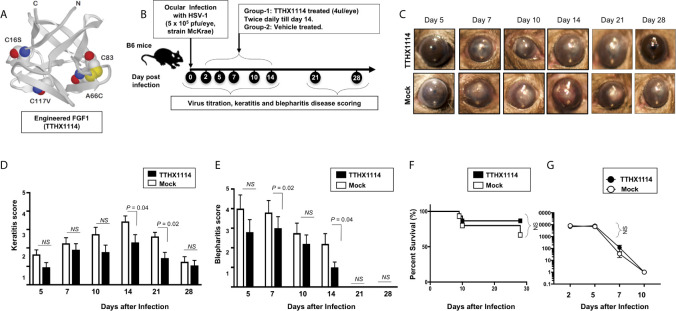
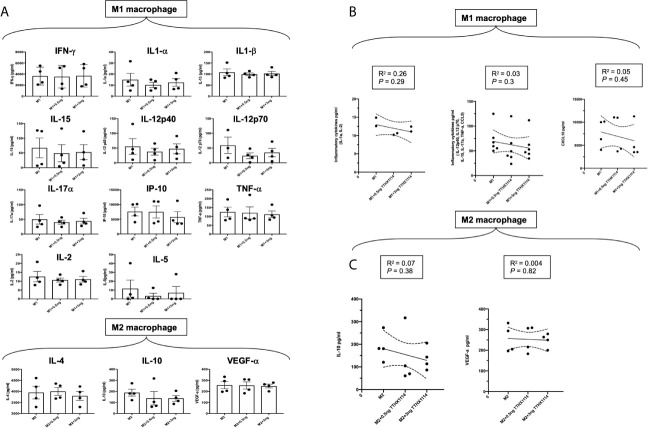
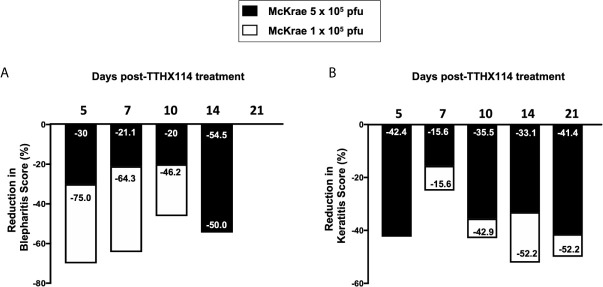
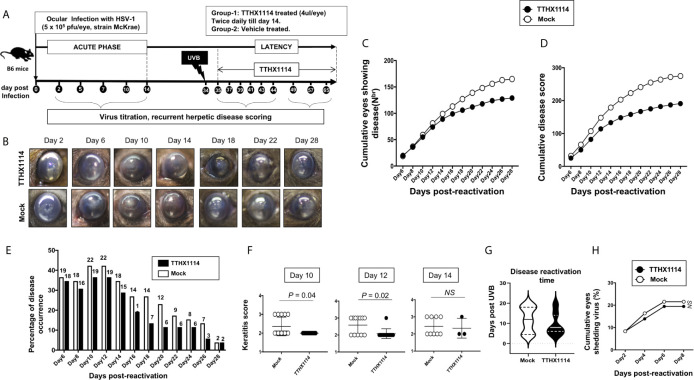
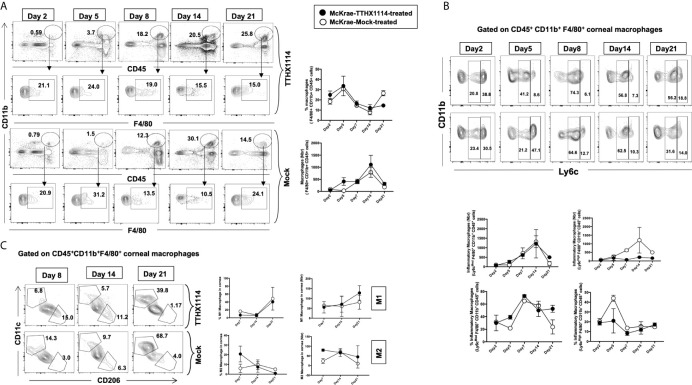
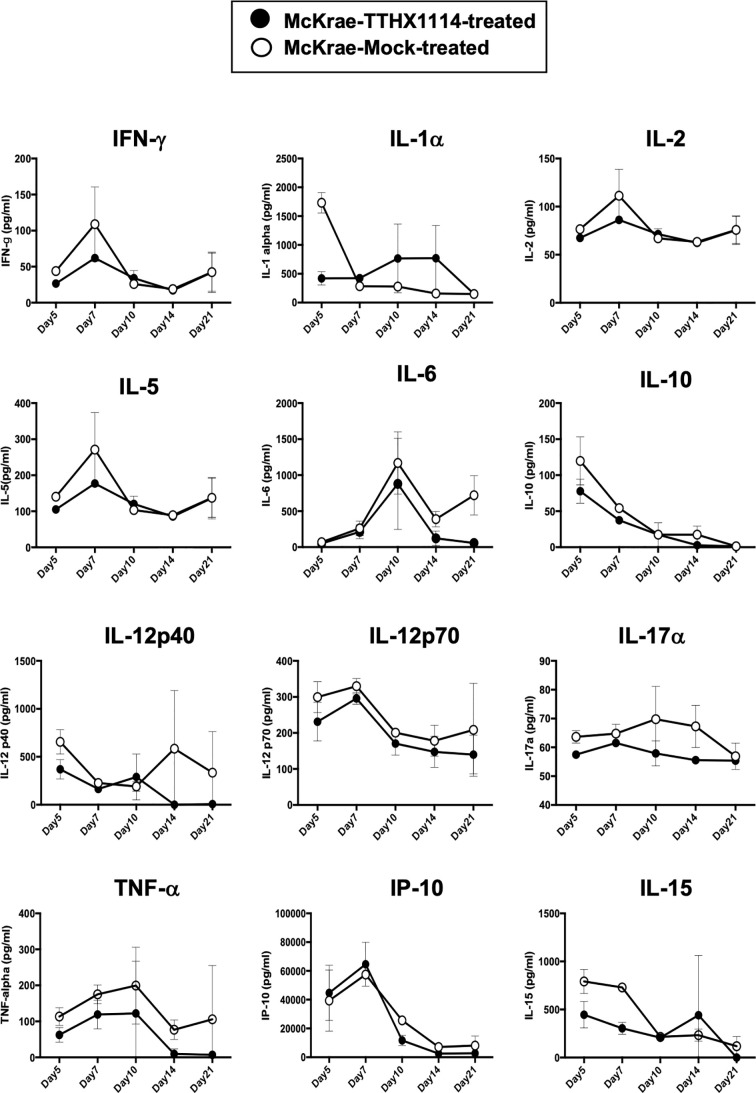
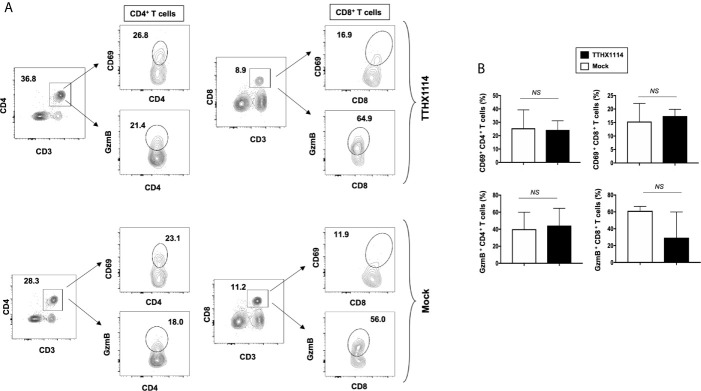
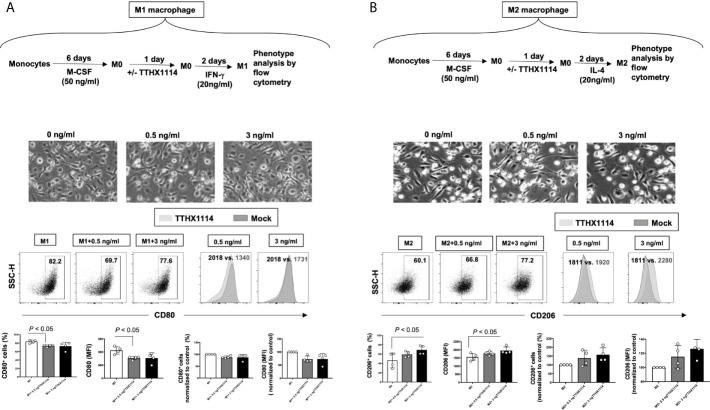
Herpes simplex virus 1 (HSV-1) infects the cornea and caused blinding ocular disease. In the present study, we evaluated whether and how a novel engineered version of fibroblast growth factor-1 (FGF-1), designated as TTHX1114, would reduce the severity of HSV-1-induced and recurrent ocular herpes in the mouse model. The efficacy of TTHX1114 against corneal keratopathy was assessed in B6 mice following corneal infection with HSV-1, strain McKrae. Starting day one post infection (PI), mice received TTHX1114 for 14 days. The severity of primary stromal keratitis and blepharitis were monitored up to 28 days PI. Inflammatory cell infiltrating infected corneas were characterized up to day 21 PI. The severity of recurrent herpetic disease was quantified in latently infected B6 mice up to 30 days post-UVB corneal exposure. The effect of TTHX1114 on M1 and M2 macrophage polarization was determined in mice and on primary human monocytes-derived macrophages. Compared to HSV-1 infected non-treated mice, the infected and TTHX1114 treated mice exhibited significant reduction of primary and recurrent stromal keratitis and blepharitis, without affecting virus corneal replication. The therapeutic effect of TTHX1114 was associated with a significant decrease in the frequency of M1 macrophages infiltrating the cornea, which expressed significantly lower levels of pro-inflammatory cytokines and chemokines. This polarization toward M2 phenotype was confirmed on human primary macrophages. This pre-clinical finding suggests use of this engineered FGF-1 as a novel immunotherapeutic regimen to reduce primary and recurrent HSV-1-induced corneal disease in the clinic.
单纯疱疹病毒 1(HSV-1)感染角膜并导致致盲性眼部疾病。在本研究中,我们评估了新型工程化成纤维细胞生长因子-1(FGF-1)的版本,命名为 TTHX1114,是否以及如何减轻 HSV-1 诱导的和复发性眼部单纯疱疹在小鼠模型中的严重程度。在 B6 小鼠角膜感染 HSV-1 株 McKrae 后,评估 TTHX1114 对角膜病变的疗效。从感染后第 1 天(PI)开始,小鼠接受 TTHX1114 治疗 14 天。监测原发性基质角膜炎和睑炎的严重程度,直至 PI 后 28 天。在 PI 第 21 天之前,对感染角膜中的炎症细胞浸润进行了特征描述。在潜伏感染的 B6 小鼠中,量化复发性疱疹性疾病的严重程度,直至 UVB 角膜暴露后 30 天。在小鼠和原代人单核细胞衍生的巨噬细胞中,确定 TTHX1114 对 M1 和 M2 巨噬细胞极化的影响。与 HSV-1 感染未治疗的小鼠相比,感染和 TTHX1114 治疗的小鼠表现出原发性和复发性基质角膜炎和睑炎的显著减轻,而不影响病毒的角膜复制。TTHX1114 的治疗效果与角膜浸润 M1 巨噬细胞频率的显著降低有关,这些细胞表达的促炎细胞因子和趋化因子水平显著降低。在原代人巨噬细胞上证实了这种向 M2 表型的极化。这一临床前发现表明,使用这种工程化的 FGF-1 作为一种新的免疫治疗方案,可减少临床中 HSV-1 诱导的原发性和复发性角膜疾病。