Department of Endocrinology and Metabolism, The Affiliated Hospital of Southwest Medical University, Sichuan Luzhou 646000, China.
Department of Vascular and Breast Surgery, Hospital (T.C.M) Affiliated to Southwest Medical University, Sichuan, Luzhou 646000, China.
Biomed Res Int. 2021 May 17;2021:5522578. doi: 10.1155/2021/5522578. eCollection 2021.
Diabetes mellitus is a clinical syndrome caused by genetic and environmental factors. Growing evidence suggests that exposure to environmental endocrine disruptors and activation of NLRP3 inflammasome signaling play a vital role in diabetes. However, it is unclear how PCB118, a common environmental endocrine disruptor, contributes to the incidence of diabetes, and its specific mechanism of action is unknown. In this study, we explored whether ROS-induced NLRP3 inflammasome priming and activation were related to PCB118 exposure in mouse islet -TC-6 cells and the mechanisms of diabetes.
Mouse islet -TC-6 cells were cultured with PCB118 as a stimulating factor and ROS inhibitor N-acetyl cysteine (NAC) as an intervention. Cellular toxicity due to PCB118 was detected using the Cell Counting Kit-8; ROS was measured using DCFH-DA; the expressions of NLRP3, procaspase-1, caspase-1, pro-IL-1, and IL-1 protein were detected by western blot; and IL-6, IL-18, and C-C chemokine ligand 2 (CCL-2) were measured by ELISA.
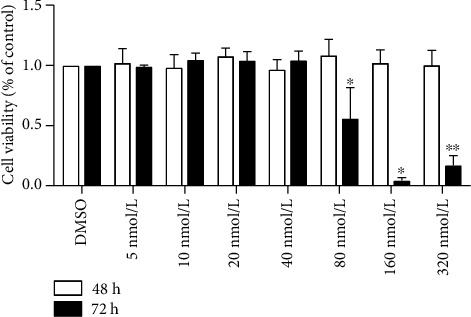
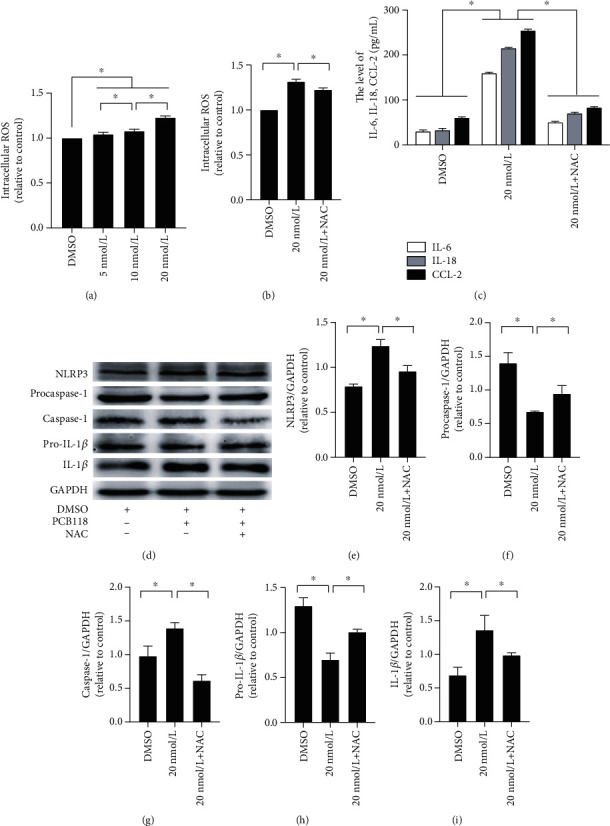
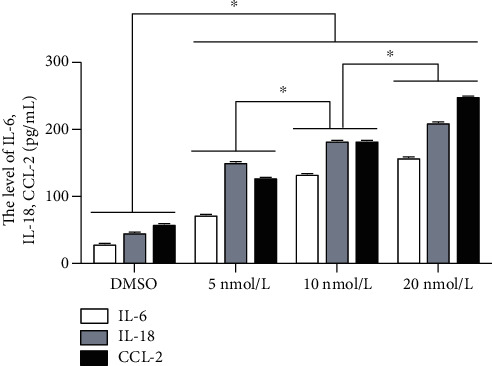
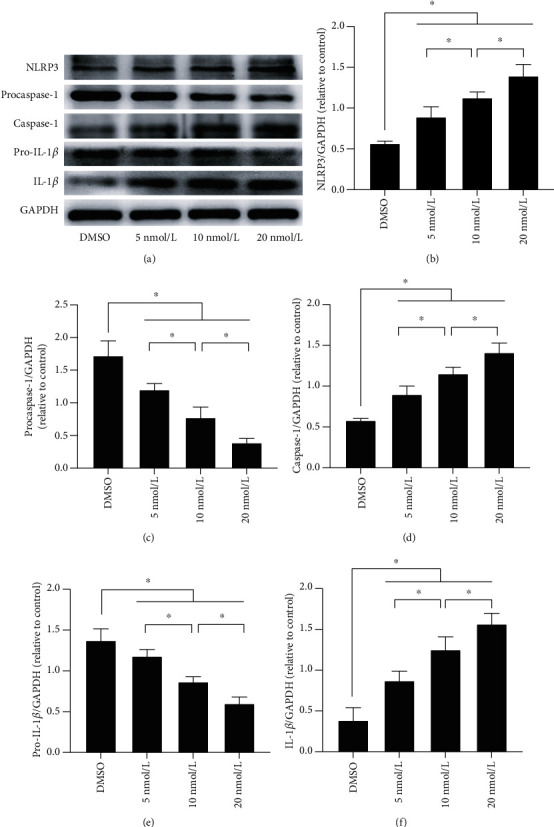
PCB118 caused significant toxicity to the cells when the stimulation concentration was equal to or greater than 80 nmol/L at 72 hours ( < 0.05) and increased the levels of ROS, NLRP3, caspase-1, IL-1, IL-6, IL-18, and CCL-2 ( < 0.05); the expressions of procaspase-1 and pro-IL-1 were downregulated in a dose-dependent manner after PCB118 exposure ( < 0.05), which was prevented by pretreatment with NAC ( < 0.05).
PCB118 can activate NLRP3 inflammasome signaling in islet beta cells via the oxidative stress pathway and cause inflammation in islet beta cells. It suggests that environmental endocrine disruptors play an important role in the inflammation of islet beta cells and may contribute to the development of diabetes through NLRP3 inflammatory signaling.
糖尿病是一种由遗传和环境因素引起的临床综合征。越来越多的证据表明,环境内分泌干扰物的暴露和 NLRP3 炎性小体信号的激活在糖尿病的发生中起着至关重要的作用。然而,目前尚不清楚 PCB118(一种常见的环境内分泌干扰物)如何导致糖尿病的发生,其具体作用机制尚不清楚。在本研究中,我们探讨了 ROS 诱导的 NLRP3 炎性小体的始动和激活是否与 PCB118 暴露于小鼠胰岛 -TC-6 细胞有关,以及糖尿病的发病机制。
将小鼠胰岛 -TC-6 细胞用 PCB118 作为刺激因子,用 ROS 抑制剂 N-乙酰半胱氨酸(NAC)作为干预因素进行培养。用细胞计数试剂盒 -8 检测 PCB118 引起的细胞毒性;用 DCFH-DA 测定 ROS;用 Western blot 检测 NLRP3、procaspase-1、caspase-1、pro-IL-1 和 IL-1 蛋白的表达;用 ELISA 法测定 IL-6、IL-18 和 C-C 趋化因子配体 2(CCL-2)。
PCB118 在刺激浓度等于或大于 80nmol/L 时,在 72 小时对细胞有明显的毒性作用(<0.05),并增加了 ROS、NLRP3、caspase-1、IL-1、IL-6、IL-18 和 CCL-2 的水平(<0.05);PCB118 暴露后,procaspase-1 和 pro-IL-1 的表达呈剂量依赖性下调(<0.05),NAC 预处理可预防这种下调(<0.05)。
PCB118 可通过氧化应激途径激活胰岛β细胞中的 NLRP3 炎性小体信号,并导致胰岛β细胞炎症。这表明环境内分泌干扰物在胰岛β细胞炎症中起着重要作用,可能通过 NLRP3 炎症信号途径促进糖尿病的发生。