Department of Stomatology, Jinling Hospital, The First School of Clinical Medicine, Southern Medical University, Nanjing, China.
Duke Cancer Institute, Duke University Medical Center, Durham, North Carolina, USA.
Int J Cancer. 2021 Sep 15;149(6):1302-1312. doi: 10.1002/ijc.33702. Epub 2021 Jun 10.
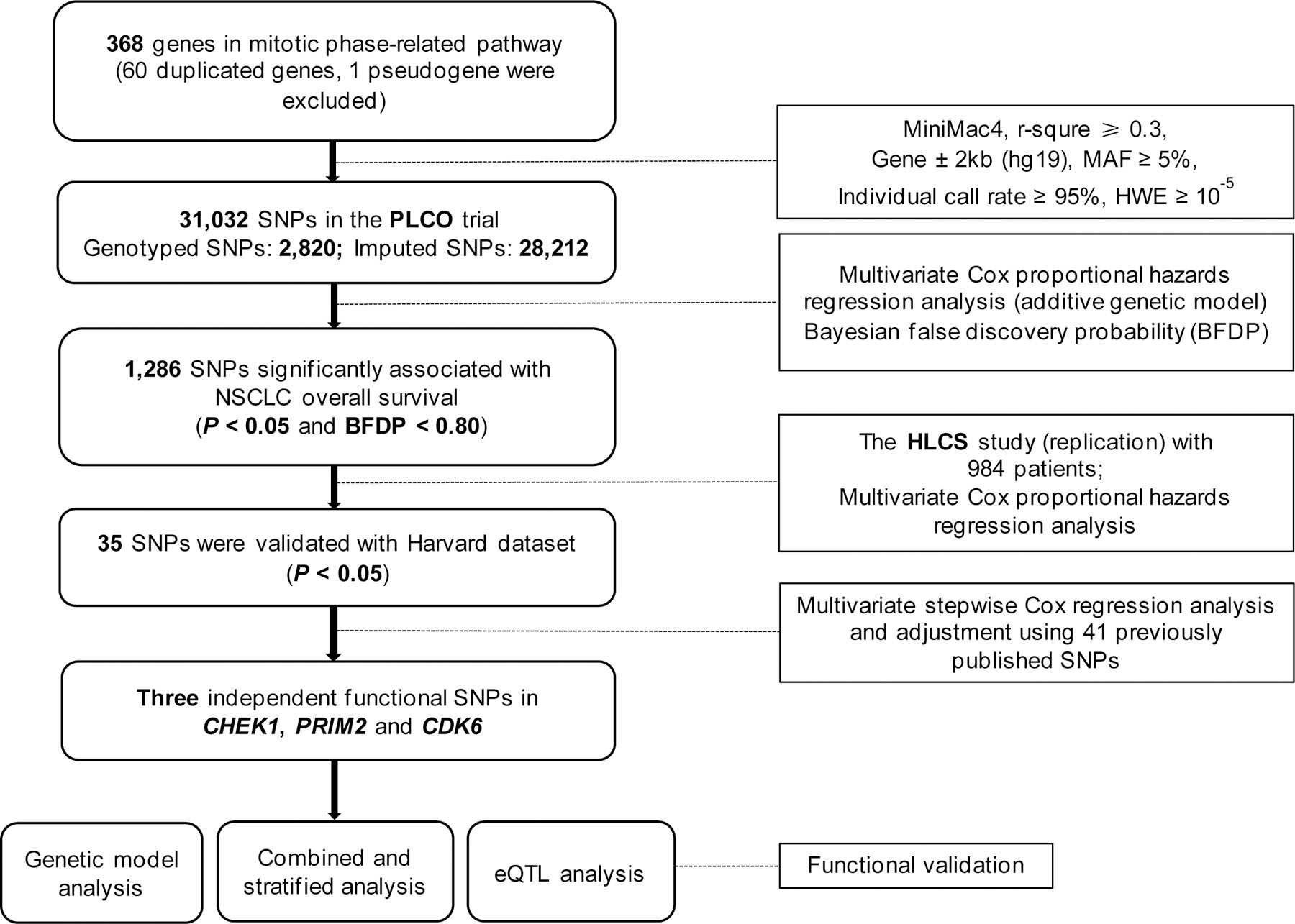
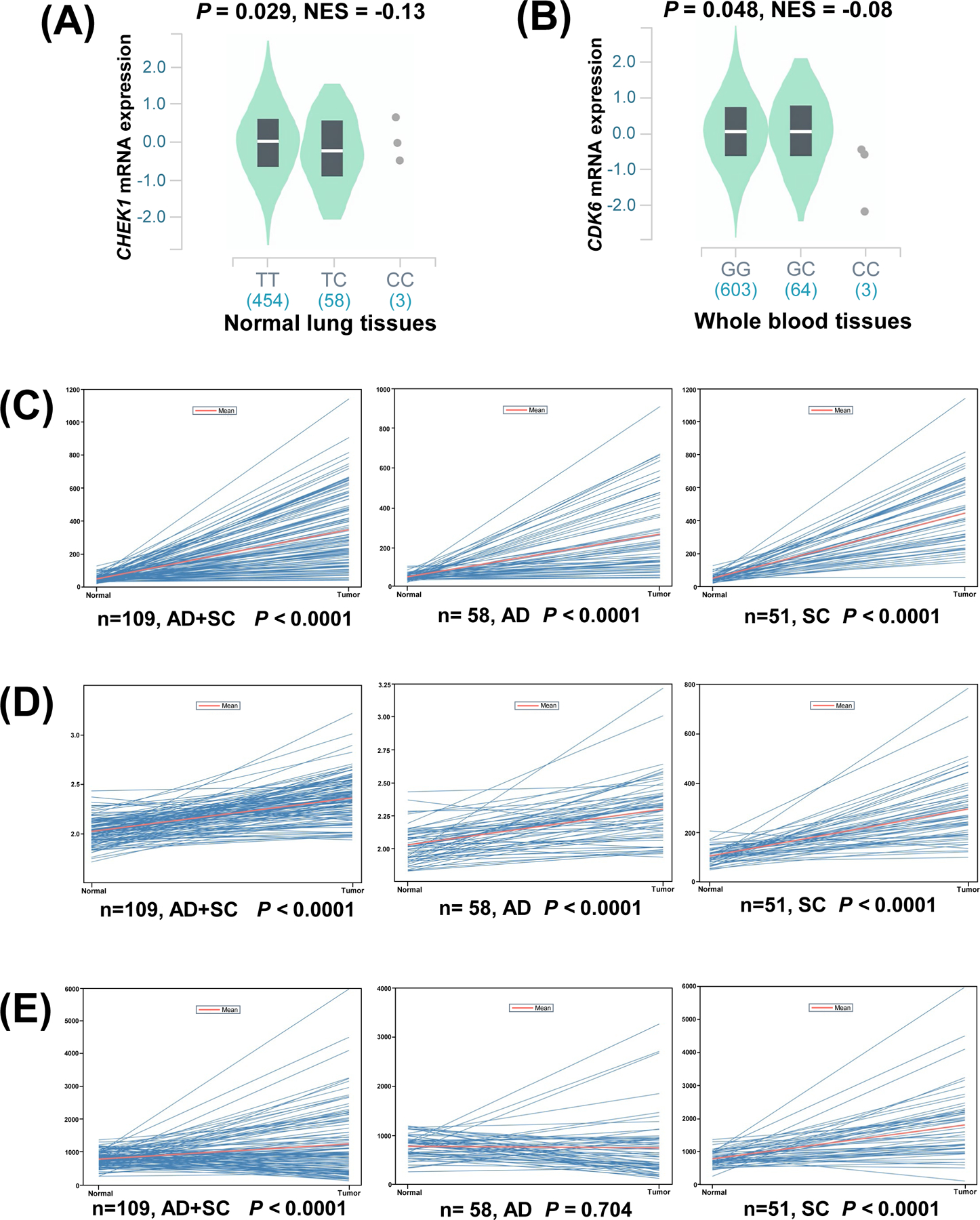
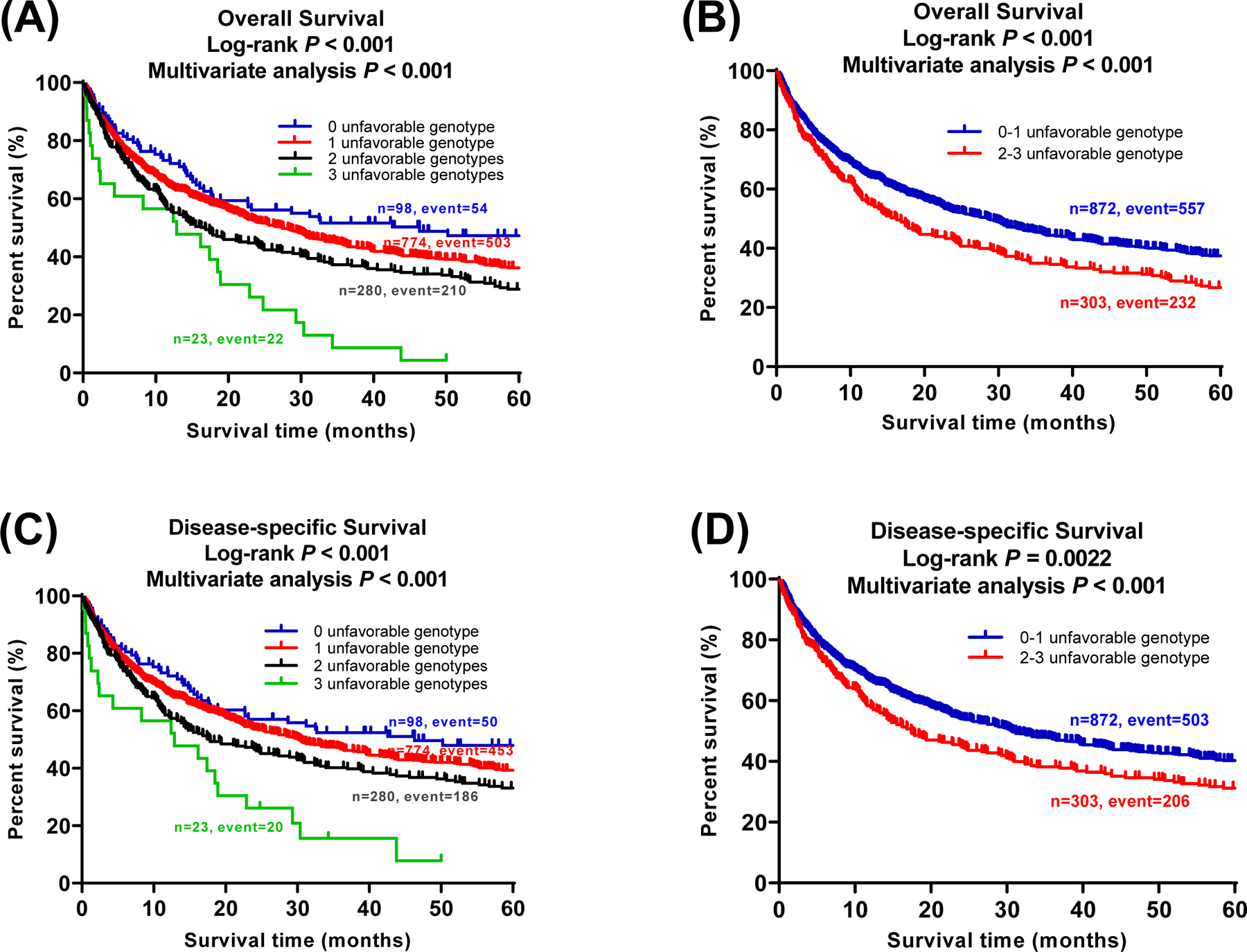
The mitotic phase is a vital step in cell division and may be involved in cancer progression, but it remains unclear whether genetic variants in mitotic phase-related pathways genes impact the survival of these patients. Here, we investigated associations between 31 032 single nucleotide polymorphisms (SNPs) in 368 mitotic phase-related pathway genes and overall survival (OS) of patients with nonsmall cell lung cancer (NSCLC). We assessed the associations in a discovery data set of 1185 NSCLC patients from the Prostate, Lung, Colorectal and Ovarian (PLCO) Cancer Screening Trial and validated the findings in another data set of 984 patients from the Harvard Lung Cancer Susceptibility Study. As a result, we identified three independent SNPs (ie, CHEK1 rs76744140 T>C, PRIM2 rs6939623 G>T and CDK6 rs113181986 G>C) to be significantly associated with NSCLC OS with an adjusted hazard ratio of 1.29 (95% confidence interval = 1.11-1.49, P = 8.26 × 10 ), 1.26 (1.12-1.42, 1.10 × 10 ) and 0.73 (0.63-0.86, 1.63 × 10 ), respectively. Moreover, the number of combined unfavorable genotypes of these three SNPs was significantly associated with NSCLC OS and disease-specific survival in the PLCO data set (P < .0001 and .0003, respectively). Further expression quantitative trait loci analysis showed that the rs76744140C allele predicted CHEK1 mRNA expression levels in normal lung tissues and that rs113181986C allele predicted CDK6 mRNA expression levels in whole blood tissues. Additional analyses indicated CHEK1, PRIM2 and CDK6 may impact NSCLC survival. Taken together, these findings suggested that these genetic variants may be prognostic biomarkers of patients with NSCLC.
有丝分裂期是细胞分裂的一个重要步骤,可能与癌症的进展有关,但目前尚不清楚有丝分裂期相关途径基因的遗传变异是否会影响这些患者的生存。在这里,我们研究了 368 个有丝分裂期相关途径基因中的 31032 个单核苷酸多态性 (SNP) 与非小细胞肺癌 (NSCLC) 患者总生存期 (OS) 之间的关系。我们在来自前列腺癌、肺癌、结直肠癌和卵巢癌 (PLCO) 癌症筛查试验的 1185 例 NSCLC 患者的发现数据集和来自哈佛肺癌易感性研究的 984 例患者的另一个数据集进行了关联评估。结果,我们确定了三个独立的 SNP(即 CHEK1 rs76744140 T>C、PRIM2 rs6939623 G>T 和 CDK6 rs113181986 G>C)与 NSCLC OS 显著相关,调整后的危险比分别为 1.29 (95%置信区间 1.11-1.49,P = 8.26 × 10 -3 )、1.26 (1.12-1.42,1.10 × 10 -3 )和 0.73 (0.63-0.86,1.63 × 10 -3 )。此外,这三个 SNP 的联合不利基因型数量与 PLCO 数据集中的 NSCLC OS 和疾病特异性生存显著相关(P < .0001 和.0003)。进一步的表达数量性状基因座分析表明,rs76744140C 等位基因预测了正常肺组织中 CHEK1 mRNA 的表达水平,rs113181986C 等位基因预测了全血组织中 CDK6 mRNA 的表达水平。额外的分析表明 CHEK1、PRIM2 和 CDK6 可能影响 NSCLC 的生存。总之,这些发现表明这些遗传变异可能是非小细胞肺癌患者的预后生物标志物。