Koch Institute for Integrative Cancer Research, Massachusetts Institute of Technology, Cambridge, MA 02139, USA; Department of Chemistry, Massachusetts Institute of Technology, Cambridge, MA 02139, USA; Department of Chemical Engineering, Massachusetts Institute of Technology, Cambridge, MA 02139, USA; Ragon Institute of MGH, MIT, and Harvard, Cambridge, MA 02139, USA.
Koch Institute for Integrative Cancer Research, Massachusetts Institute of Technology, Cambridge, MA 02139, USA; Department of Chemistry, Massachusetts Institute of Technology, Cambridge, MA 02139, USA; Broad Institute of MIT and Harvard, Cambridge, MA 02139, USA.
Adv Drug Deliv Rev. 2021 Aug;175:113803. doi: 10.1016/j.addr.2021.05.013. Epub 2021 May 29.
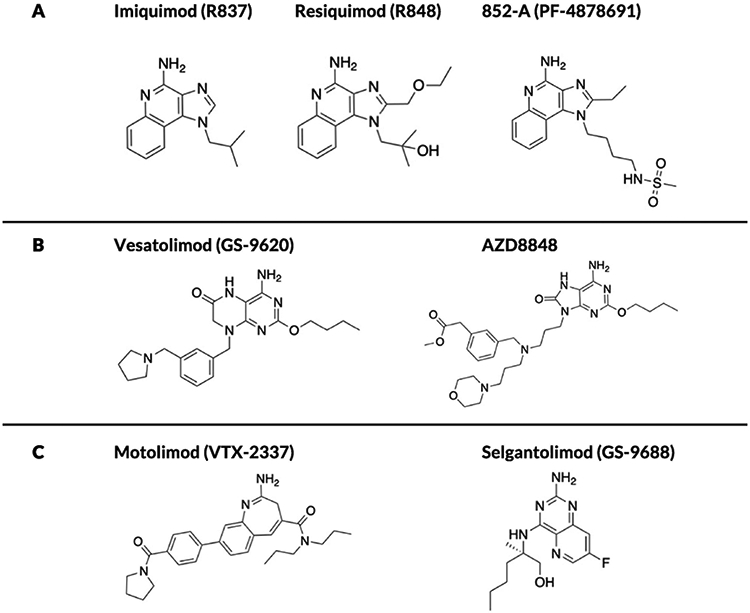
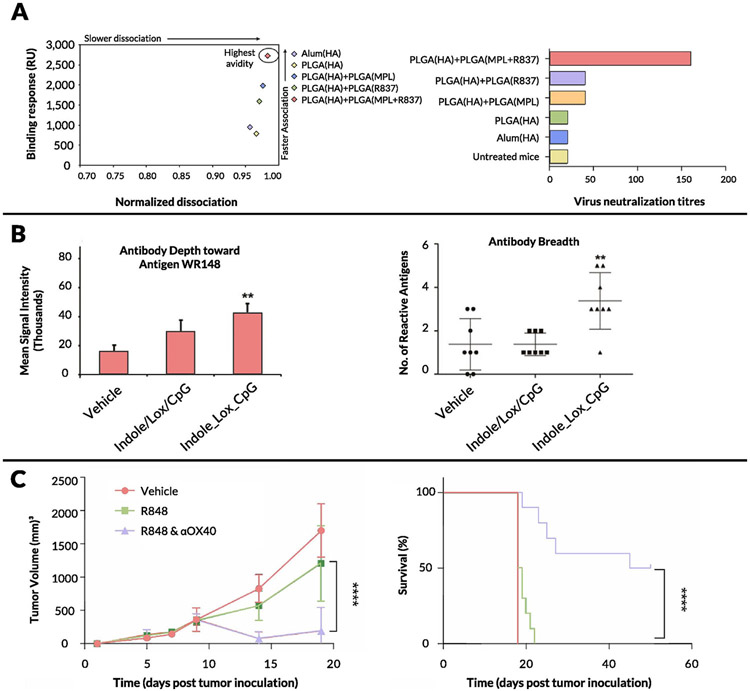
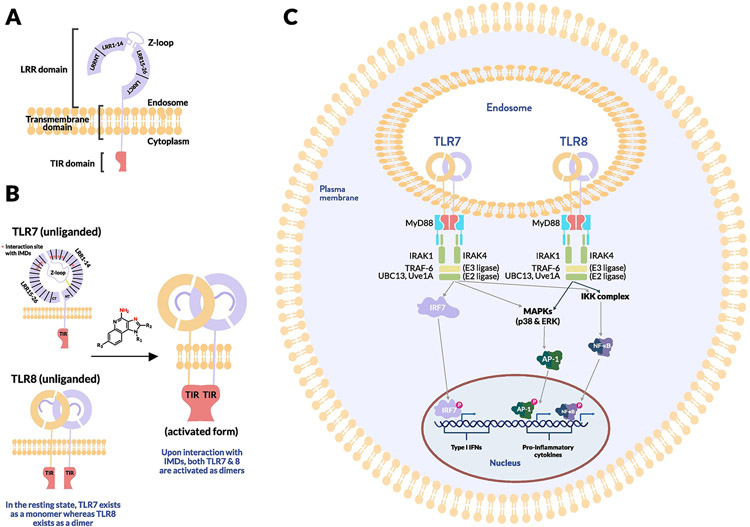
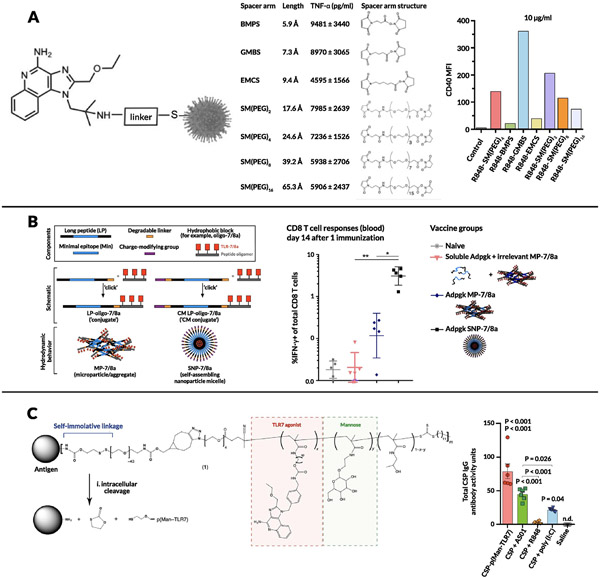
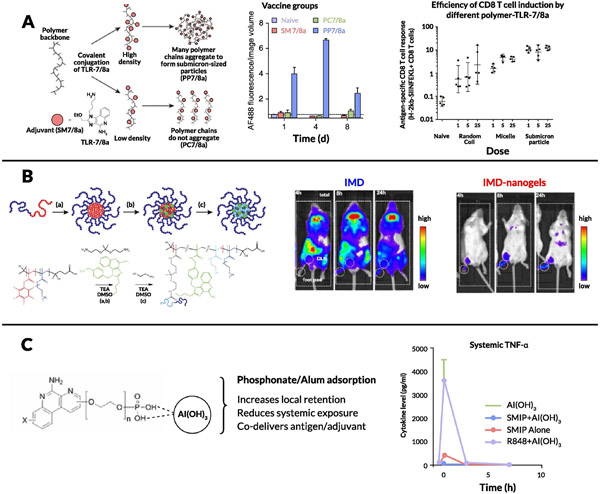
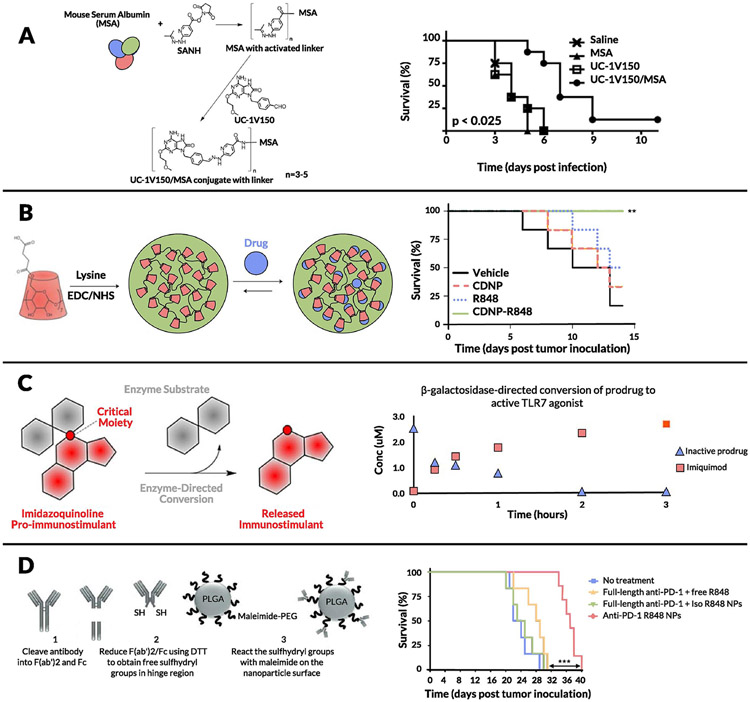
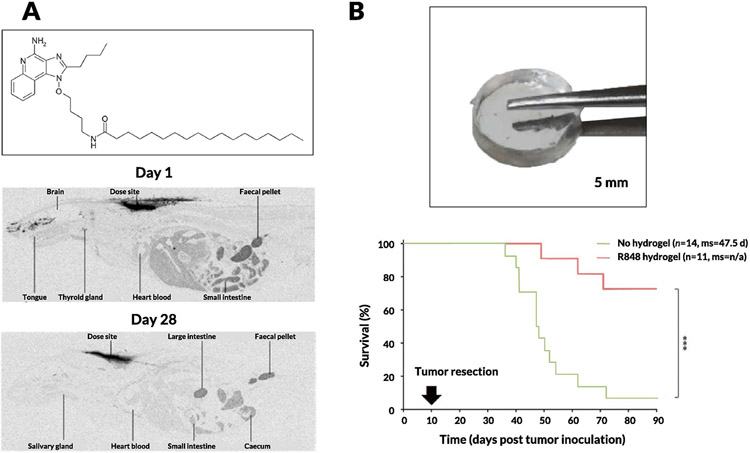
Imidazoquinoline derivatives (IMDs) and related compounds function as synthetic agonists of Toll-like receptors 7 and 8 (TLR7/8) and one is FDA approved for topical antiviral and skin cancer treatments. Nevertheless, these innate immune system-activating drugs have potentially much broader therapeutic utility; they have been pursued as antitumor immunomodulatory agents and more recently as candidate vaccine adjuvants for cancer and infectious disease. The broad expression profiles of TLR7/8, poor pharmacokinetic properties of IMDs, and toxicities associated with systemic administration, however, are formidable barriers to successful clinical translation. Herein, we review IMD formulations that have advanced to the clinic and discuss issues related to biodistribution and toxicity that have hampered the further development of these compounds. Recent strategies aimed at enhancing safety and efficacy, particularly through the use of bioconjugates and nanoparticle formulations that alter pharmacokinetics, biodistribution, and cellular targeting, are described. Finally, key aspects of the biology of TLR7 signaling, such as TLR7 tolerance, that may need to be considered in the development of new IMD therapeutics are discussed.
咪唑并喹啉衍生物(IMDs)及其相关化合物作为 Toll 样受体 7 和 8(TLR7/8)的合成激动剂发挥作用,其中一种已获得 FDA 批准用于局部抗病毒和皮肤癌治疗。尽管如此,这些激活先天免疫系统的药物具有潜在的更广泛的治疗用途;它们被作为抗肿瘤免疫调节剂,以及最近作为癌症和传染病候选疫苗佐剂进行研究。然而,TLR7/8 的广泛表达谱、IMDs 的不良药代动力学特性以及全身给药相关的毒性,是成功实现临床转化的巨大障碍。本文综述了已进入临床阶段的 IMD 制剂,并讨论了与生物分布和毒性相关的问题,这些问题阻碍了这些化合物的进一步发展。描述了最近旨在提高安全性和疗效的策略,特别是通过使用改变药代动力学、生物分布和细胞靶向的生物缀合物和纳米颗粒制剂。最后,讨论了 TLR7 信号生物学的关键方面,例如 TLR7 耐受,这可能需要在新的 IMD 治疗药物的开发中加以考虑。