College of Pharmacy, University of Manitoba, Apotex Centre, 750 McDermot Avenue, Winnipeg, Manitoba, R3E 0T5, Canada.
Department of Biochemistry and Medical Genetics, University of Manitoba, Room 308 - Basic Medical Sciences Building, 745 Bannatyne Avenue, Winnipeg, Manitoba, R3E 0J9, Canada.
BMC Cancer. 2021 May 31;21(1):648. doi: 10.1186/s12885-021-08359-6.
Predicting patient drug response based on a patient's molecular profile is one of the key goals of precision medicine in breast cancer (BC). Multiple drug response prediction models have been developed to address this problem. However, most of them were developed to make sensitivity predictions for multiple single drugs within cell lines from various cancer types instead of a single cancer type, do not take into account drug properties, and have not been validated in cancer patient-derived data. Among the multi-omics data, gene expression profiles have been shown to be the most informative data for drug response prediction. However, these models were often developed with individual genes. Therefore, this study aimed to develop a drug response prediction model for BC using multiple data types from both cell lines and drugs.
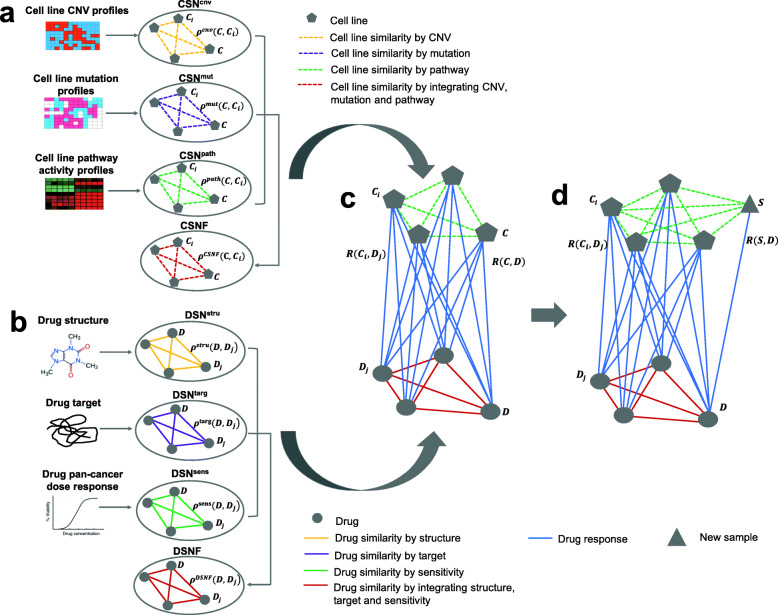
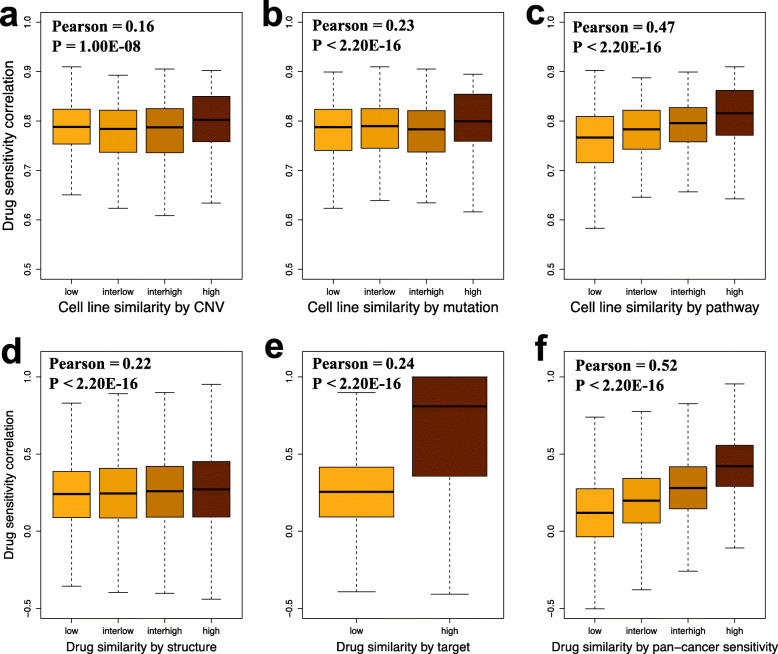
We first collected the baseline gene expression profiles of 49 BC cell lines along with IC values for 220 drugs tested in these cell lines from Genomics of Drug Sensitivity in Cancer (GDSC). Using these data, we developed a multiple-layer cell line-drug response network (ML-CDN2) by integrating a one-layer cell line similarity network based on the pathway activity profiles and a three-layer drug similarity network based on the drug structures, targets, and pan-cancer IC profiles. We further used ML-CDN2 to predict the drug response for new BC cell lines or patient-derived samples.
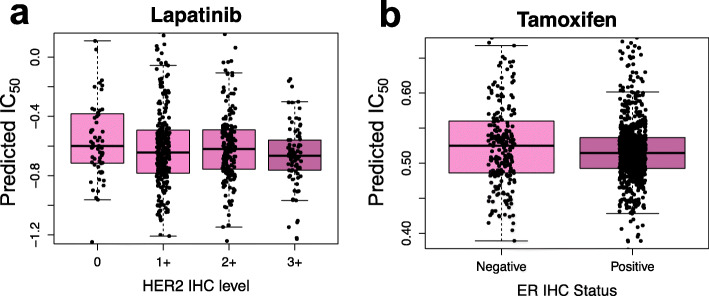
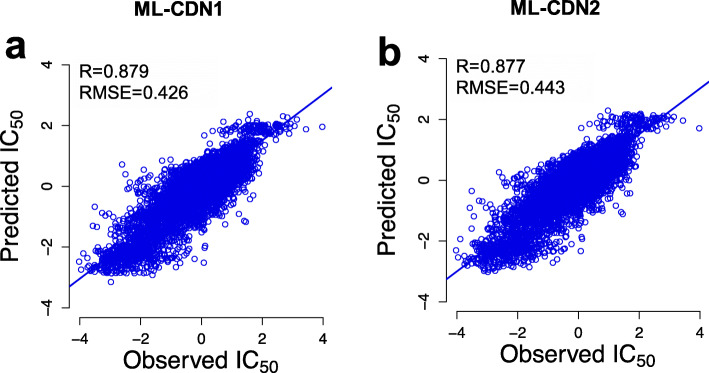
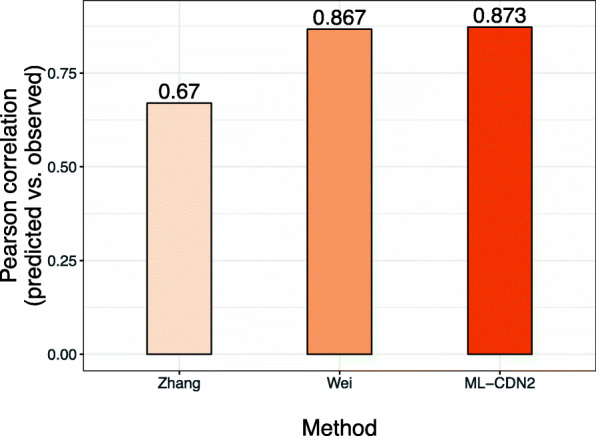
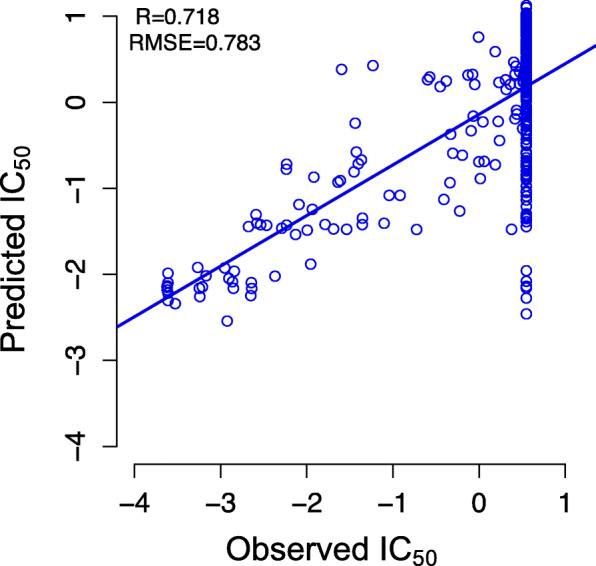
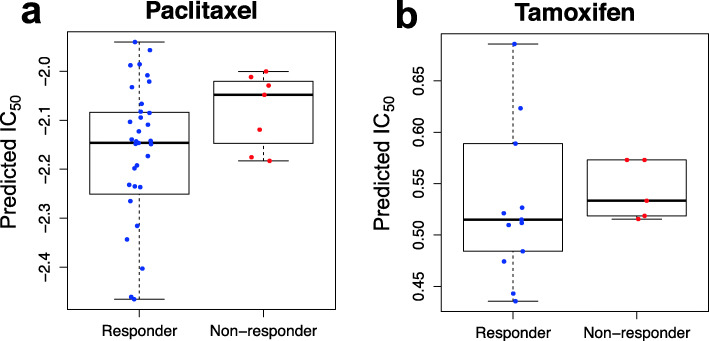
ML-CDN2 demonstrated a good predictive performance, with the Pearson correlation coefficient between the observed and predicted IC values for all GDSC cell line-drug pairs of 0.873. Also, ML-CDN2 showed a good performance when used to predict drug response in new BC cell lines from the Cancer Cell Line Encyclopedia (CCLE), with a Pearson correlation coefficient of 0.718. Moreover, we found that the cell line-derived ML-CDN2 model could be applied to predict drug response in the BC patient-derived samples from The Cancer Genome Atlas (TCGA).
The ML-CDN2 model was built to predict BC drug response using comprehensive information from both cell lines and drugs. Compared with existing methods, it has the potential to predict the drug response for BC patient-derived samples.
基于患者的分子谱预测患者的药物反应是精准医学在乳腺癌(BC)中的主要目标之一。已经开发了多种药物反应预测模型来解决这个问题。然而,它们中的大多数都是为了对来自不同癌症类型的细胞系中的多种单一药物的敏感性进行预测而开发的,没有考虑药物特性,也没有在癌症患者衍生的数据中进行验证。在多组学数据中,基因表达谱已被证明是药物反应预测最有信息的数据。然而,这些模型通常是使用单个基因开发的。因此,本研究旨在使用来自细胞系和药物的多种数据类型为 BC 开发药物反应预测模型。
我们首先从癌症药物敏感性基因组学(GDSC)中收集了 49 个 BC 细胞系的基线基因表达谱以及在这些细胞系中测试的 220 种药物的 IC 值。使用这些数据,我们通过整合基于途径活性谱的单层细胞系相似网络和基于药物结构、靶点和泛癌 IC 谱的三层药物相似网络,开发了一个多层细胞系-药物反应网络(ML-CDN2)。我们进一步使用 ML-CDN2 来预测新的 BC 细胞系或患者衍生样本的药物反应。
ML-CDN2 表现出良好的预测性能,所有 GDSC 细胞系-药物对的观察到的和预测的 IC 值之间的 Pearson 相关系数为 0.873。此外,当用于预测来自癌症细胞系百科全书(CCLE)的新的 BC 细胞系的药物反应时,ML-CDN2 表现出良好的性能,Pearson 相关系数为 0.718。此外,我们发现可以将基于细胞系的 ML-CDN2 模型应用于从癌症基因组图谱(TCGA)中预测 BC 患者衍生样本的药物反应。
ML-CDN2 模型是为了使用来自细胞系和药物的综合信息来预测 BC 药物反应而构建的。与现有方法相比,它有可能预测 BC 患者衍生样本的药物反应。