Department of Biochemistry, Radioimmunology and Experimental Medicine, The Children's Memorial Health Institute, Warsaw, Poland.
Rehabilitation Ward, The Children's Memorial Health Institute, Warsaw, Poland.
J Musculoskelet Neuronal Interact. 2021 Jun 1;21(2):215-236.
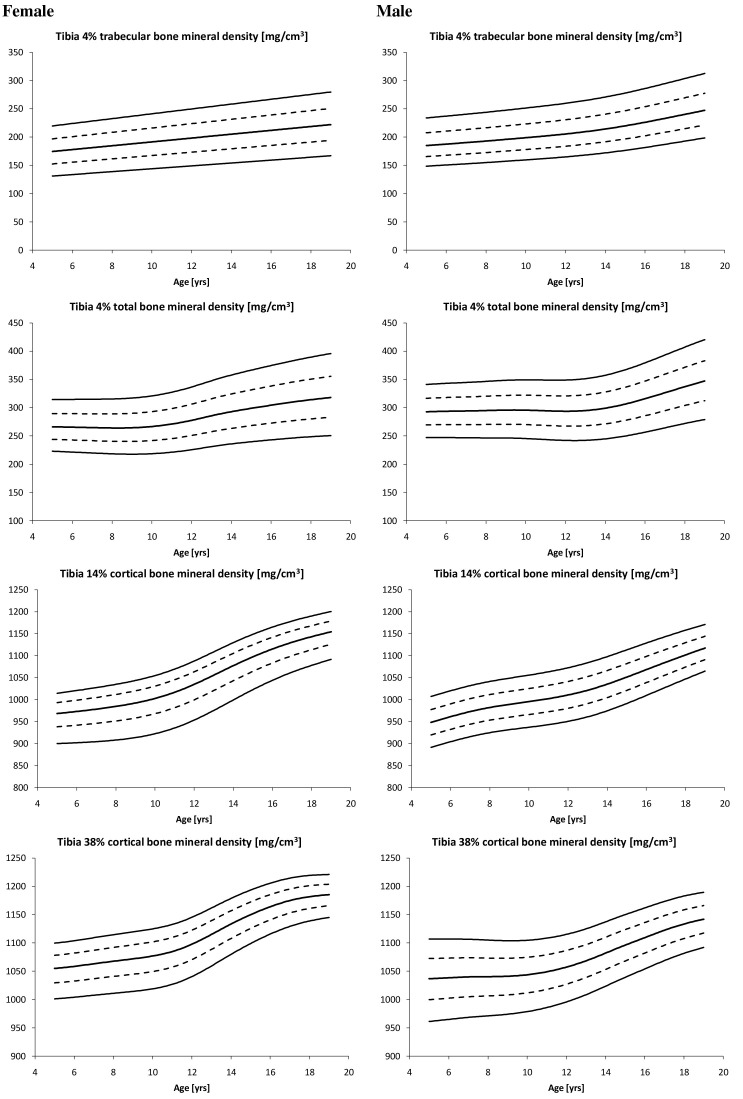
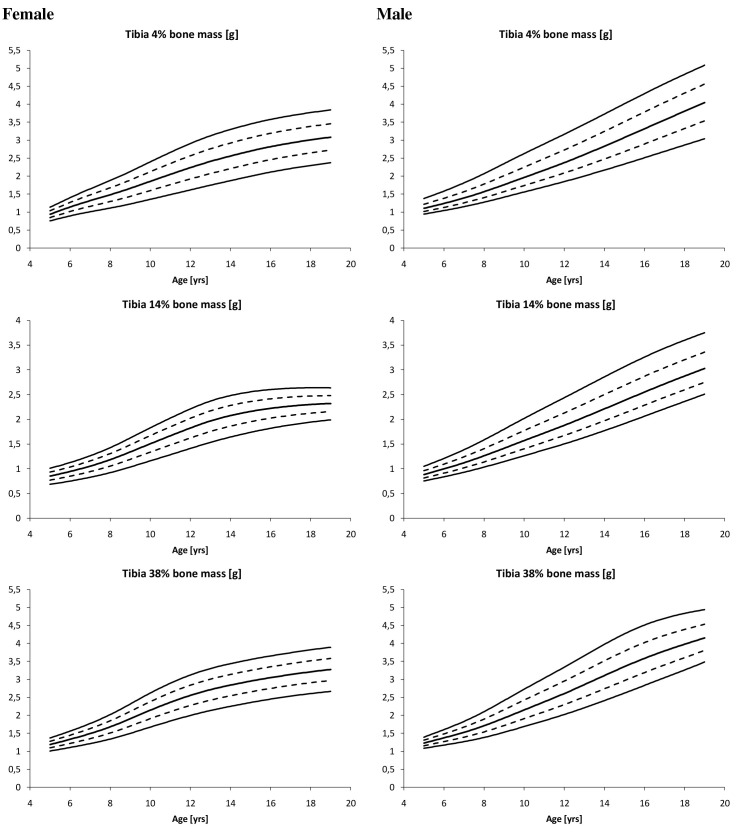
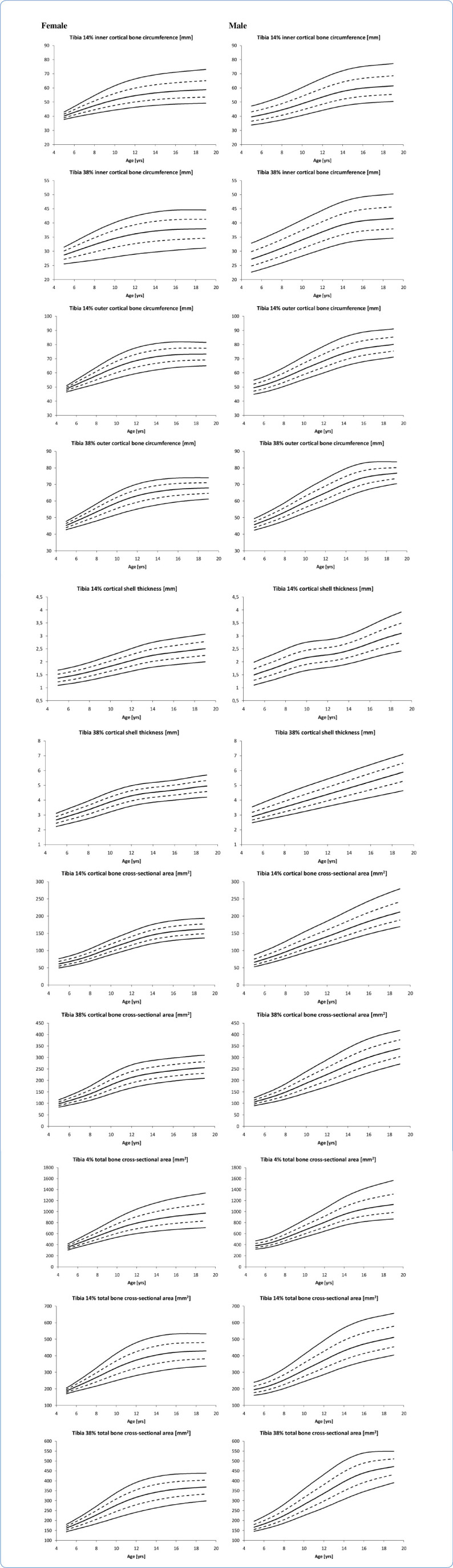
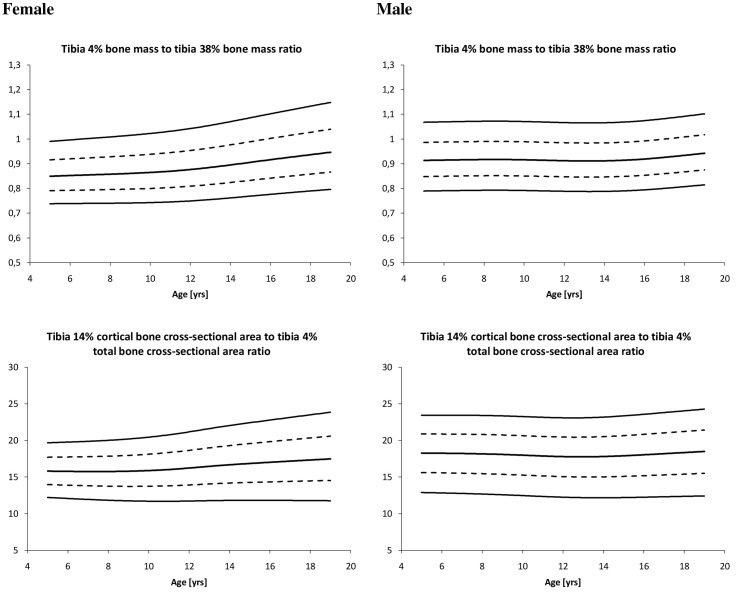
Peripheral quantitative computed tomography is utilised in increasing numbers of paediatric studies, however, very little is known about the reference limits for pQCT tibia measurements. The purpose of this study was to establish country-specific reference data for bone densities, cross-sectional sizes, strength and regional muscle distribution measured by pQCT in children and adolescents.
Stratec XCT 2000L apparatus was used. The measurement sites were 4%, 14%, 38% and 66% of the tibia length. The study group consisted of 222 participants (103 girls) aged 4,3-19,4 yrs. ANCOVA was used to assess the main determinants of pQCT outcomes. The LMS method was used to fit the percentile curves for each outcomes.
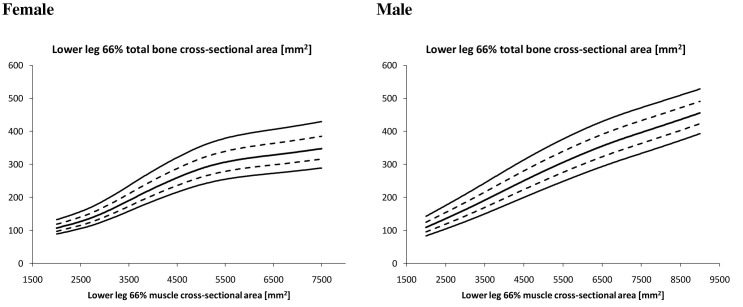
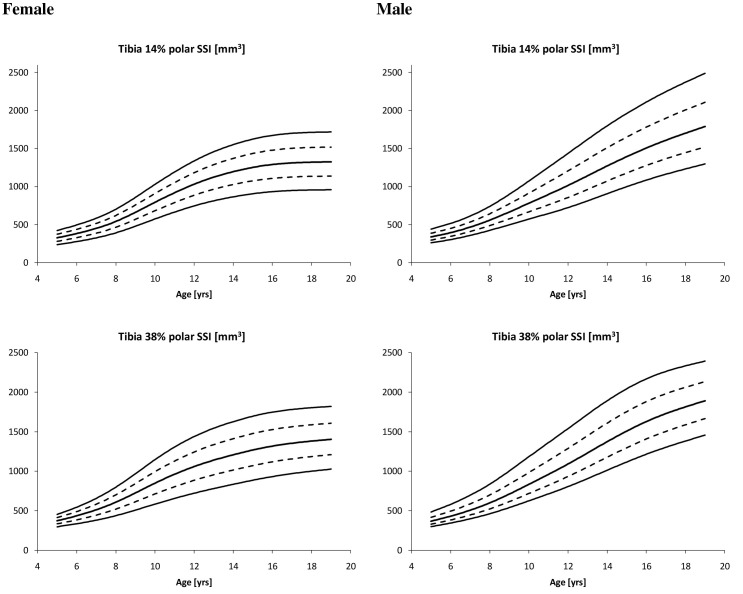
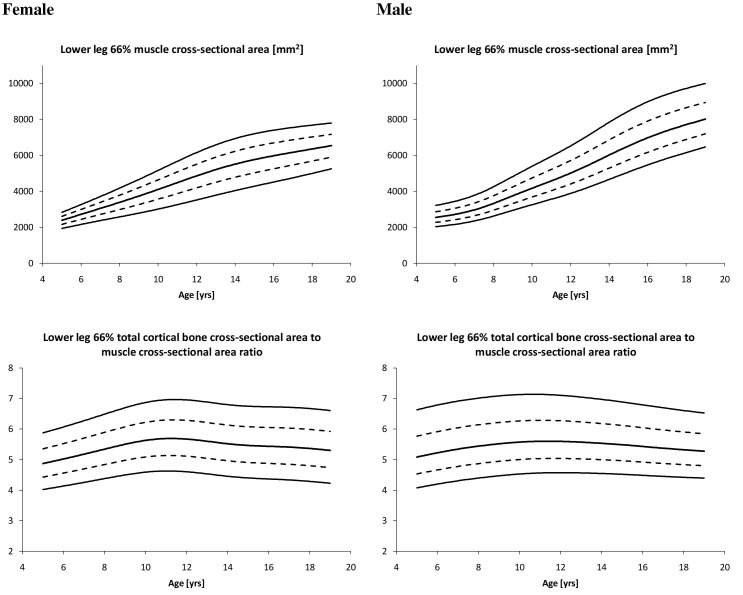
Weight and age were the main determinants for most of the pQCT outcomes. Smoothed percentile curves were developed by age and by height for both sexes.
In this study we present reference data for bone densities, cross-sectional size and strength as well as for regional muscle distribution measured by pQCT at certain sites of the lower leg to allow simple calculation of reliable Z scores.
外周定量计算机断层扫描越来越多地应用于儿科研究中,然而,关于 pQCT 胫骨测量的参考值却知之甚少。本研究旨在为儿童和青少年的 pQCT 测量的骨密度、横截面积、强度和区域肌肉分布建立特定于国家的参考数据。
使用 Stratec XCT 2000L 仪器。测量部位为胫骨长度的 4%、14%、38%和 66%。研究组包括 222 名参与者(103 名女孩),年龄为 4.3-19.4 岁。使用协方差分析评估 pQCT 结果的主要决定因素。使用 LMS 方法为每个结果拟合百分位曲线。
体重和年龄是大多数 pQCT 结果的主要决定因素。为了便于简单计算可靠的 Z 分数,我们按年龄和性别分别为胫骨下段特定部位的骨密度、横截面积和强度以及区域肌肉分布制定了参考值。
本研究提供了通过 pQCT 测量的骨密度、横截面积和强度以及区域肌肉分布的参考数据,以便在特定部位简单计算可靠的 Z 分数。