Department of Physical Therapy, Faculty of Health Science, Kio University, Japan.
Department of Physiology I, Nara Medical University, Japan.
J Musculoskelet Neuronal Interact. 2021 Jun 1;21(2):287-297.
This study aimed to explore optimal conditions of whole-body vibration (WBV) for improving bone properties in aged rats.
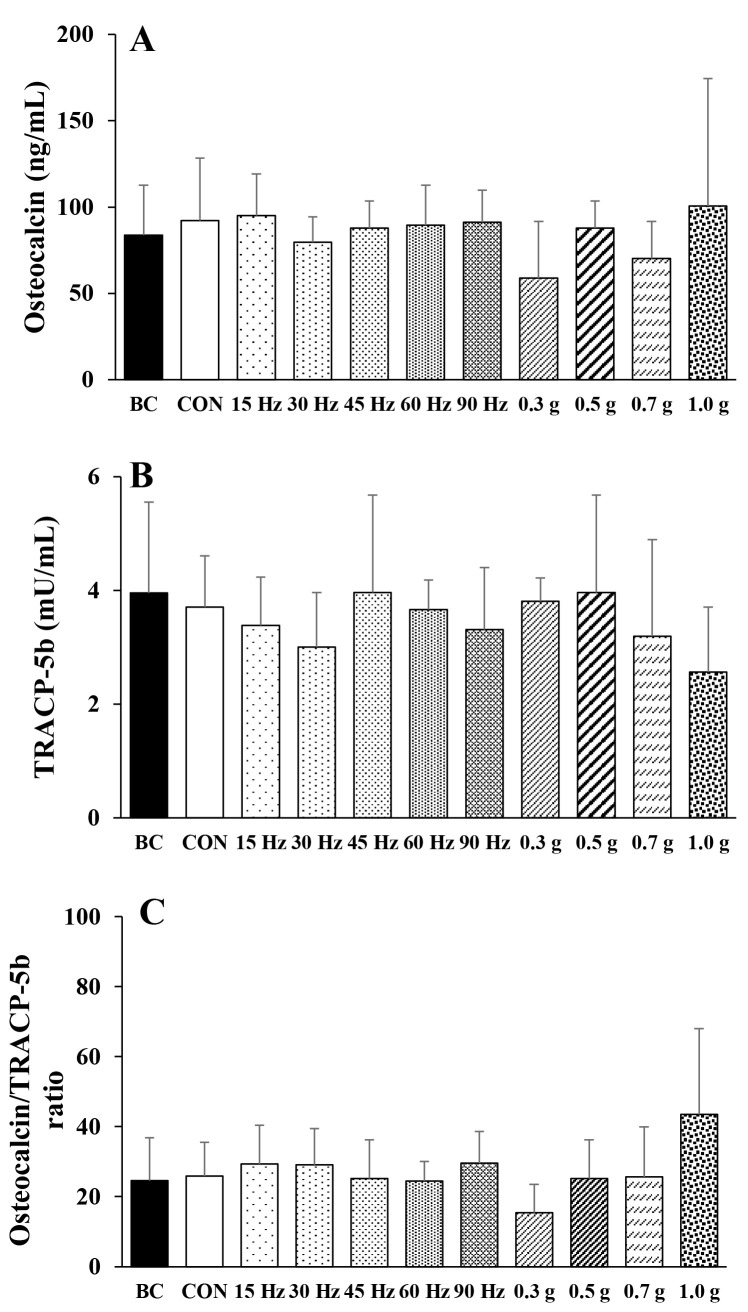
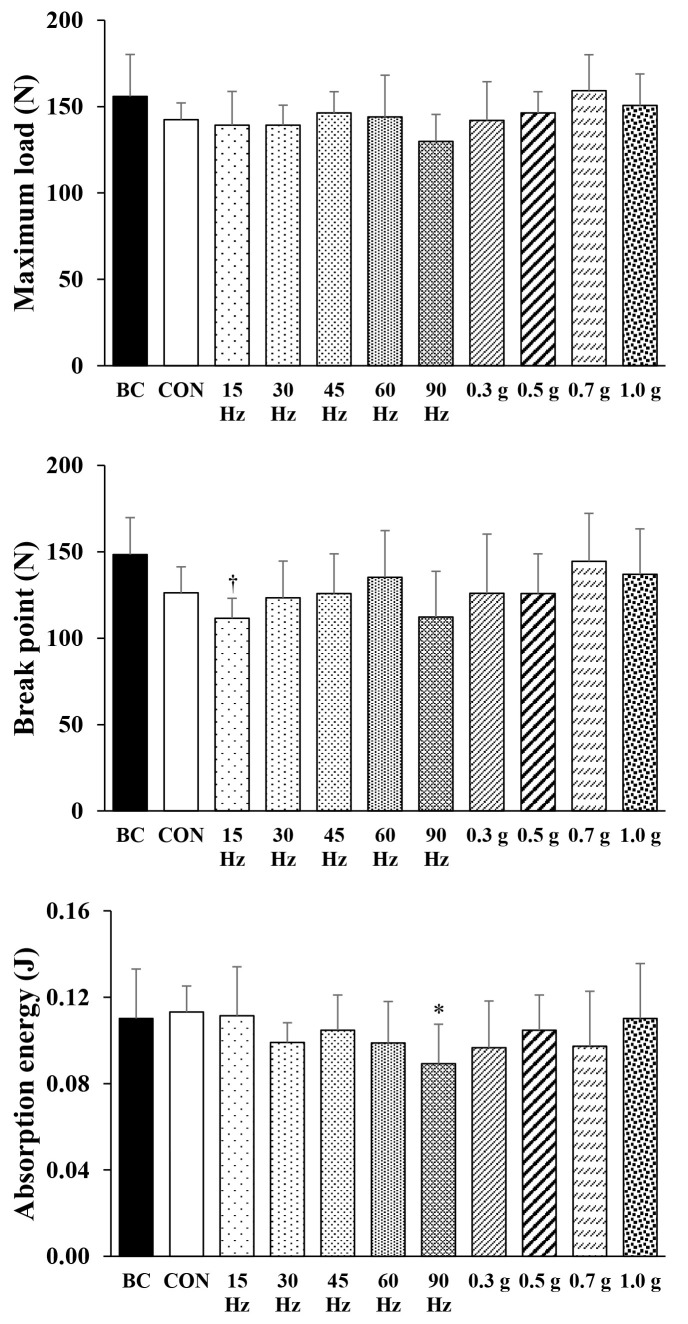
Eighty-week-old rats were divided into baseline control (BC), age-matched control (CON) and experimental groups, which underwent WBV (0.5 ) at various frequencies (15, 30, 45, 60 or 90 Hz) or WBV (45 Hz) with various magnitudes (0.3, 0.5, 0.7 or 1.0 ) for 7 weeks. After interventions, femur bone size, bone mechanical strength and circulating bone formation/resorption markers were measured, and trabecular bone microstructure (TBMS) and cortical bone geometry (CBG) of femurs were analyzed by micro-CT.
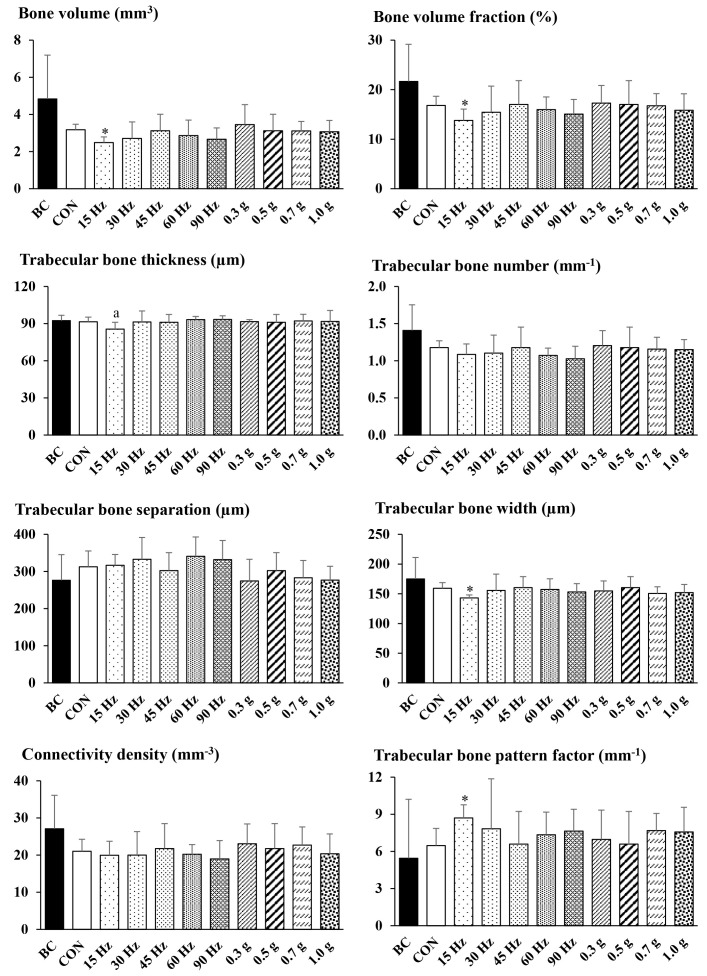
Several TBMS parameters and trabecular bone mineral content were significantly lower in the 15 Hz WBV (0.5 ) group than in the CON group, suggesting damage to trabecular bone. On the other hand, although frequency/magnitude of WBV did not influence any CBG parameters, the 0.7 and 1.0 WBV (45 Hz) group showed an increase in tissue mineral density of cortical bone compared with the BC and CON groups, suggesting the possibility of improving cortical bone properties.
Based on these findings, it should be noted that WBV conditions are carefully considered when applied to elderly people.
本研究旨在探讨全身振动(WBV)改善老年大鼠骨特性的最佳条件。
80 周龄大鼠分为基线对照组(BC)、年龄匹配对照组(CON)和实验组,实验组分别接受 0.5 振动频率(15、30、45、60 或 90 Hz)或 45 Hz 振动频率(0.3、0.5、0.7 或 1.0 )的全身振动干预,持续 7 周。干预后,测量股骨骨大小、骨机械强度和循环骨形成/吸收标志物,并通过 micro-CT 分析股骨的小梁骨微观结构(TBMS)和皮质骨几何结构(CBG)。
15 Hz WBV(0.5 )组的几个 TBMS 参数和小梁骨矿物质含量明显低于 CON 组,表明小梁骨受损。另一方面,尽管 WBV 的频率/幅度并不影响任何 CBG 参数,但 0.7 和 1.0 的 WBV(45 Hz)组与 BC 和 CON 组相比,皮质骨的组织矿物质密度增加,提示有可能改善皮质骨特性。
基于这些发现,当应用于老年人时,应注意全身振动条件的仔细考虑。