Tu Zhenbo, Schmoellerl Johannes, Mariani Odette, Zheng Yurong, Hu Yi, Vincent-Salomon Anne, Karnoub Antoine E
Department of Pathology and Cancer Center, Beth Israel Deaconess Medical Center, Harvard Medical School, Boston, MA, USA.
Institut Curie, Paris Cedex 05, France.
NPJ Breast Cancer. 2021 May 31;7(1):69. doi: 10.1038/s41523-021-00259-z.
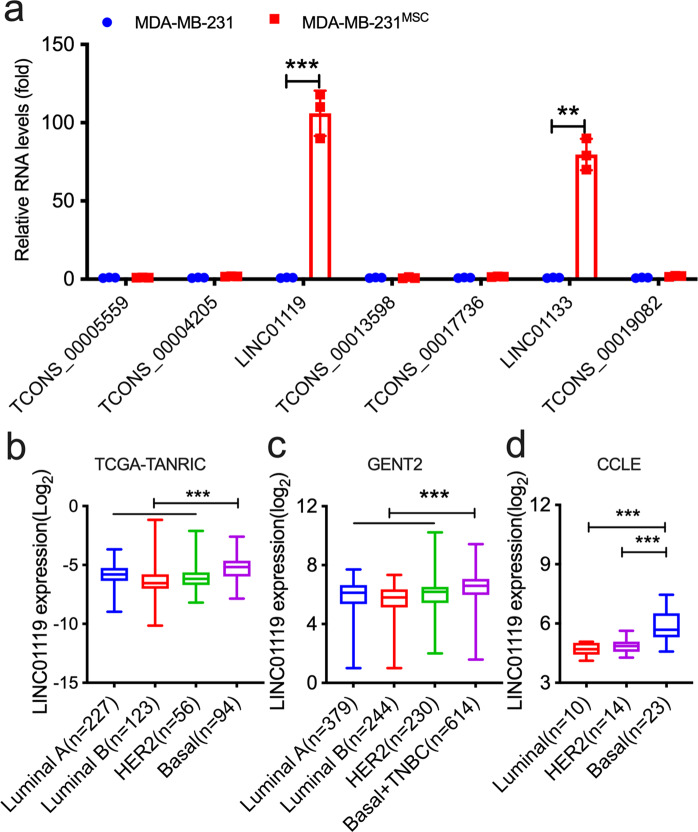
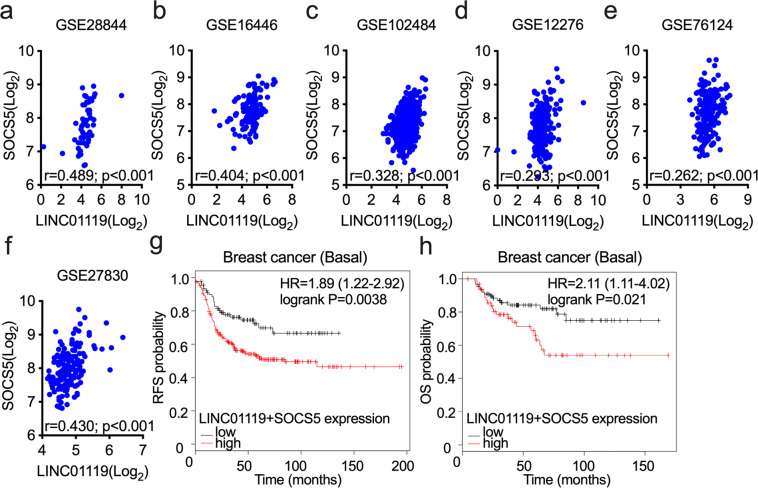
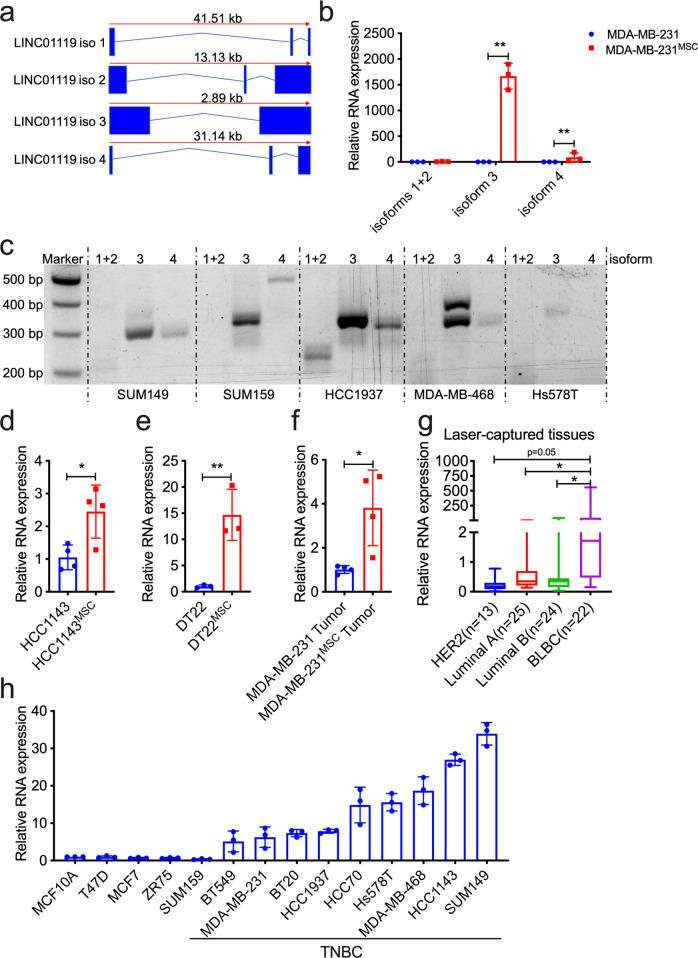
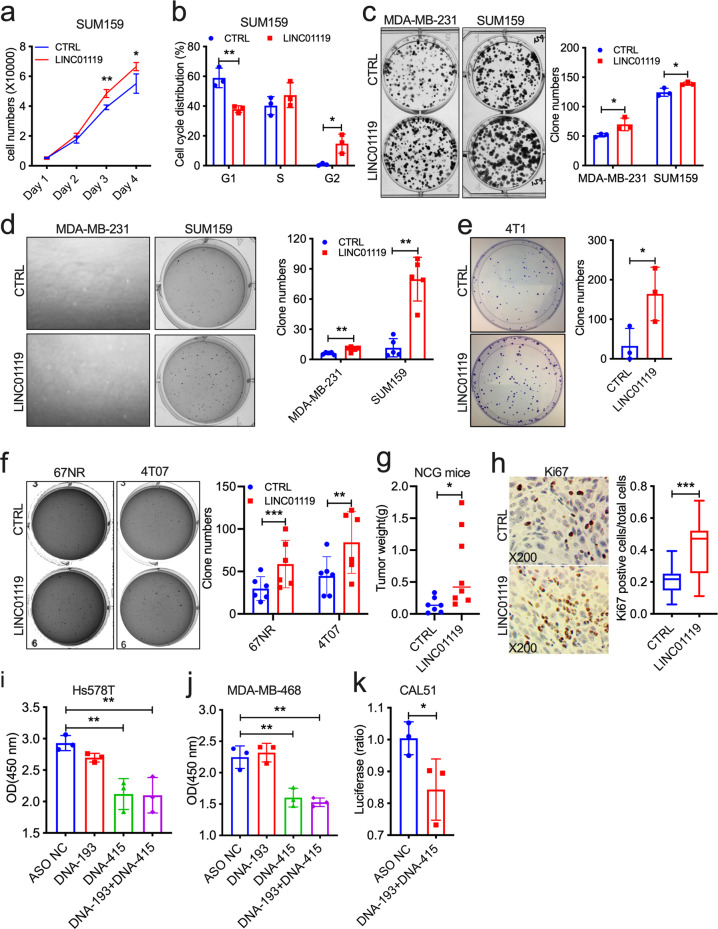
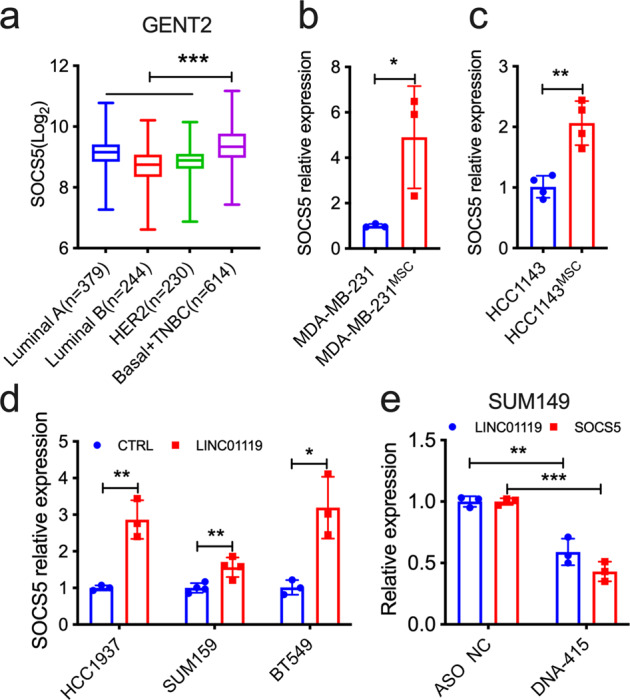
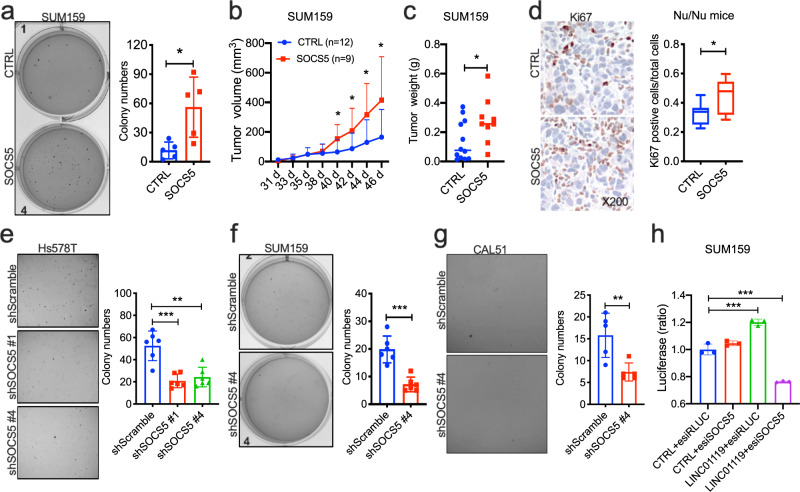
The development of triple-negative breast cancer (TNBC) is critically regulated by certain tumor-microenvironment-associated cells called mesenchymal stem/stromal cells (MSCs), which we and others have shown promote TNBC progression by activating pro-malignant signaling in neighboring cancer cells. Characterization of these cascades would better our understanding of TNBC biology and bring about therapeutics that eliminate the morbidity and mortality associated with advanced disease. Here, we focused on the emerging class of RNAs called long non-coding RNAs or lncRNAs and utilized a MSC-supported TNBC progression model to identify specific family members of functional relevance to TNBC pathogenesis. Indeed, although some have been described to play functional roles in TNBC, activities of lncRNAs as mediators of tumor-microenvironment-driven TNBC development remain to be fully explored. We report that MSCs stimulate robust expression of LINC01119 in TNBC cells, which in turn induces suppressor of cytokine signaling 5 (SOCS5), leading to accelerated cancer cell growth and tumorigenesis. We show that LINC01119 and SOCS5 exhibit tight correlation across multiple breast cancer gene sets and that they are highly enriched in TNBC patient cohorts. Importantly, we present evidence that the LINC01119-SOCS5 axis represents a powerful prognostic indicator of adverse outcomes in TNBC patients, and demonstrate that its repression severely impairs cancer cell growth. Altogether, our findings identify LINC01119 as a major driver of TNBC development and delineate critical non-coding RNA theranostics of potential translational utility in the management of advanced TNBC, a class of tumors in most need of effective and targeted therapy.
三阴性乳腺癌(TNBC)的发展受到某些与肿瘤微环境相关的细胞(称为间充质干/基质细胞,即MSCs)的严格调控。我们和其他研究表明,这些细胞通过激活邻近癌细胞中的促恶性信号来促进TNBC进展。对这些级联反应的表征将加深我们对TNBC生物学的理解,并带来消除与晚期疾病相关的发病率和死亡率的治疗方法。在此,我们聚焦于一类新兴的RNA,即长链非编码RNA(lncRNA),并利用一个由MSCs支持的TNBC进展模型来鉴定与TNBC发病机制功能相关的特定家族成员。事实上,尽管已有一些lncRNA被描述在TNBC中发挥功能作用,但lncRNA作为肿瘤微环境驱动的TNBC发展的介质的活性仍有待充分探索。我们报告称,MSCs刺激TNBC细胞中LINC01119的强烈表达,这反过来又诱导细胞因子信号转导抑制因子5(SOCS5),导致癌细胞生长加速和肿瘤发生。我们表明,LINC01119和SOCS5在多个乳腺癌基因集中呈现紧密相关性,并且它们在TNBC患者队列中高度富集。重要的是,我们提供证据表明,LINC01119-SOCS5轴是TNBC患者不良预后的有力预后指标,并证明其抑制会严重损害癌细胞生长。总之,我们的研究结果确定LINC01119是TNBC发展的主要驱动因素,并勾勒出在晚期TNBC管理中具有潜在转化效用的关键非编码RNA诊疗方法,晚期TNBC是一类最需要有效和靶向治疗的肿瘤。